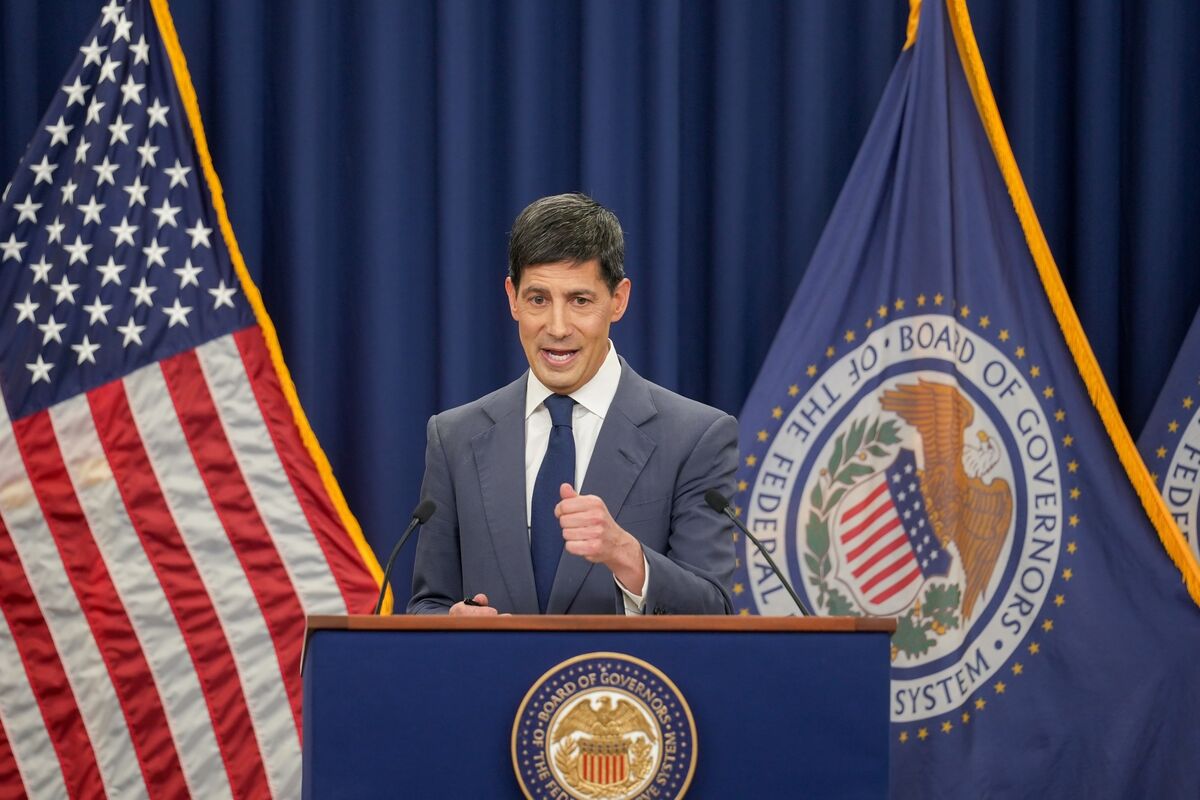
Federal Reserve Chairman Kevin Warsh raised a proposal to reduce the frequency of the central bank’s scheduled policy meetings during the rate-setting Federal Open Market Committee gathering this week. The shift could break nearly 50 years of established practice and significantly alter how markets receive interest rate guidance.
A Fed spokesperson declined to comment on the discussions.
The potential shift marks the most consequential operational adjustment under the new Fed leader, who took the helm in May promising a regime change.
Federal Open Market Committee Schedule and Historical Cadence
Under the current rules of procedure for the Federal Open Market Committee, the group meets at least four times a year in Washington, though it has maintained an eight-meeting annual schedule for nearly half a century. Leaders have also convened unscheduled gatherings during periods of acute economic turbulence, such as the onset of the COVID-19 pandemic in 2020 and the global financial crisis spanning 2007 to 2009.

When asked during his Senate confirmation hearing in April whether he was committed to holding an FOMC meeting at least once every eight weeks, Warsh pointed to statutory minimums. I believe the statute requires a minimum of four meetings, but four is not enough,
Warsh said during the hearing, adding, So having more meetings than that is appropriate. But I’ve not even begun to look at the meeting schedules for 2027 and beyond.
The central bank has already locked in its meeting calendar for the remainder of 2026, with sessions slated for September, October, and December, alongside a tentative schedule for 2027. Official guidance notes that Each meeting date is tentative until confirmed at the meeting immediately preceding it,
a disclaimer that predates the current chairman’s tenure.
Market Pressures and Broader Policy Reviews
The debate over meeting frequency arrives at a tense moment for the U.S. central bank. Investors have recently criticized Warsh’s efforts to limit forward guidance regarding the trajectory of interest rates, even as mounting economic pressure urges the Fed to take more aggressive action against inflation. Just this week, policymakers voted 9-3 to hold interest rates steady. While the decision itself was widely anticipated, investors balked when Warsh declined to explain the choice or clarify whether he would support rate hikes if inflation fails to cool.
In addition to exploring meeting reductions, Warsh has signaled intent for further internal reforms, including a possible decrease in the number of press conferences held following rate decisions. He also established five task forces dedicated to evaluating monetary policy execution across areas ranging from communications and data handling to the management of the Fed’s balance sheet.
Structure of the Rate-Setting Committee
The rate-setting committee comprises a 12-member roster responsible for steering monetary policy. This group includes the seven appointed officials serving on the Board of Governors in Washington, the president of the Federal Reserve Bank of New York serving as the vice chair, and four rotating regional bank presidents drawn from the remaining twelve districts who serve one-year voting terms.
Any reduction in scheduled gatherings would directly diminish the volume of official commentary and economic assessments delivered to Wall Street and the broader public regarding the job market and inflation—the core pillars of the Fed’s congressional dual mandate.
Worth a look