<>
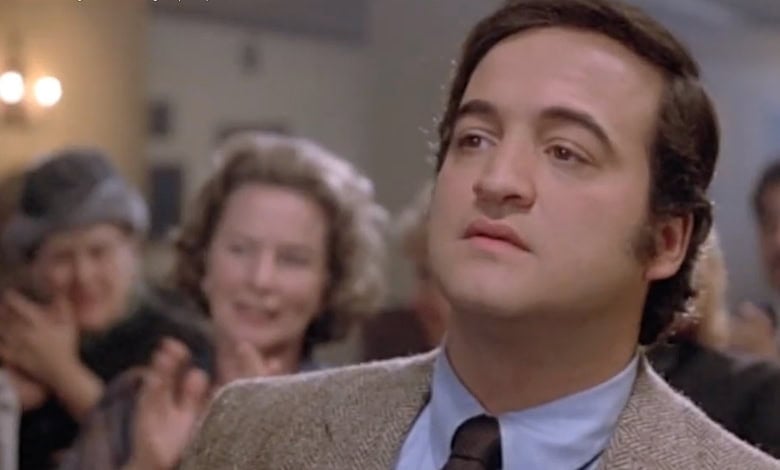
John Belushi’s turn as cynical Chicago columnist Ernie Souchak in the 1981 film Continental Divide remains a pivotal, yet often overlooked, moment in the actor’s brief but influential career. Directed by Michael Apted and scripted by Lawrence Kasdan, the film offered a departure from the high-energy, anarchic roles that defined Belushi’s early stardom, presenting instead a grounded, vulnerable character study that some critics and historians now identify as his most nuanced performance.
The film follows Souchak, a confrontational investigative reporter who is sent to the Rocky Mountains to profile Dr. Nell Porter, an ornithologist living in seclusion to study bald eagles. Played by Blair Brown, Dr. Porter acts as the intellectual and emotional foil to Souchak’s urban intensity. Their developing relationship serves as the narrative spine of the film, shifting the tone from a classic fish-out-of-water comedy to a character-driven romance. For Belushi, who had achieved massive commercial success with Animal House (1978) and The Blues Brothers (1980), Continental Divide represented a strategic effort to transition into more dramatic work, a move supported by his collaborators at the time.
A Shift in Performance Style
Belushi’s approach in Continental Divide is notably restrained. While audiences were accustomed to his boisterous energy, his portrayal of Souchak relies on subtle physical comedy and an unforced, conversational delivery.
Blair Brown’s contribution to the film is equally significant. Coming off her performance in the 1980 science fiction film Altered States, Brown brought a grounded, intellectual rigor to the role of Dr. Porter. Her performance earned her a nomination for the Golden Globe Award for Best Actress in a Motion Picture – Musical or Comedy in 1982, as noted by the Hollywood Foreign Press Association. The chemistry between the two leads is widely cited as the film’s strongest asset, grounding the more formulaic elements of the script in genuine emotional stakes.
Legacy and Critical Reception
The film’s third act, which navigates the logistical and emotional challenges of two people from vastly different worlds, avoids the typical tropes of the era’s romantic comedies. By focusing on character beats rather than relying on slapstick, the film demonstrates a level of maturity that suggests what might have been a long and varied career for Belushi had he lived past his 33rd year.
The film’s endurance is a testament to the collaborative efforts of Apted and Kasdan, who managed to craft a story that feels both timeless and specific to the cultural climate of the early 1980s. For fans and film historians, the movie serves as a bittersweet reminder of an artist who was beginning to explore the depths of his range. The final sequence, in particular, is frequently noted for its emotional resonance, capturing a sense of longing that feels particularly poignant in the context of the actor’s premature passing.
Rediscovering the Film
While his legacy is anchored by his iconic roles in Saturday Night Live and his collaborations with John Landis, Continental Divide offers a glimpse into a quieter, more introspective side of the performer.
Please share your thoughts on whether you believe this was Belushi’s most underrated performance in the comments below.