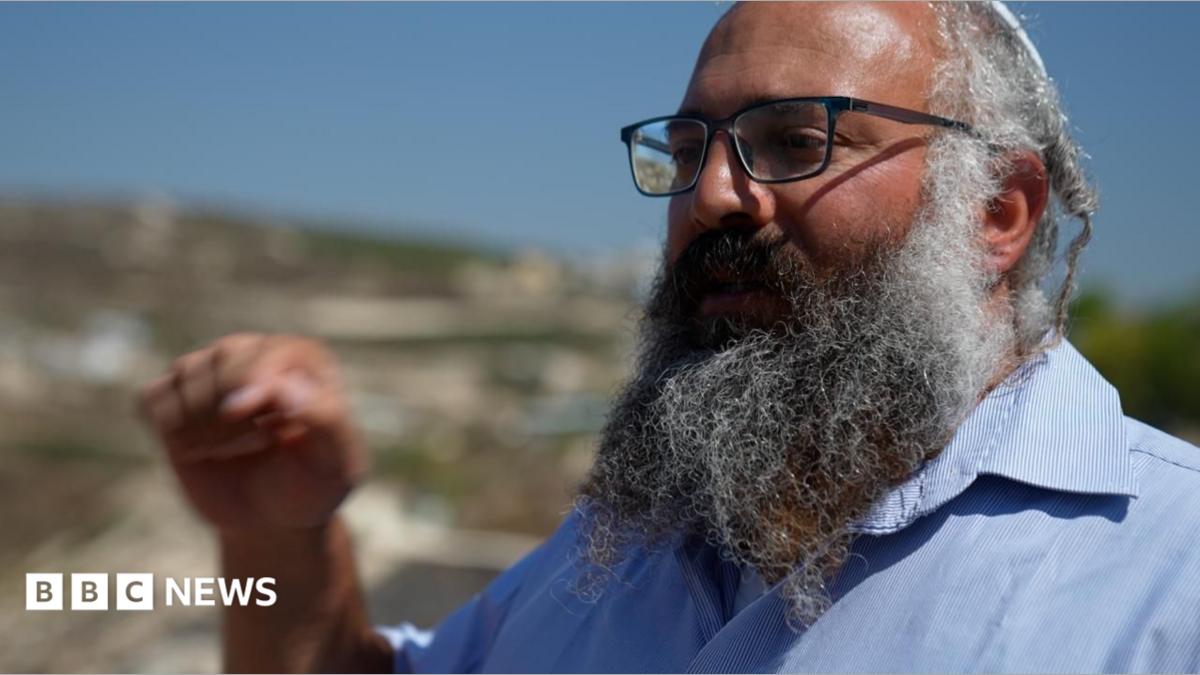
A recent interview with an Israeli settler in the West Bank has drawn renewed international attention to the rising climate of violence in the occupied territory, as the individual explicitly characterized attacks against Palestinians as acts of justified retaliation. The comments, broadcast by the BBC, reflect a growing tension in the region, where the expansion of settlements and outposts has coincided with an increase in confrontations between Israeli residents and Palestinian communities.
According to data from the United Nations Office for the Coordination of Humanitarian Affairs (OCHA), settler-related violence has surged significantly since October 2023. OCHA has documented hundreds of incidents involving the destruction of Palestinian property, physical assaults, and the obstruction of access to agricultural land. These events occur against a backdrop of long-standing legal disputes regarding the status of Israeli outposts, many of which are considered illegal under both international law and, in some instances, Israeli domestic law, though they often receive varying degrees of state support.
The Context of Settler Violence in the West Bank
The West Bank remains a primary focus of geopolitical instability, with the expansion of settlements serving as a persistent obstacle to a two-state solution. The Israeli government maintains a complex administrative framework in the territory, where the legal status of land is frequently contested. The United Nations has repeatedly called for an end to settlement expansion, citing Article 49 of the Fourth Geneva Convention, which prohibits an occupying power from transferring parts of its own civilian population into the territory it occupies. Despite these international mandates, the number of settlers in the West Bank and East Jerusalem has continued to climb, with estimates from organizations such as Peace Now placing the settler population at over 700,000.
The increase in localized violence often involves the destruction of olive groves, the vandalism of vehicles, and threats against Palestinian farmers. Human rights organizations, including B’Tselem, have reported that such actions are frequently carried out with a degree of impunity, alleging that Israeli security forces often fail to intervene or protect Palestinian civilians during these encounters. The Israeli military, the Israel Defense Forces (IDF), states that it operates to maintain security for all residents in the West Bank, though it acknowledges the difficulty of managing the volatile security situation.
International Reactions and Legal Implications
The rhetoric justifying violence as “revenge” has been condemned by various international bodies and human rights advocates, who warn that such statements risk further radicalizing an already polarized environment. The European Union and the United States have, on several occasions, issued statements urging the Israeli government to take concrete steps to curb settler violence and to hold perpetrators accountable. The U.S. State Department has occasionally imposed sanctions on specific individuals identified as being involved in acts of violence against civilians in the West Bank, signaling a shift toward more direct diplomatic pressure.
For many Palestinian families, the proximity of outposts creates a daily reality of uncertainty. Reports from groups like Yesh Din indicate that the legal system in the West Bank, which operates under a dual framework for Israelis and Palestinians, often leaves the latter with limited recourse when their property is damaged or when they are subjected to violence. The discrepancy in legal treatment remains a central point of contention in international human rights monitoring.
What Happens Next for the Region
The situation in the West Bank remains fluid, with observers watching for the next series of reports from the United Nations and the International Court of Justice regarding the legality of the occupation and the associated settlement policies. The UN Human Rights Council continues to monitor the impact of settlement expansion on the human rights of Palestinians, with periodic updates provided during their sessions in Geneva. These reports serve as a primary record for international policymakers assessing the situation on the ground.
As tensions remain high, local communities are left to navigate the ongoing security challenges, often relying on international non-governmental organizations to monitor incidents and provide documentation for potential legal challenges. The discourse surrounding the justification of violence highlights the deep-seated ideological divides that continue to complicate any prospects for a long-term resolution. The international community is expected to maintain its focus on the region as these incidents continue to influence broader diplomatic efforts in the Middle East.
Readers seeking further information on the legal status of these territories or updates on the humanitarian situation can consult the official archives of the United Nations Office for the Coordination of Humanitarian Affairs or the periodic updates provided by the International Committee of the Red Cross regarding the protection of civilians in occupied territories. We invite our readers to share their perspectives on these developments in the comments section below.
Worth a look