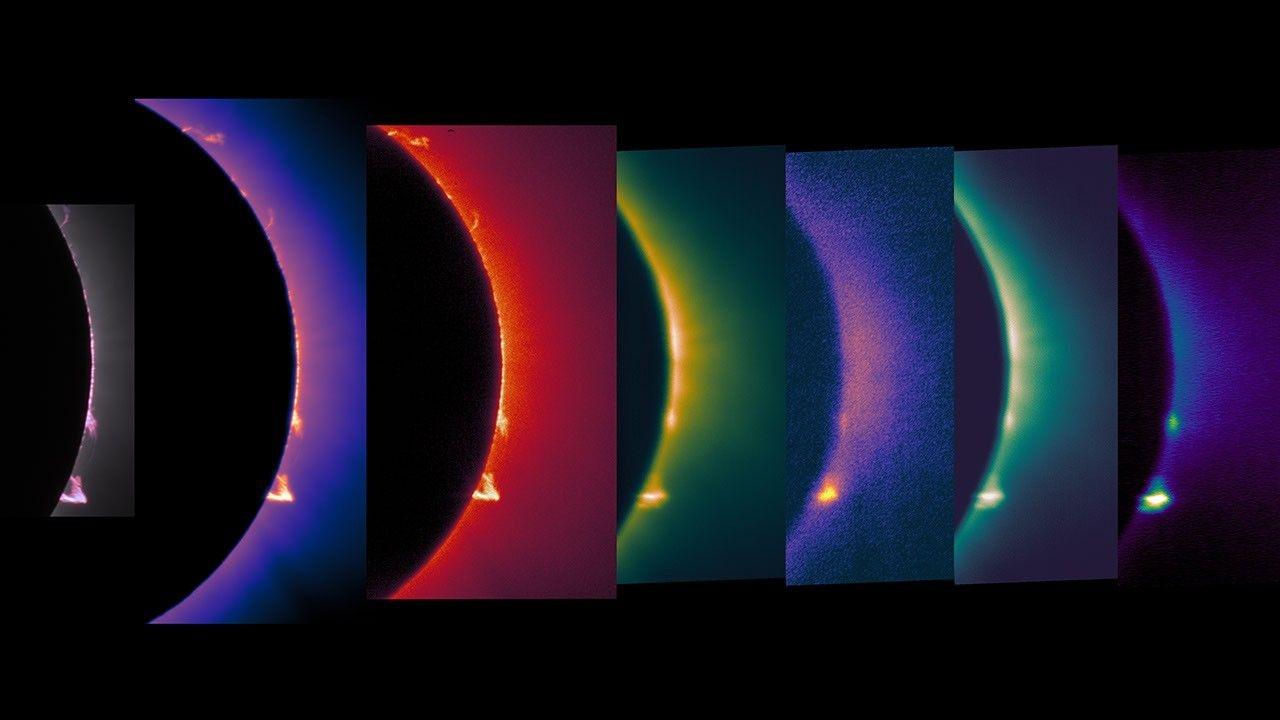
On August 12, 2026, a total solar eclipse will sweep across Greenland, Iceland, and Spain. NASA and international research teams are preparing high-altitude aircraft flights, scientific balloons, and global live broadcasts to study the sun’s corona and atmospheric boundary layers during the sudden midday darkness.
When the moon’s dark central shadow races across the Earth at 5,000 mph on Wednesday, August 12, 2026, it will create a total solar eclipse across Greenland, Iceland, Spain, northern Russia, and a small corner of Portugal, according to NASA. While millions of observers look to the skies for the spectacle, space agencies and university researchers are turning the temporary twilight into an ambitious scientific laboratory.
The event marks a rare European totality path. Iceland will experience its first total solar eclipse since 1954, SANA reported. Maximum totality during the eclipse will reach 2 minutes and 18 seconds over far western Iceland, while viewers in northeastern Spain will see shorter durations under two minutes.
NASA Airborne Missions and High-Altitude Jet Chases Over Iceland and Spain
To extend observation windows, NASA is deploying its WB-57 high-altitude research aircraft. The nose cone of the aircraft will house a suite of four cameras developed by the Scientifically Calibrated In-Flight Imagery team at NASA’s Langley Research Center, capturing at least 20 high-resolution images per second in visible and infrared wavelengths.


The instrument, known as the SCIFLI Multispectral Airborne Imager, or SAMI, previously flew during the April 8, 2024, total solar eclipse.
“The Sun is always changing. Every eclipse is different. So we could see things we didn’t see before.”
Amir Caspi, Southwest Research Institute, via Forbes
Scientists hope the observations will clarify solar prominence formation, the extreme temperatures of the corona, and the origin of the solar wind. From our unique perspective on Earth during a total solar eclipse, scientists can study the Sun’s corona in a way we can’t from anywhere else in the solar system,
said Kelly Korreck, eclipse program manager at NASA Headquarters.
International Science Teams Launching Balloons and Turboprop Flights
Beyond NASA’s jet, international partnerships are taking to the skies.
“We will try to measure magnetic field polarization to help us understand magnetic fields in the sun’s corona.”
Dr. Laura Hayes, Dublin Institute for Advanced Studies, via Forbes
Meanwhile, atmospheric research expands via the Nationwide Eclipse Ballooning Project led by Angela Des Jardins at Montana State University. Student teams from several U.S. universities will launch 86 scientific balloons across Iceland and Spain.
Global Broadcast Plans, Partial Visibility, and Safety Warnings
Eastern time on Wednesday, August 12, via NASA+ and social media platforms. Totality begins in Iceland at 1:45 p.m. ET and in Spain at 2:28 p.m. ET, with experts answering viewer questions online.
Partial phases will be visible across a broad expanse of the Northern Hemisphere, including parts of North Africa, Europe, and North America. Ohio will not see another total solar eclipse until 2099.
Astronomers and space agencies emphasize strict safety precautions. Because even a 99% eclipsed sun remains intense enough to cause permanent vision harm, viewers observing partial phases must use certified ISO 12312-2 solar viewers from trusted vendors, avoiding standard sunglasses entirely.
Keep reading