Forensic Reanalysis Rewrites the Final Moments of Incan Child Sacrifice
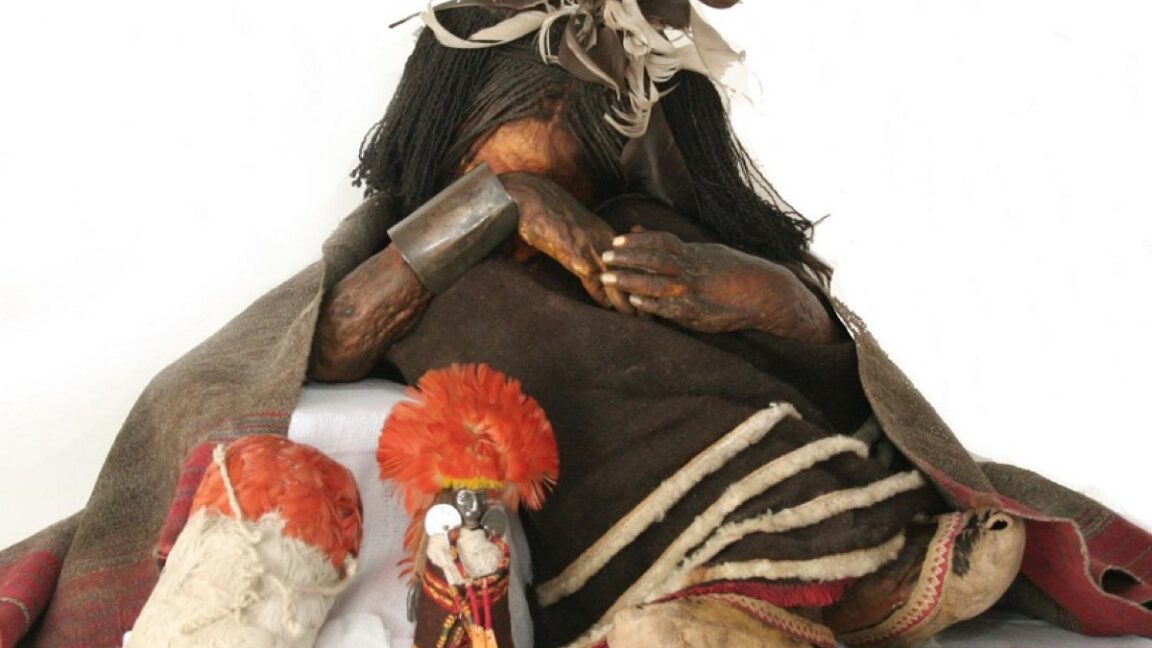
Modern forensic analysis is upending long-held assumptions about how the Inca Empire dispatched young victims in high-altitude rituals. According to a study published in the journal Science Advances, researchers reanalyzing the remains of a sacrificial Incan boy have concluded that he died from blunt force trauma rather than freezing to death, as was previously believed by historians.
The Inca Empire practiced a well-documented human sacrifice ritual known as Capachoca. Children were chosen as offerings to the mountains, believed to become divine intermediaries with the gods. Pilgrimages led to remote high-altitude sacrificial sites. Colonial-era chronicles recorded methods such as strangulation, asphyxiation, and blunt force trauma.
By applying modern forensic analysis to the preserved remains of the young victim, scientists revisited the physical evidence surrounding the event. The resulting paper in Science Advances provides a clearer picture of the final moments of the ritual participants, shifting the historical consensus away from hypothermia toward direct physical trauma as the cause of death.
Stellar Companions and Medici Autopsies
Beyond archaeological re-examinations, recent research has addressed longstanding puzzles in astronomy and medical history. Among these is new evidence regarding the red supergiant star Betelgeuse. Astronomers have gathered some of the strongest observational data to date indicating that the massive star is orbited by a companion star, a finding that helps explain variations in its behavior and luminosity.
In the realm of historical medicine, researchers also confirmed the exact cause of death for a prominent historical figure. Historical analysis determined that a Medici duke succumbed to malaria rather than foul play or poisoning, correcting centuries-old speculation and rumors surrounding his passing.
Archery in Antiquity and Cyborg Insect Engineering
Other studies in the recent research roundup turned to unexpected corners of history and biology. Investigators uncovered evidence showing that certain ancient Egyptian princesses were skilled archers, expanding our understanding of royal education and athletic capabilities in antiquity.
Meanwhile, in modern applied biology, engineers developed specialized miniature diving gear for cyborg cockroaches, creating functional prototypes designed to help robotic insects navigate flooded terrains.
Multidisciplinary Tools Upending Established Narratives
The application of advanced forensic, genetic, and observational tools continues to refine our understanding of both ancient artifacts and natural phenomena. Whether examining skeletal remains from Andean mountain shrines or tracking stellar motion light-years away, contemporary researchers rely on rigorous multidisciplinary frameworks.
Keep reading