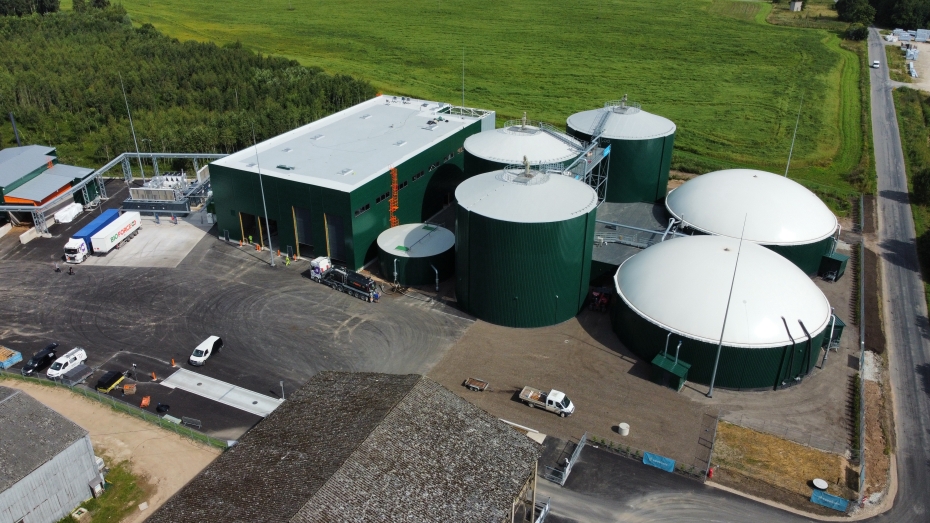
Bioforce has secured the largest investment in the Baltic biomethane sector to date, marking a major milestone for renewable energy development in the region. According to corporate announcements and regional business reports, the substantial capital infusion will directly fund the expansion of biomethane production facilities and infrastructure in Latvia, accelerating the country’s transition toward sustainable energy independence.
The record-breaking financial backing underscores a growing investor appetite for green infrastructure across Northern Europe. As natural gas markets face continued volatility, regional policymakers and industrial leaders increasingly view biomethane—a purified form of biogas derived from organic waste and agricultural residues—as an essential domestic alternative for heating, transport, and industrial power generation.
Bioforce’s latest strategic move builds upon established operations within the Baltic energy market, positioning the firm to scale up processing capabilities significantly. Industry analysts note that expanding domestic biomethane output not only cuts greenhouse gas emissions across the agricultural and transport sectors but also shields local economies from external energy shocks by diversifying national supply chains.
Scaling Biomethane Production in Latvia
The newly secured capital will channel directly into upgrading existing anaerobic digestion plants and constructing new processing units throughout Latvia. These technical enhancements allow raw biogas to be upgraded to high-grade biomethane, which can then be injected directly into the national natural gas grid or bottled for heavy transport fleets.
Industrial developers emphasize that Latvia possesses substantial untapped agricultural and forestry byproducts, making it an ideal landscape for sustainable fuel production. By capturing methane emissions that would otherwise escape from organic waste decomposition, the upgraded facilities effectively trap carbon and convert it into a valuable, circular-economy energy resource.
Local municipalities and farming cooperatives stand to benefit significantly from the expansion. Long-term supply agreements between renewable energy operators and agricultural producers create reliable secondary revenue streams for rural communities, turning organic waste management from a costly burden into an economic asset.
Regional Energy Security and Market Impact
Securing the largest investment in the Baltic biomethane sector reflects a broader regional push to align with European Union climate mandates. Under the European Green Deal and REPowerEU plans, member states face strict targets to ramp up sustainable biomethane production to 35 billion cubic meters annually by 2030, reducing reliance on imported fossil fuels.
Market observers point out that cross-border capital flows into Baltic green tech demonstrate robust confidence in regulatory stability and long-term purchase agreements within the region. Financial institutions syndicating the investment evaluated strict environmental governance standards, ensuring that feedstock sourcing adheres to stringent sustainability criteria that prevent competition with food crop production.
As engineering teams break ground on facility expansions, project timelines indicate that the newly funded infrastructure will come online in phases over the next several years. Stakeholders can track official planning filings, environmental impact assessments, and construction updates through the Latvian Ministry of Economics and corporate disclosures from Bioforce.
Related reading