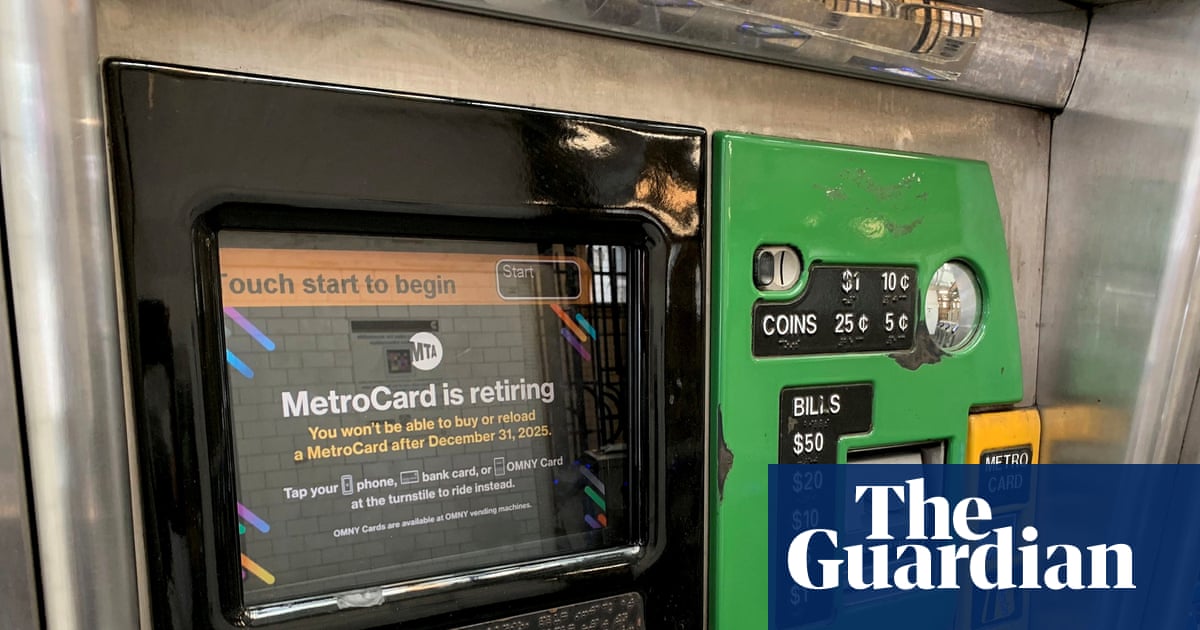
sports.yahoo.com City’s Metropolitan Transportation Authority has launched an online auction for sixty retired MetroCard vending machines as the transit agency transitions to the contactless OMNY fare system. Bidding runs through August 19, offering collectors and commuters a chance to own heavy metal terminals that served subway riders for decades.
The end of an era for New York City public transit has taken a literal turn toward home decor. The Metropolitan Transportation Authority opened an online auction for its final fleet of MetroCard vending machines on Wednesday morning, giving the public a rare chance to purchase the iconic metal fixtures before the city completes its permanent shift to digital fare collection.
The auction features a total of 60 retired machines collected from across the subway system, according to MTA media liaison Joana Flores. Bidding is scheduled to run through August 19. The inventory includes both of the transit network’s primary terminal models: the larger floor-standing units and the streamlined express machines that once lined bustling platforms to speed up transaction times.
Inside the Heavy Metal Inventory Up for Grabs
The larger units, officially designated as MetroCard Vending Machines, were first installed in 1999 and allowed riders to purchase and reload cards using cash, credit, and debit options. They measure 80 inches long, 42 inches wide, and 36 inches deep, scaling a staggering 1,050 pounds.
By contrast, the smaller MetroCard Express Machines were introduced later to ease station congestion by processing only credit and debit transactions. These compact boxes measure 21 inches long, 14 inches wide, and 42 inches tall, weighing a much more manageable 210 pounds.
The MTA is selling all units in as-is, non-operational condition. Technical crews have already removed their electronic and payment processing components. Winning bidders must pay in full on the day they receive notification and arrange pickup within ten days, taking full responsibility for loading and transporting the heavy steel fixtures.
The final remaining public-facing machine sits in Greenwich Village at Mulry Square, where it now displays a QR code directing curious commuters to the online bidding platform.
From Tokens to Magnetic Stripes and the Rise of OMNY
The retirement of the vending machines marks another chapter in the quiet burial of the blue and yellow plastic cards that defined New York commuting for decades. The transit authority announced that the agency will stop selling MetroCards entirely, forcing riders to transition to OMNY, the contactless tap-and-ride system. Existing MetroCards will remain accepted at turnstiles for a transitional period, with a final cutoff date to be announced later.
The MetroCard itself arrived in 1994, replacing the classic subway tokens that had anchored the city’s transit system since 1953. Richard Ravitch, then the commissioner of the MTA, first championed the magnetic stripe stored-value card in 1983.
While the transition promised to modernize the system, it did not eliminate fare evasion. Noah McClain, a sociology professor who studies transit technology, noted that early hopes that magnetic cards would spell the death knell for fare evasion
Noah McClain, sociology professor quickly gave way to new loopholes. Clever operators known as swipers
sold bent cards to bypass turnstiles, while hackers successfully reverse-engineered the system’s magnetic encoding.
Still, riders embraced the flexibility the cards provided. Unlike the old tokens, MetroCards offered discounted fares for seniors, students, and disabled passengers, alongside free transfers between buses and subways with a single swipe.
Collector Culture and Cultural Cachet of the MetroCard
Beyond utility, the magnetic cards were deliberately engineered to be collectible. The MTA released its first commemorative limited-edition card the same year the system launched, eventually issuing roughly 400 distinct promotional and historic editions. Over the decades, the cards featured cultural icons including David Bowie, the Wu-Tang Clan, the Notorious B.I.G., and Olivia Rodrigo, alongside television mainstays like Seinfeld
and Law & Order
.
That nostalgic pull has translated directly into heavy interest in the current hardware auction. Social media users have responded to the MTA’s announcement with enthusiasm, describing the terminals as a wild home decor idea
Social media user. Even public figures weighed in, with NPR gameshow host Peter Sagal writing online that he has not lived in New York since 1998 but still wants to acquire a machine.
For those who miss out on the digital auction, the MTA is hosting a public sweepstakes running alongside the sale. Fifteen random winners will receive VIP early access and a 20 percent discount at the agency’s annual transit memorabilia pop-up sale in October. If, let’s say, there isn’t enough interest during the auction, and we do have MetroCard vending machines at the end of 19 August, then we would just put them up for sale at the pop-up sale,
Flores said. But usually, these things are hot ticket items – they tend to go fast.
Keep reading