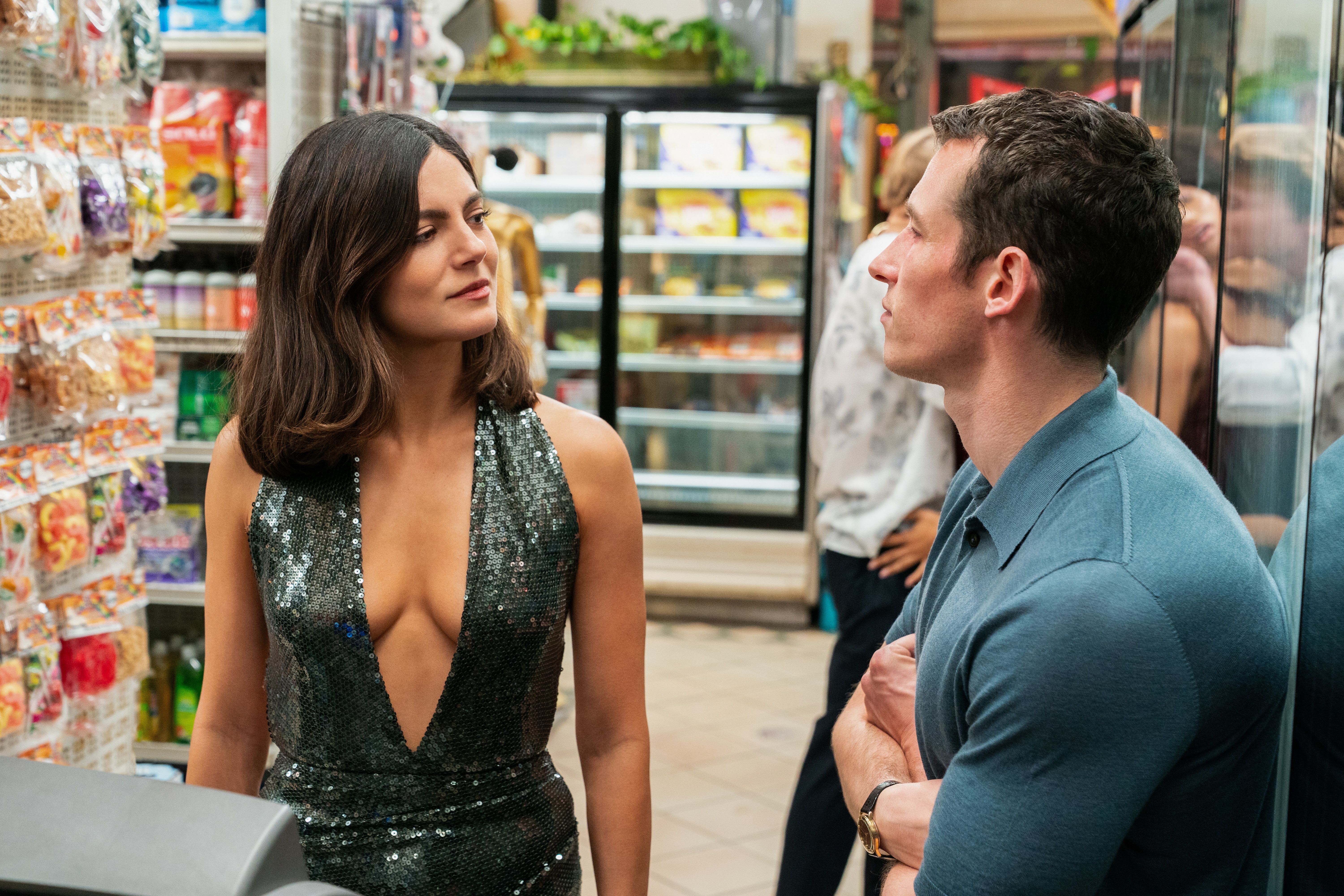
The romantic comedy One Night Only, directed by Will Gluck, explores the intersection of government-mandated intimacy and the chaotic reality of modern dating. Set in a dystopian New York City where unmarried citizens are legally permitted to engage in sexual activity on only one designated night per year, the film examines the tension between state-imposed restrictions and the fundamental human desire for connection. The premise, while intentionally absurd, serves as a backdrop for a narrative focused on the unintended consequences of social engineering in an urban environment.
The film centers on Owen, a pizza shop manager portrayed by Callum Turner, and Allie, a singer played by Monica Barbaro. Their paths cross amidst the frantic, high-stakes atmosphere of the city’s singular night of legal premarital intimacy. According to the film’s narrative structure, the government’s stated justification for the policy centers on the promotion of family values, though the plot suggests the underlying intent is the broader curtailment of individual freedom and public expression.
Following the 2023 release of Anyone But You, which also starred Glen Powell and Sydney Sweeney and was directed by Gluck, One Night Only arrives as a departure in genre tone while maintaining a focus on contemporary relationship dynamics. The script, written by Travis Braun, utilizes the scarcity of resources—specifically the extreme difficulty in obtaining contraception—as a narrative device to heighten the urgency of the characters’ pursuit of connection. In one notable scene, a condom becomes a focal point of the plot, treated as a rare, highly protected commodity that underscores the satirical nature of the film’s premise.
The Dynamics of a Dystopian New York
The film’s portrayal of New York City emphasizes the juxtaposition of its architectural history with a restrictive political climate. Rather than focusing exclusively on the city’s elite, the cinematography highlights the use of public transit and underrepresented locations, such as the Little Red Lighthouse in Washington Heights. This choice of setting serves to ground the fantastical premise in a recognizable, albeit stylized, version of the city. The production design incorporates both the decay of urban infrastructure and the persistence of independent small businesses, providing a visual argument for the endurance of human connection in the face of institutional pressure.
The character of Allie, played by Monica Barbaro, acts as a primary through-line for the film’s emotional stakes. Barbaro, who previously appeared as Joan Baez in the 2024 film A Complete Unknown directed by James Mangold, brings a grounded performance to the role of a musician whose personal plans are consistently disrupted by the evening’s events. Her interactions with supporting characters, including her roommate played by Quintessa Swindell, provide context for the city’s social stratification. Swindell’s character notes that the city’s gay population has historically operated outside the boundaries of these specific mandates, offering an alternative perspective on the government’s control over personal life.
Character Arcs and Narrative Conflict
The relationship between Owen and Allie is defined by a series of failed romantic encounters with other individuals throughout the evening. Owen, initially reeling from his girlfriend’s—played by Maya Hawke—decision to pursue a different partner during the restricted window, experiences several misadventures, including a strained interaction involving alcohol and an arduous journey to Brooklyn Bridge Park. Allie’s own trajectory involves a series of unsuccessful dates, including an encounter with a character played by Andrew Burnap, whose apartment features significant art pieces that contrast with her current professional struggles.
The conflict between Owen and Allie is driven by a mutual, evolving frustration that mirrors the broader unpredictability of the city. Their character development relies on a “slow-burn” dynamic, where initial disgust—triggered by a comedic mishap involving the pair—gradually yields to a shared understanding of their circumstances. The film’s pacing is maintained by these episodic reunions, which force the leads to confront their own expectations of romance versus the reality of their environment.
Production and Thematic Significance
The film’s thematic focus on “sex and the city” serves as both a nod to the genre’s tropes and an exploration of how societal rules influence behavior. By framing the search for a partner as a high-stakes, time-limited event, the film highlights how economic and social pressures—ranging from the cost of living to the influence of corporate chains—impact the way younger generations approach romantic coupling. The inclusion of specific cultural markers, such as the reference to Hildegarde Swift’s 1947 book The Little Red Lighthouse and the Great Gray Bridge, reinforces the film’s attempt to link the city’s past with a speculative future.
While the film uses a dystopian setup to drive its plot, its conclusion remains rooted in the conventions of the romantic comedy genre, emphasizing the persistence of individual choice over state mandates. As the narrative progresses, the characters move from passive participants in a government-controlled event to active agents in their own lives, suggesting that even within a restrictive system, the unpredictability of human attraction remains a primary force.
- Spokane Complex Fire: 1,500 Firefighters Battle Blaze That Destroyed 850 Structures
- Olivia Wilde, Cooper Hoffman, and Charli XCX Star in New Indie Film Exploring Gen Z vs. Millennial Desire
- A Night Out In Naples Wine Pairing Dinner At Sails (newsdirectory3.com)
- Why Mosquito Bites Itch More at Night (daybreakwire.com)