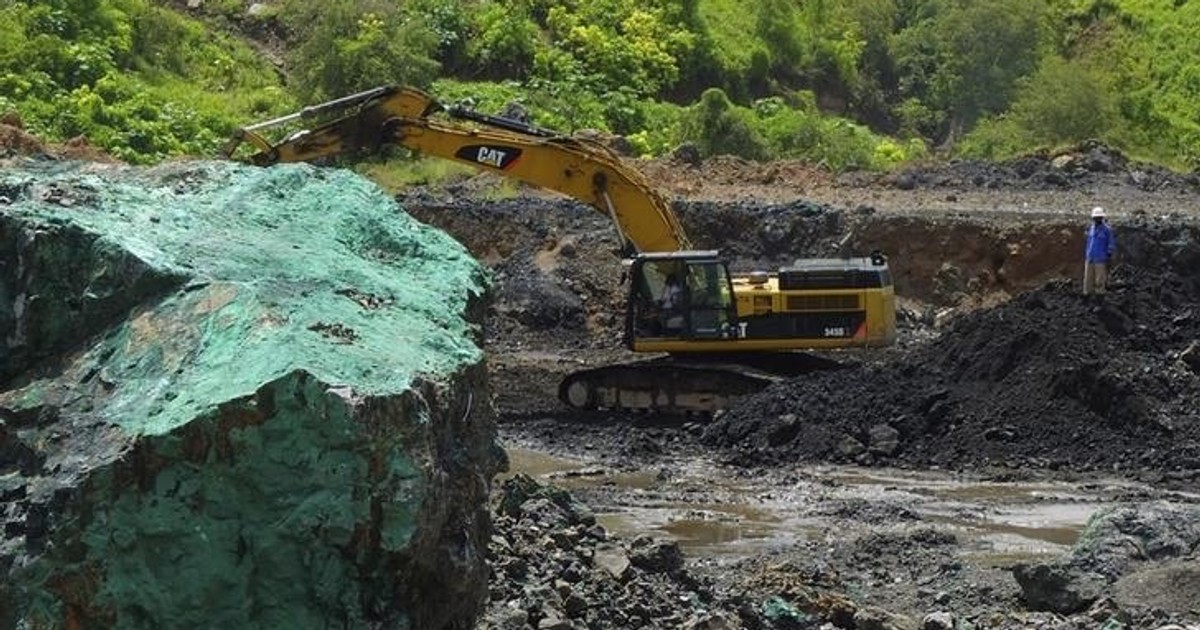
The Union of Chinese-Capital Mining Companies in the DR Congo rejected claims that its cobalt exports contain excessive uranium, following a government ban on raw concentrate shipments designed to boost local processing and retain a larger share of the nation’s $24 trillion in mineral wealth.
A brewing minerals standoff in the Democratic Republic of Congo has drawn sharp pushback from international operators after the government moved to halt raw material exports. The Union of Chinese-Capital Mining Companies in the DRC, known as the USMCC, issued a statement addressing market disruptions and allegations surrounding the mineral-rich Central African nation’s export streams.
Chinese Mining Association Denies Uranium Claims in Exported Cobalt
The USMCC rejected assertions that cobalt products originating from Chinese-operated mines in the southeastern region carry excessive levels of radioactive material. According to the association’s statement, the allegations have disrupted commercial activity and created unfounded market anxiety.
The organization acknowledged that normal production of cobalt hydroxide can involve minute, natural traces of uranium. However, mining analysts and industry representatives maintain that these concentrations fall well short of commercial viability. There are no economic or technical conditions for recovering, extracting or exploiting this uranium,
the USMCC stated, emphasizing that the trace elements do not alter the classification of the material as standard cobalt.
Major Chinese firms operating across the region include CMOC Group, Zijin Mining, and Zhejiang Huayou Cobalt. To maintain regulatory compliance, the association pledged to implement regular product sampling and publish ongoing quality-control findings.
Kinshasa Enforces Strict Export Bans on Copper and Cobalt Concentrates
The uranium dispute coincides with a broader regulatory overhaul by the Congolese government. A sweeping administrative order immediately prohibits exports of copper and cobalt concentrates, replacing a 2023 regulatory framework. The policy aims to compel mining operators to process raw materials domestically.
Official figures highlight the vast scale of the country’s mineral output and its reliance on foreign trade. The DRC stands as the world’s leading cobalt producer and Africa’s top copper producer, holding unexploited mineral reserves valued at roughly $24 trillion. These metals remain critical components for electric vehicles, electrical grids, and global electronics.
While the export prohibition affects all companies producing concentrates, the nation’s Minister of Mines retains the authority to issue one-year strategic waivers. The policy specifically targets unrefined concentrates—products generated after raw ore is crushed and washed to remove waste rock—rather than fully finished metals like copper cathodes. Official trade data shows the country exported 696,725 tonnes of locally processed copper cathodes during the first quarter of 2026, compared to just 53,926 tonnes of raw copper concentrate.
Global Mining Giants and Regional Transport Networks Face Immediate Disruption
The export restrictions extend far beyond Chinese enterprises, impacting multinational operators across North America and Europe. Switzerland-headquartered Glencore, Canada-based Ivanhoe Mines, and the Luxembourg-based Eurasian Resources Group must now adapt their supply chains to comply with the domestic processing mandate.
Operations such as the Kamoa-Kakula copper complex—co-owned by Ivanhoe Mines, Zijin Mining, and the Congolese state—face immediate exposure because portions of their output still rely on export exemptions. Furthermore, transport corridors moving materials from Congolese mines through Zambia, Angola, and South Africa are adjusting to the sudden policy shift.
Alongside the concentrate ban, the government introduced a three-month transition window for a new tax regime governing mining by-products. According to Reuters reporting cited by Business Insider Africa, the framework applies a 55% valuation coefficient to ensure the state captures greater fiscal value from ancillary minerals.
A Broader African Movement Against Raw Material Exports
The DRC’s aggressive shift mirrors a continent-wide push to stop the export of unrefined natural resources. Governments across Africa are increasingly restricting raw shipments to foster domestic manufacturing, create local jobs, and retain profits within their borders.
As these nations build a unified economic strategy around resource nationalism, the focus shifts to how Kinshasa’s mineral ministry will administer strategic waivers and whether domestic refineries can absorb the massive volumes of raw copper and cobalt previously shipped abroad.
Worth a look