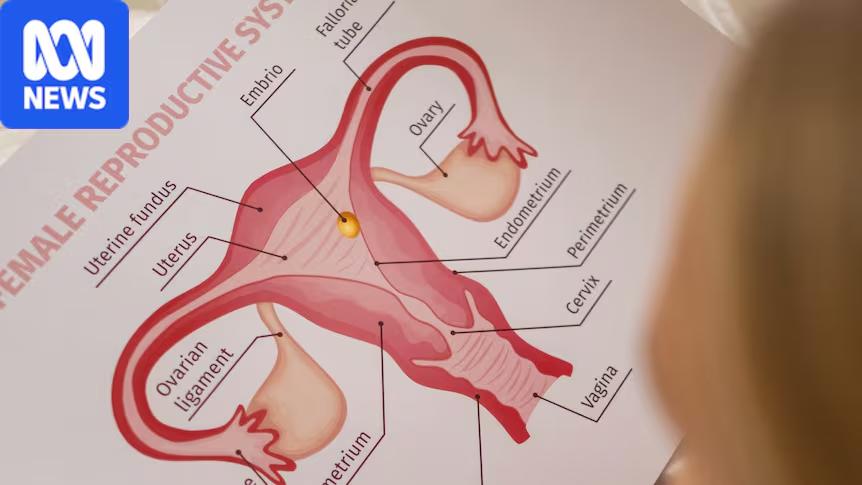
After a 14-year global consensus process spanning 22,000 survey responses, polycystic ovary syndrome (PCOS) has been officially renamed polyendocrine metabolic ovarian syndrome (PMOS). Announced at the European Congress of Endocrinology in Prague, the change addresses decades of diagnostic confusion by shifting clinical focus from ovarian cysts to systemic hormonal and metabolic imbalances.
The condition, which affects an estimated 170 million women worldwide according to reporting published in The Lancet, has long carried a label that clinicians and patient advocates describe as misleading. Helena Teede, director of the Monash Centre for Health Research Implementation and leader of the renaming initiative, stated that the previous terminology reduced a lifelong systemic condition to a simple misunderstanding about ovarian morphology.
“It might sound like it’s just a simple name change, but it’s seriously not. Not only will it move away from that inaccurate cyst implication and the focus on the ovaries, it will actually get people to understand the broader nature of the condition, that it is an endocrine or hormonal imbalance condition. It will validate what a lot of women know and experience.”
Helena Teede, director of the Monash Centre for Health Research Implementation, via ABC News
Why the Monash University Consensus Dropped the Cyst Focus
The multinational consensus process drew on input from 56 patient and professional organizations over 14 years. A central driver for the terminology shift was recent peer-reviewed data co-authored by Professor Teede, which demonstrated that women diagnosed with the syndrome do not actually experience a higher rate of abnormal ovarian cysts than the general population as detailed in public health reporting.
Terhi Piltonen, lead author of the cyst study and professor of obstetrics and gynaecology at Finland’s University of Oulu, emphasized that the reclassification aims to transform clinical encounters. With the name change we hope to capture better the true nature of the syndrome, involve more health professionals to identify the affected persons and take better care of them
noted Professor Piltonen, pointing to the need for broader medical engagement beyond reproductive specialists.
Despite the new nomenclature, diagnostic thresholds remain anchored to established parameters. Under both past and current guidelines, patients qualify for a diagnosis when presenting with at least two of three criteria: irregular menstrual cycles or absent ovulation, elevated levels of androgens causing physical signs like hirsutism and acne, or ultrasound findings showing 20 or more antral follicles as outlined in clinical criteria. However, expert panels indicate that future clinical guidelines may downgrade the routine reliance on pelvic ultrasound for cyst detection given the recent epidemiological findings.
Systemic Metabolic Risks and Insulin Resistance Complications
While the reproductive features of PMOS—such as subfertility, oligo-amenorrhoea, and pregnancy complications—frequently prompt initial medical evaluation, the long-term health trajectory of affected individuals is heavily defined by cardiometabolic comorbidities.

According to genetic and epidemiological data examined in national biomedical repository studies, the intersection of obesity and hormonal dysfunction significantly accelerates systemic disease progression. Patients face heightened vulnerability to impaired glucose tolerance, dyslipidemia, non-alcoholic fatty liver disease, and obstructive sleep apnea.
| Metabolic Comorbidity | Estimated Prevalence in Affected Populations |
|---|---|
| Insulin Resistance | 50% – 80% |
| Prediabetes by Age 40 | Up to 35% |
| Type 2 Diabetes by Age 40 (Overweight Patients) | About 10% |
| Obstructive Sleep Apnea | About 20% of adults |
Genetics and clinical data compiled by MedlinePlus Genetics establish that about half of all individuals with the condition are overweight or obese. By age 40, roughly 10 percent of overweight women with the disorder develop type 2 diabetes, while up to 35 percent develop prediabetes. Furthermore, chronic hormonal irregularities elevate the long-term risk of endometrial cancer through continuous stimulation of the uterine lining.
Patient Advocacy and the Push for Earlier Clinical Intervention
For individuals navigating the healthcare system, the shift from a gynecological label to a metabolic one carries profound personal and practical implications.

Medical adoption of the PMOS nomenclature is expected to proceed gradually across global health institutions as educational materials, diagnostic manuals, and clinical practice guidelines are updated to reflect the consensus framework.