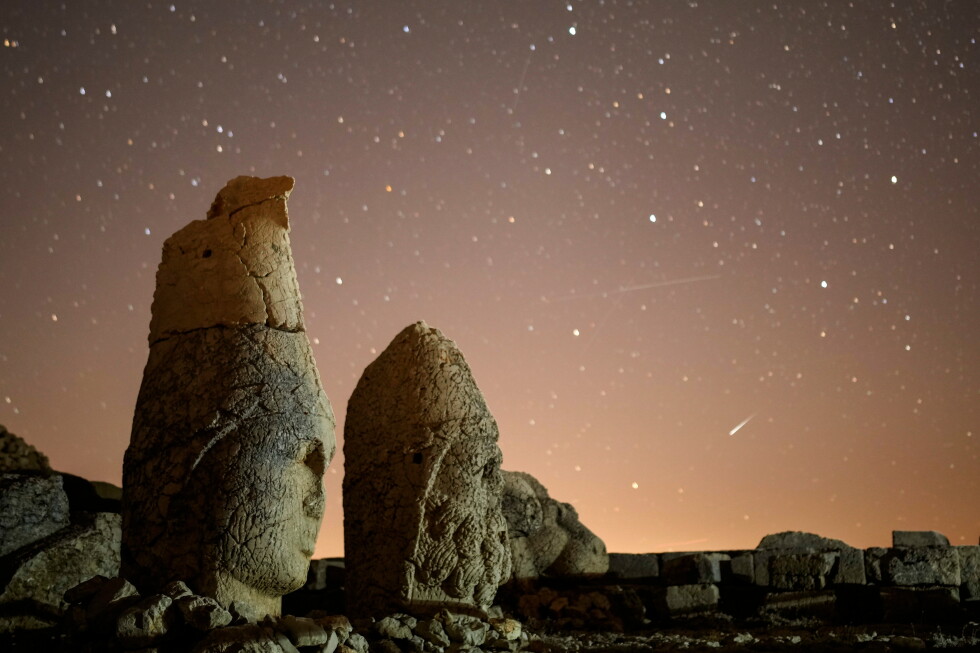
The annual Perseid meteor shower is building toward its peak on the night of August 12 into the morning of August 13, with astronomers forecasting some of the best viewing conditions seen since 2018, according to CNET. The celestial event coincides with a new moon phase, ensuring dark skies throughout the night without competing lunar glare to wash out fainter shooting stars.
Perseid Meteor Shower Peak Forecast to Deliver Best Viewing in Years
According to Apnews, the meteor shower’s peak also aligns with a total solar eclipse across Spain, Iceland, and Greenland, as well as a six-planet parade, though the finest fireball viewing occurs after totality. The shower itself is active from July 17 through late August, with rates climbing steadily as Earth moves deeper into the debris stream.
Understanding the Science Behind the Perseids
The Perseids are generated when Earth plows through a trail of ice, dust, and pebbles left behind by comet 109P/Swift-Tuttle. This icy body measures 16 miles across—twice the size of the asteroid theorized to have killed the dinosaurs—and orbits the sun every 133 years, with its next return not scheduled until 2125, as reported by CNET.
As Earth intersects this debris, the remnants collide with the atmosphere at extreme speeds. According to a spokesperson for NASA, quoted by Global News, these bits of debris enter the atmosphere at a swift 59 kilometers per second, vaporizing at altitudes of 80 to 90 kilometers. Doug Welch, professor emeritus of physics and astronomy at McMaster University, noted to CNET that the brilliant streaks and long tails characteristic of Perseid meteors are actually superheated air created as the meteoroid exerts enormous pressure on air molecules in its path.
Observations of the Perseids date back over 2,000 years, and the shower remains a perennial favorite because summer temperatures allow observers to comfortably spend hours outdoors. Under ideal dark-sky conditions, NASA estimates that between 50 and 100 meteors per hour may be visible.
Optimal Viewing Times and Strategies
To maximize the experience, experts recommend heading away from city lights into rural, dark-sky regions. Pierre Langlois, manager for space astronomy and planetary science missions at the Canadian Space Agency, noted in coverage by Global News that viewers must be patient, stating, You have to be patient, but it’s a great spectacle if you’re lucky to be in a region where you can see it.

The best viewing window runs from midnight to dawn, or between 10 p.m. and 2 a.m., when the constellation Perseus climbs higher in the northern and northeastern sky, and the radiant point is positioned favorably overhead. Observers should look toward the northern or northeastern sky and give their eyes at least 30 minutes to adapt to the dark.
Astronomers offer several practical tips for watching the shower:
- Find a dark site away from urban light pollution and clouds.
- Lie on your back and focus on a single patch of sky to catch quick streaks in your peripheral vision.
- Avoid looking at cell phone screens, as bright light ruins night vision.
- No special telescopes, binoculars, or eye coverings are required for the meteor shower.
Aparna Venkatesan, an astronomer with the University of San Francisco, highlighted the benefit of the lunar cycle, telling Apnews, New moon means we don’t have moonlight flooding the sky, and you tend to see way more meteors as a result.
Zach Vanderbosch, an astronomer at the McDonald Observatory in Texas, added, There’s just something magical about it.
Worth a look