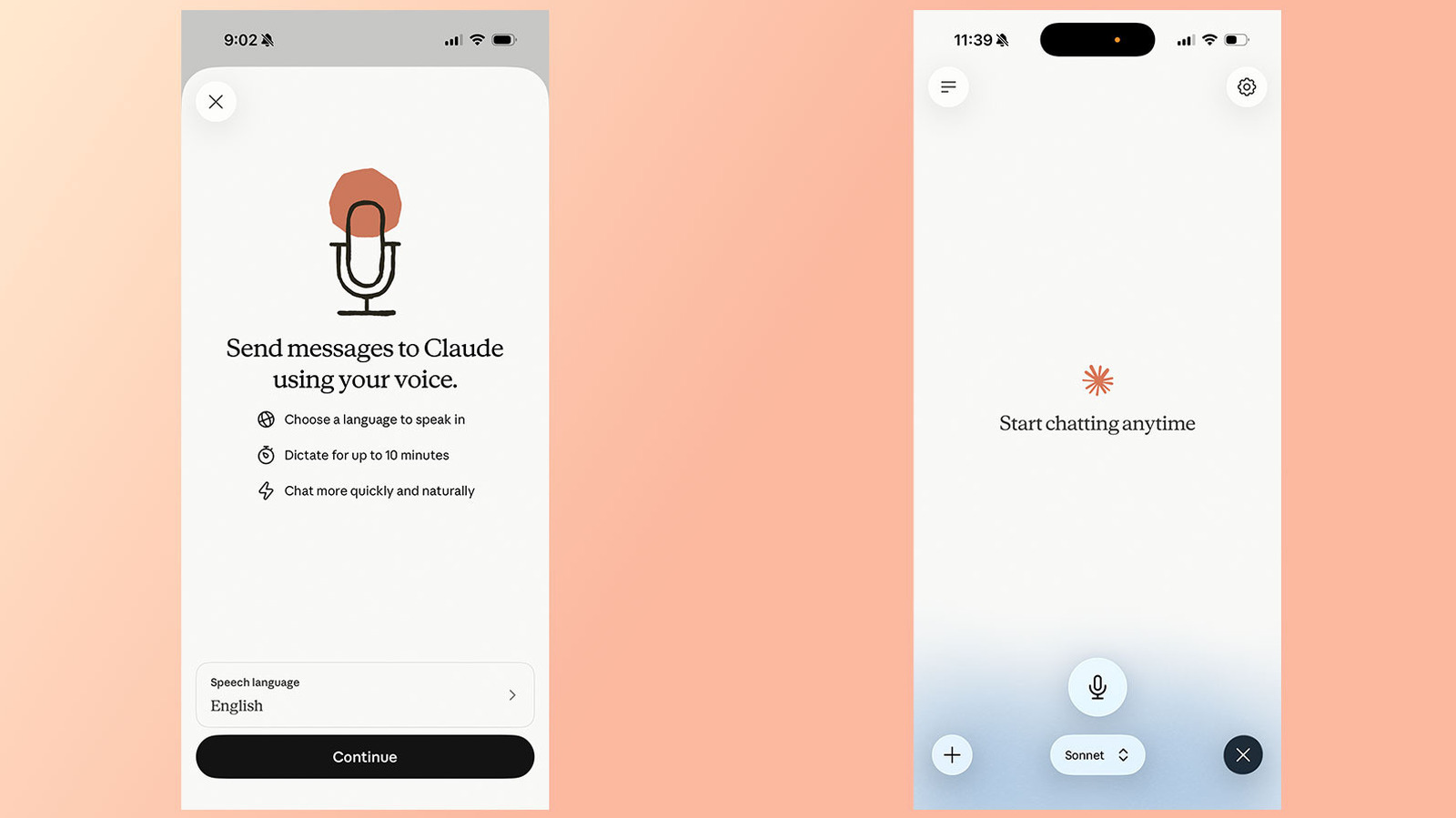
Opus and Sonnet Bring Advanced Reasoning to Voice
Anthropic has expanded its conversational artificial intelligence software by making its more capable Opus and Sonnet models available in voice mode across multiple platforms, according to reporting by The Verge. The rollout marks a significant shift from the company’s initial release, which restricted voice capabilities solely to its faster yet less powerful Haiku model.
When Anthropic first introduced voice capabilities, the feature focused primarily on rapid replies to brief queries with minimal delay. However, company blog posts cited by The Verge indicate that users quickly sought deeper functionality, pushing the software to help navigate intricate business problems. Because the Haiku model was built for speed rather than comprehensive reasoning, it kept exchanges brief rather than analytical. The addition of Sonnet and Opus bridges that gap by offering advanced problem-solving tools and multi-step execution.
Fluid Multimodal Switching and Productivity Integrations
The updated system allows users to switch fluidly between text and voice modes mid-conversation, as well as toggle between underlying models. For instance, a user might initiate a quick brainstorming session using the faster model, then transition to Opus to flesh out a detailed project strategy. Furthermore, Anthropic has extended the feature’s integration into productivity tools such as Gmail, Slack, and Canva, enabling the software to draft pitches or adjust calendar entries based on spoken prompts.
Broadened International Availability
Alongside model upgrades, the company broadened language availability for voice interactions. While non-English languages were previously restricted to beta status, the feature now supports French, German, Spanish, Hindi, Indonesian, Italian, Japanese, Korean, and Portuguese, according to The Verge.
Cross-Platform Navigation and Hardware Flexibility
Technical guidance outlined in the Claude Help Center details how users can operate the feature across web browsers, desktop applications, and mobile devices running iOS or Android. The platform supports both hands-free operation and a push-to-talk mode, giving individuals control over when the assistant listens. Users can also select distinct voice profiles, manage connected tools, and rely on built-in safety filters designed to handle audio inputs securely.
Complex Workflows and Enterprise Deployment
The ability of Sonnet and Opus to process complex scenarios allows for practical workflows that extend beyond basic dictation. Users can talk through logistics, convert spoken dialogue into structured documents, or delegate administrative updates while away from a keyboard.
Users interested in trying the updated voice capabilities can access the feature through supported mobile applications or desktop environments by checking their model settings and selecting their preferred language preference. Organizations and enterprise administrators seeking specific deployment controls should consult official documentation for platform-level management guidelines.
Related reading