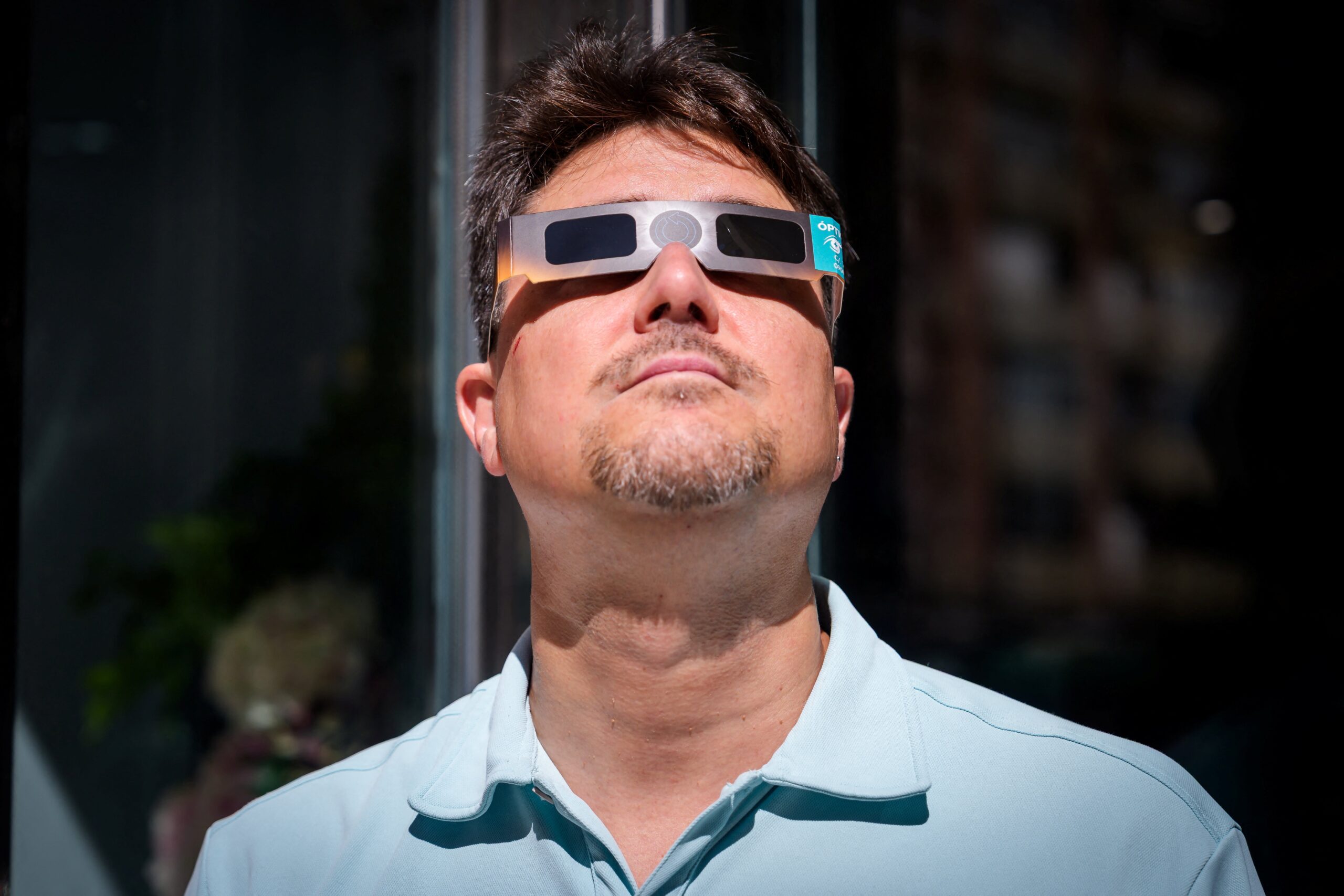
A celestial event will take place on Wednesday, August 12, 2026, when the moon passes in front of the sun and casts its shadow across the Northern Hemisphere, according to NASA. While a total solar eclipse will follow a narrow path of totality across parts of the Arctic and Europe—including eastern Greenland, western Iceland, and northern Spain—observers in North America will experience a partial eclipse, as reported by Forbes.
Partial Solar Eclipse Scheduled for August 12, 2026
According to USA Today, the moon’s central dark shadow, known as the umbra, will miss North America entirely. However, the wider outer shadow, or penumbra, will sweep across northern parts of the continent. This phenomenon will be partially visible across 26 U.S. states and Washington, D.C.
Viewing Locations and Coverage Across U.S. States
Viewing times and coverage levels will vary significantly by location. According to Forbes, Alaska will experience the deepest U.S. view, with about 37% of the sun covered in Fairbanks at 8:27 a.m. AKDT, while USA Today notes that overall coverage in Alaska can reach more than 20% across areas. In the contiguous United States, Maine will receive the strongest view, reaching about a 28% partial eclipse at around 1:50 p.m. EDT.
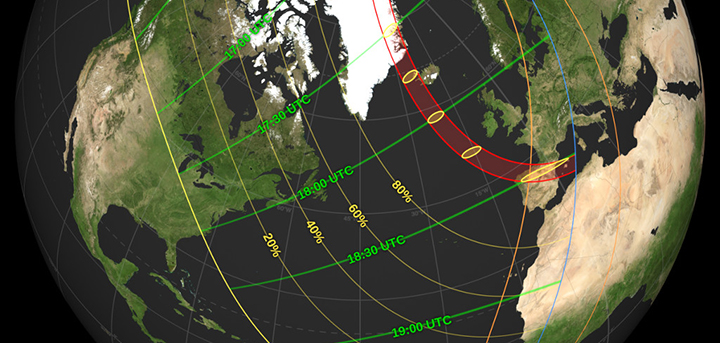
Various cities in New England and New York will see between 10% and 20% maximum coverage. For example, Norwich, New York, will experience about 10% obscurity in the afternoon between 1:00 p.m. and 2:30 p.m., creating a view that The Evening Sun | Chenango County, NY's Hometown Newspaper describes as the moon taking a bite out of the solar disk. Other specific regional measurements include Montpelier, Vermont, seeing a 17% partial eclipse at 1:49 p.m. EDT, and Harrisburg, Pennsylvania, seeing a 6% partial eclipse at 1:50 p.m. EDT.
The complete list of 26 states and the district where the partial eclipse will be visible includes Alaska, Connecticut, Delaware, Illinois, Indiana, Iowa, Kentucky, Maine, Maryland, Massachusetts, Michigan, Minnesota, Montana, New Hampshire, New Jersey, New York, North Carolina, North Dakota, Ohio, Pennsylvania, Rhode Island, South Dakota, Vermont, Virginia, Washington D.C., West Virginia, and Wisconsin.
Safety Guidelines for Viewing the Partial Eclipse
Because the moon does not completely block the sun during a partial solar eclipse, experts warn that it is never safe to look directly at the sun without proper eye protection. According to USA Today and The Evening Sun | Chenango County, NY's Hometown Newspaper, viewers should use certified solar eclipse glasses that comply with the international standard ISO 12312-2 and are thousands of times darker than ordinary sunglasses. NASA advises inspecting any previously used viewers, such as those saved from the 2024 eclipse, and discarding them if damaged.

Using a camera lens, telescope, binoculars, or other optical devices without a special-purpose solar filter is dangerous, as solar rays can burn through the filter and cause serious eye injury. Individuals using optical devices are advised by The Evening Sun | Chenango County, NY's Hometown Newspaper to seek expert advice from an astronomer before attaching any solar filter.
For those without safe eyewear, indirect viewing methods can be used. A pinhole projector can be easily constructed at home using a cardboard box, white sheet of paper, tape, scissors, and aluminum foil or tinfoil to project an image of the sun onto a nearby surface.
Keep reading
- Reduce Screen Time with Brick: Limited-Time Sale Now On!
- Swiss Model Tamy Glauser Accuses SBB Employee of Assault in Zurich
- Tariff vs. Price Floor: What Trump's New Solar Rule Does (daybreakwire.com)
- Octopus Energy Offers Free Electricity to Customers Who Cut Usage During Solar Eclipse (world-today-news.com)