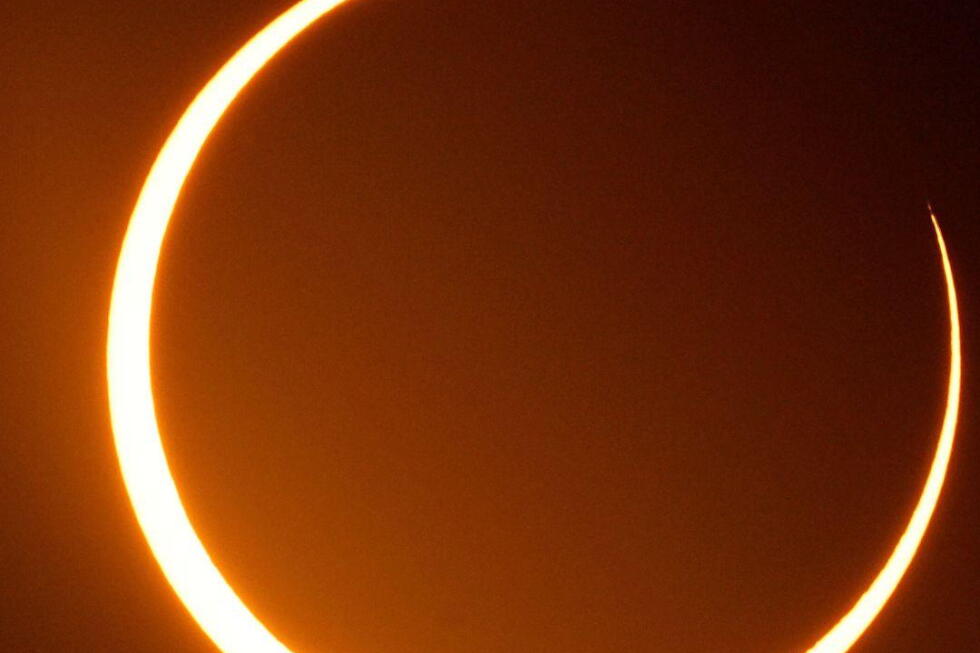
Millions across Europe are preparing to witness a rare total solar eclipse on August 12, 2026. The phenomenon will plunge a narrow band of the planet into brief twilight, with prime viewing conditions anticipated across parts of Spain, Iceland, and Greenland, alongside widespread partial visibility.
Astronomy enthusiasts and travelers are already planning their routes for the upcoming total solar eclipse scheduled for August 12, 2026. This astronomical event will create a narrow path of totality where the Moon completely obscures the Sun, turning day into a brief crepuscular twilight and revealing the solar corona.
Path of Totality Across Europe and the Arctic
The path of totality begins over the Arctic Ocean before tracking across eastern Greenland, western Iceland, and northern Spain, eventually crossing the Balearic Islands and ending over the Mediterranean Sea. According to reporting from Space.com, the zone where the total eclipse will be visible will have an approximate width of 293 kilometers (182 miles). People within that strip will experience how day briefly turns into twilight and will be able to observe the solar corona, the outermost layer of the Sun, when the Moon covers it completely.
Outside this narrow corridor, a much broader geographic region will experience a partial eclipse, where the Moon will appear to “bite” the Sun. Observers throughout the United Kingdom, Ireland, France, Germany, Italy, and Scandinavian countries—in addition to other areas of Europe—will watch the Moon take a partial portion out of the solar disk.
Viewing Conditions in Spain, Iceland, and Greenland
Spain offers distinct geographic advantages for spectators. Experts consider northern Spain to be one of the favorite destinations for astronomy fans, noting that besides being an easily accessible location, the eclipse will occur with the Sun very low on the horizon near sunset, which could offer spectacular images. The event marks the first total eclipse visible from peninsular Spain since 1912, according to the Instituto Geográfico Nacional (IGN), prompting thousands of people to prepare plans to watch it.
In contrast, Greenland and Iceland provide a completely different experience. Specialists note that in those places, the total eclipse will happen with the Sun higher in the sky, using the characteristic Arctic landscapes of both regions as a backdrop.
Exact Timings and Regional Breakdown in Spain
Although the eclipse will be visible throughout the country, not all areas will experience the same event, as only the narrow strip crossing the peninsula from northwest to east and reaching the Balearic Islands will see the Sun completely covered, while the rest of the territory enjoys a partial eclipse with varying percentages of obscuration. The eclipse cycle across the Spanish peninsula starts around 19:30 hours on August 12, 2026, when the Moon begins slowly covering the solar disk.

Cities situated inside the core band of totality—including A Coruña, Lugo, León, Burgos, Palencia, Valladolid, Logroño, Soria, Zaragoza, and Oviedo—will see the totality arrive approximately between 20:28 and 20:31 hours, depending on the exact location.
Other major capitals like Madrid, Bilbao, Santander, Pamplona, Segovia, Ávila, and Salamanca fall outside the strict totality path, meaning the eclipse will be partial there, although in some cases the obscuration will exceed 99%, delivering a spectacle very similar to that of the totality zone. The entire phenomenon will conclude between 21:00 and 21:20 hours, practically coinciding with sunset.
Safety Protocols and Smartphone Photography Challenges
Specialists remind the public that it is never safe to look directly at the Sun without proper protection. Observers must wear certified eclipse glasses or use specialized solar filters for telescopes, binoculars, and cameras during all partial phases. Removing eye protection and viewing the phenomenon directly is safe exclusively during the brief moments of totality when the Moon completely covers the Sun. Once any part of the solar disk appears again, wearing protection is mandatory to prevent permanent vision damage.
Capturing the event introduces distinct hurdles. Millions of people will get to experience—and film or photograph—the rare total solar eclipse, but an eclipse poses unique challenges for photos, such as drastic lighting changes, and specific tips can help secure the best shot on a smartphone.