
The United States Department of Homeland Security has issued an Interim Final Rule establishing mandatory electronic filing for eligible immigration benefit applications, shifting away from traditional paper submissions to streamline agency operations and cut government overhead. According to cohentuckerlaw.com, the procedural change shifts how individuals and employers interact with immigration authorities for green cards, naturalization, and other protective statuses.
Published on August 10, 2026, the regulatory framework grants U.S. Citizenship and Immigration Services the authority to require digital submissions across a wide range of administrative petitions. Under the policy, any benefit form that has featured an active online filing option for at least 180 days becomes eligible for transition into a mandatory electronic format. The directive takes formal effect on August 11, 2026, with a public comment window remaining open through October 13, 2026, as outlined by regulatory notices.
Federal administrators designed the technological pivot to phase out physical lockbox facilities managed by the U.S. Department of the Treasury. By shifting to direct electronic fee processing and digital intake portals, the agency aims to eliminate physical handling bottlenecks, reduce administrative expenses, and accelerate initial processing timelines for petitioners. Digital intake also allows immigration authorities to cross-reference submitted data instantly against government databases, strengthening identity verification protocols and fraud detection systems before an application is adjudicated.
Eligibility Thresholds and Transition Timelines
The transition to mandatory electronic filing will not happen overnight. Federal authorities established a structured rollout process that gives applicants and legal representatives advance notice before any specific benefit form loses its paper option. According to regulatory filings, U.S. Citizenship and Immigration Services is required to provide a 60-day public notice window before enforcing mandatory e-filing for any individual form.
To qualify for mandatory status, a form must meet a clear operational milestone: it must have maintained a functioning online filing alternative for a minimum of 180 days. This prerequisite ensures that applicants and legal counsel have adequate time to familiarize themselves with digital submission portals, interactive application wizards, and electronic document upload standards before paper submissions are officially barred.
Once a form reaches its mandatory transition date, physical applications submitted via mail or traditional drop-offs will generally face administrative rejection. Filers must instead establish secure online accounts to complete interactive forms or upload required PDFs alongside digitized supporting evidence, such as civil records and employment verification letters. cohentuckerlaw.com recommends that employers and petitioners closely monitor official agency announcements to track the 60-day notice periods for specific visa and naturalization categories.
Hardship Waivers and Exceptions for Paper Filers
The complete elimination of paper lockbox submissions raises critical accessibility questions for applicants who lack reliable internet access or face severe technical limitations. To address these hurdles, the regulatory framework includes a provision for discretionary undue hardship waivers.
cohentuckerlaw.com notes that paper filings will only be accepted if federal immigration authorities explicitly approve an undue hardship waiver request. However, these waivers are granted entirely at the discretion of the agency, meaning applicants cannot rely on exemptions as a routine alternative to digital compliance. The strict standard places an emphasis on digital preparedness, requiring petitioners to ensure their documentation is properly scanned, formatted, and indexed for direct portal uploads.
Portal systems feature built-in validation checks that automatically review data fields for completeness before submission. While automation helps prevent minor clerical oversights, it also means that missing information or mismatched data can block an application from being filed entirely, potentially leading to swift administrative denials under strict initial evidence rules.
Operational Impacts on Employers and Applicants
Corporate immigration programs and individual applicants face operational adjustments as the agency modernizes its intake infrastructure. cohentuckerlaw.com emphasizes that maintaining rigorous digital hygiene is essential for avoiding processing delays.
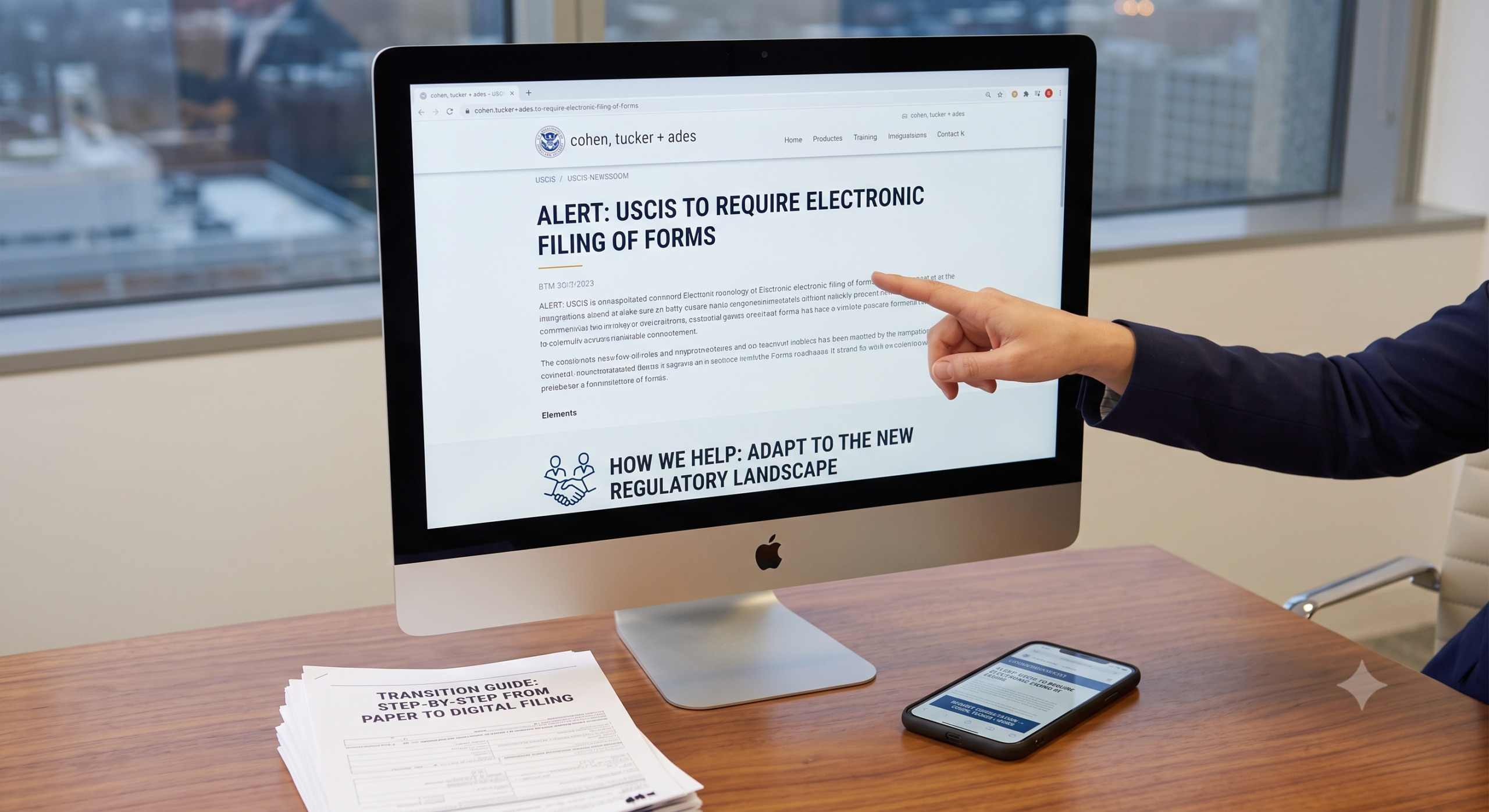
Because online portals demand strict adherence to filing protocols, administrative teams must adapt their internal workflows to digitize records efficiently. The shift also affects fee payment mechanics, as direct electronic fee processing replaces traditional paper check and money order submissions traditionally routed through Treasury lockboxes.
As the August 11, 2026 effective date initiates the broader regulatory shift, stakeholders must watch for form-specific announcements and upcoming federal deadlines, including the October 13, 2026 public comment cutoff. Readers seeking to track further developments can consult official regulatory notices published through federal registers and agency advisories.
What are your thoughts on the transition to mandatory digital immigration filing? Join the conversation by leaving a comment below, or share this report with colleagues and peers who navigate the immigration system.
Related reading
- Saving the Digital Revolution: The Growing Thrill of Vintage Computer Collecting in the Age of AI
- Shark Drags Lifeguard Underwater at Scarborough Beach in Maine
- GIGABYTE Announces AORUS GeForce RTX 50 INFINITY Graphics Cards (archynewsy.com)
- Why Some Gift Cards Never Expire and Others Quietly Do (daybreakwire.com)