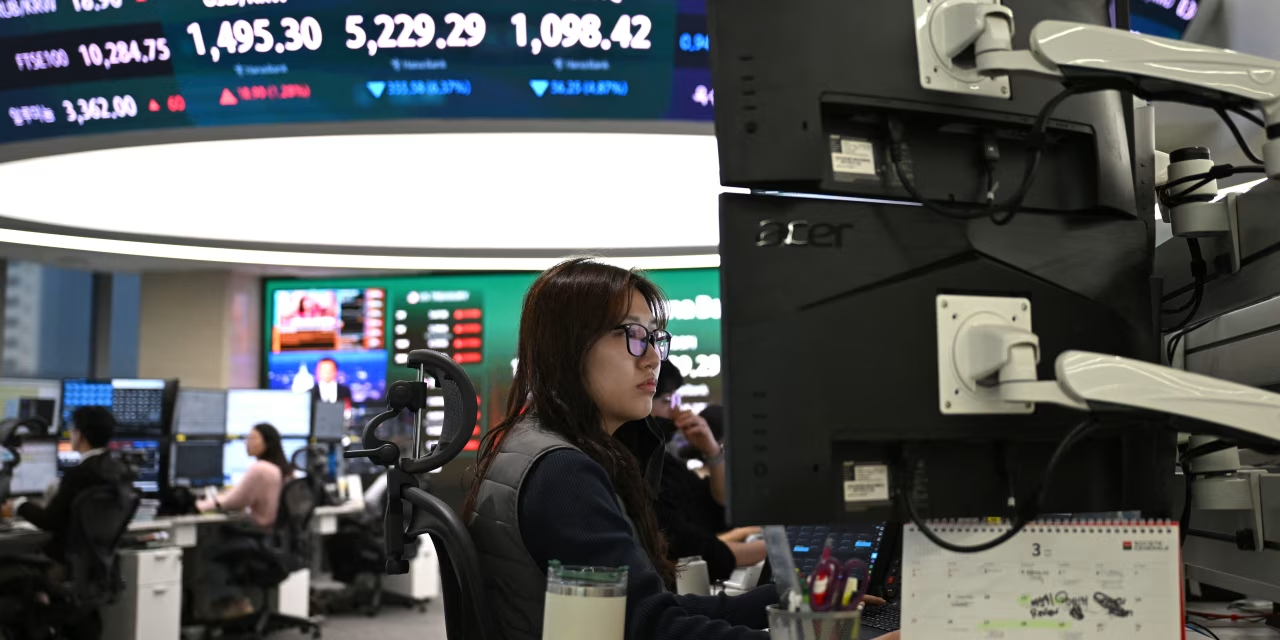
Asian stock markets rose on Wednesday as South Korean semiconductor shares rallied strongly, tracking a Wall Street rebound, while investors weighed unchanged interest rates in Australia alongside renewed geopolitical tensions in the Strait of Hormuz and upcoming U.S. inflation data.
According to market reporting from Investing, regional sentiment was shaped by a combination of domestic tech gains, central bank decisions, and lingering anxieties over energy supplies following renewed disruptions in Middle Eastern trade routes.
South Korean Tech Shares Surge as SK Hynix and Samsung Lead Gains
South Korea’s financial markets experienced a sharp upward swing, driven primarily by heavy-hitting semiconductor manufacturers. CNBC reported that SK Hynix closed over 8% higher in Seoul after its U.S.-listed shares climbed more than 27% overnight. This bounce followed a steep drop earlier in the week when investors moved aggressively to lock in profits amid mounting scrutiny over corporate artificial intelligence spending.
Domestic rival Samsung Electronics also posted strong numbers, rising 6.27% on the Korean exchange according to CNBC, while Seoul Semiconductor gained 6.19%. Broader regional chip sectors mirrored the momentum, with Taiwan Semiconductor Manufacturing Co. rising by a modest 0.83% as noted by CNBC. The broader advance was supported by fresh corporate data; Investing noted that TSMC reported a 45% jump in July sales, underlining persistent commercial demand for AI-related hardware components.
Pella Funds Warns of AI Spending Speculation
Despite the rapid recovery in hardware shares, market analysts sounded cautionary notes regarding the sustainability of the current valuation cycle. Jordan Cvetanovski, chairman and chief investment officer at Pella Funds, pointed to signs of speculative excess during an interview on financial television.
Cvetanovski added in his CNBC commentary that the infrastructure boom continues to favor hardware makers as corporations engage in a competitive race for computing capacity. Every company out there will need to get access to as much computers they can,
he said, warning that there will be supply shortages, as we’ve seen with the memory makers.
Australia Holds Cash Rate at 4.35% While Chinese Markets Subdue
Outside the technology sector, central bank policy and geopolitical developments directed regional trajectories. In Australia, the benchmark index rose 0.3% following the Reserve Bank of Australia’s unanimous decision to keep its cash rate steady at 4.35%. RBA officials noted that while economic activity is slowing down, inflation remains uncomfortably high. IG senior markets analyst Tony Sycamore observed that the ASX 200 has established a key support level at 9,000, though he cautioned that an accelerating corporate earnings season could trigger downward retests in the weeks ahead.
Meanwhile, Chinese equities lagged behind their regional peers. The mainland composite index slipped 0.2% while Hong Kong’s Hang Seng dropped 0.7%, weighed down by ongoing investor hesitation according to Investing. Singapore provided a bright spot elsewhere in Southeast Asia, with local shares climbing over 1% to reach a record high following robust corporate earnings reports.
Energy Markets React to Renewed Blockades and U.S. Inflation Watch
President Donald Trump’s pushback against Iranian compensation demands dimmed expectations for a swift diplomatic agreement that would reopen the Strait of Hormuz, maintaining upward pressure on crude valuations.
Concurrently, broader Asian equities mirrored overnight gains on Wall Street that were sparked by a softer-than-expected June inflation print. Consumer Price Index data, where headline inflation was projected to rise 0.1% in July following a 0.4% decline in June according to Investing. Market participants remain watchful, knowing that a stronger-than-anticipated reading could prompt the Federal Reserve to maintain elevated borrowing costs for an extended duration.
Related reading