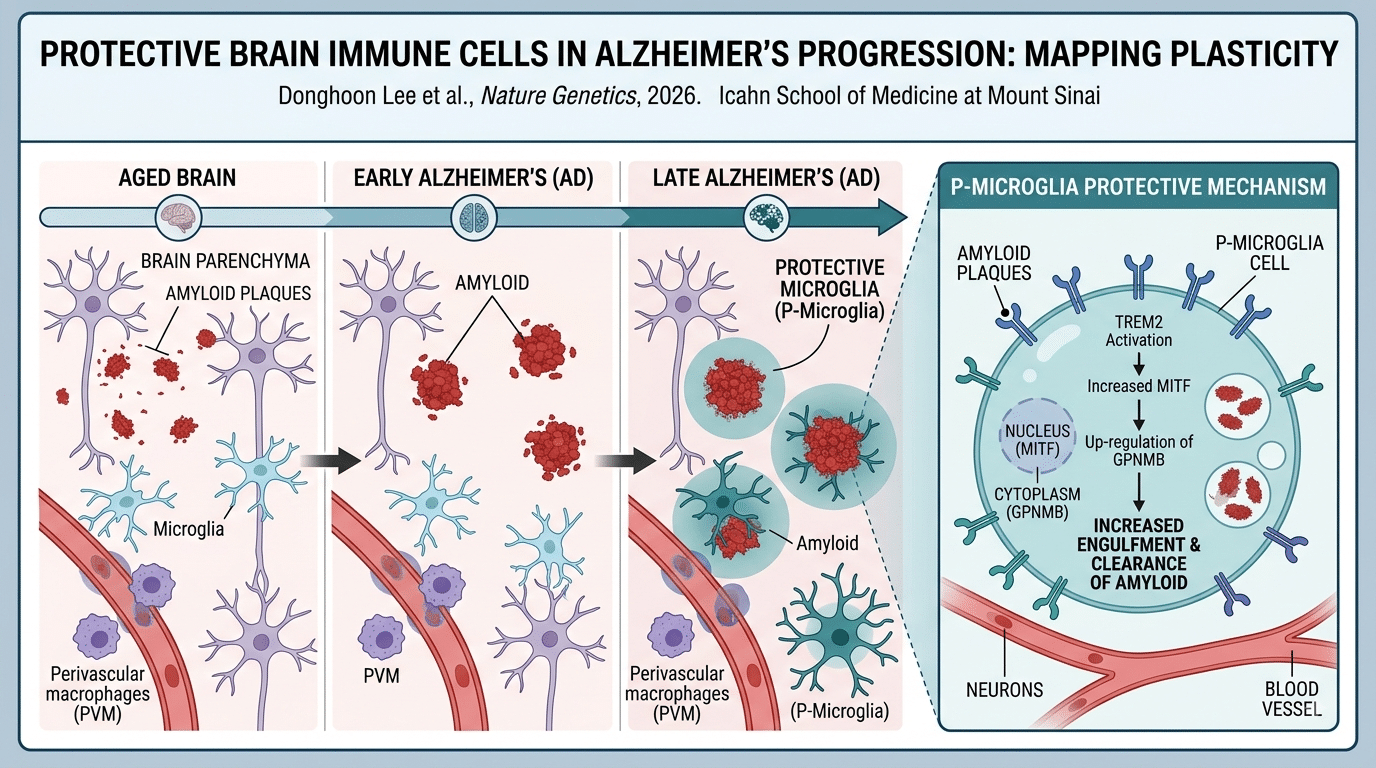
Researchers analyzing over 830,000 brain immune cells have identified a protective microglial subtype that expands as Alzheimer’s disease advances. Published in Nature Genetics, the Mount Sinai-led study pinpoints the TREM2 molecular pathway as essential for driving these cells to clear harmful material from the brain.
The human brain’s resident immune cells undergo a major structural and functional shift during aging and the progression of neurodegenerative disease. Exactly how microglial cells adapt as cognitive decline worsens has historically challenged researchers. A massive genetic and cellular mapping effort now offers unprecedented clarity on these immune dynamics.
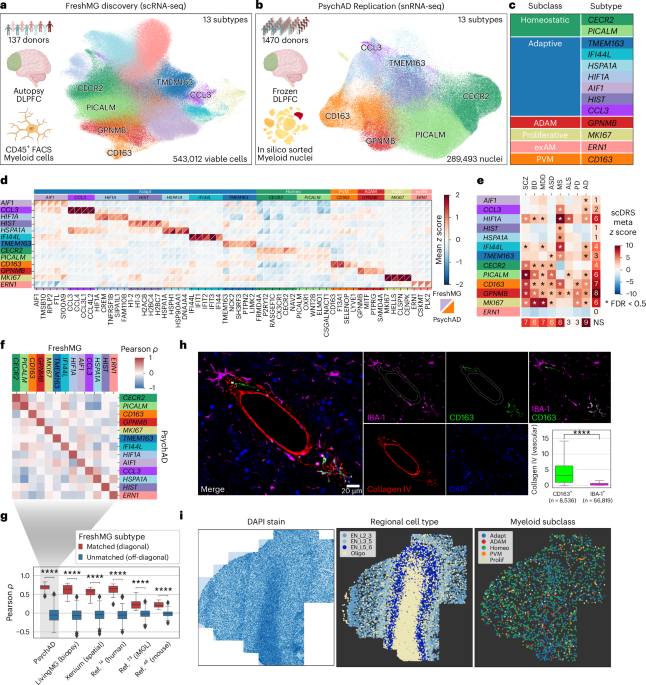
Mapping Over 830,000 Immune Cells Across 1,607 Donors
Investigators at the Icahn School of Medicine at Mount Sinai analyzed myeloid-origin immune cells sourced from the prefrontal cortex of 1,607 human donors. According to Neurosciencenews, this large-scale profiling captured both microglia and perivascular macrophages across a broad spectrum of ages and Alzheimer’s disease pathology stages. By examining tissue at this scale, the team categorized these cells into six distinct subclasses and 13 individual subtypes.
A Protective Microglial Subtype Discovered in Alzheimer’s Brains
The mapping project uncovered a specialized subset of disease-associated microglia that scales up as Alzheimer’s advances. These cells actively protect neural tissue by increasing their capacity to engulf and clear pathological material.
This protective expansion depends strictly on a specific signaling cascade. Experimental models demonstrate that the beneficial behavior of these immune cells requires a molecular pathway involving the proteins TREM2, MITF, and GPNMB.
Implications for Genetic Risk Factors and Future Therapies
The discovery helps resolve a central question in modern neurology: why specific genetic variants in immune-related genes such as TREM2 and APOE increase Alzheimer’s risk.
By shifting the focus from simply clearing amyloid plaques to actively strengthening native immune defenses, the study establishes a new framework for therapeutic development. Researchers indicate that future treatments designed to pharmacologically support this protective microglial state could offer viable pathways to slow neurodegeneration before irreversible cognitive loss occurs.