
One year after President Donald Trump declared a crime emergency and ordered an unprecedented federal intervention in the nation’s capital, federal officials report nearly 15,000 arrests and a significant drop in overall offenses, though local leaders and policy analysts dispute what role the deployment actually played in the shifting statistics. Washington, D.C. has lived with an armed National Guard presence since August 2025, when the administration initiated “Operation Make D.C. Safe and Beautiful” to combat what officials described at the time as rampant lawlessness and violence.
While White House spokeswoman Abigail Jackson credited the federal surge with transforming the city into a secure haven for residents and tourists alike in a statement to USA Today, D.C. Mayor Muriel Bowser and various local officials point out that violent crime was already trending downward toward a 30-year low before federal troops arrived, following a post-pandemic spike in 2023. The competing narratives underscore a tense ongoing debate over local autonomy, federal overreach, and the true drivers of urban public safety trends.
Data and Arrest Figures Under the Federal Surge
Federal law enforcement agencies operating under the D.C. deployment have logged nearly 15,000 arrests over the past twelve months, according to figures released by the FBI on Facebook. White House spokeswoman Abigail Jackson stated to USA Today that President Trump successfully transformed D.C. from a crime-ridden city into a safe haven through the expanded law enforcement campaign. Preliminary figures from the D.C. Metropolitan Police Department (MPD), accurate as of August 10, indicate that total crime is down 20 percent in the year-to-date compared to 2025. Property crime drove much of that decline, registering a 23 percent drop that included a 53 percent decrease in motor vehicle thefts and a 37 percent reduction in thefts from autos, according to MPD data cited by Newsweek.
Yet analysts remain split on whether the federal surge deserves primary credit for these downward trends. Mayor Bowser emphasized that the capital was already in the midst of driving down crime following legislative and strategic shifts implemented by local government after the unacceptable spikes of 2023. “One year ago, an unprecedented federal intervention brought national attention to DC’s lack of statehood and autonomy,” Mayor Bowser said in a statement provided to Newsweek by the MPD. While analysts acknowledge the statistical correlation between the stepped-up enforcement presence and falling crime numbers, some remain doubtful that Trump’s intervention deserves the credit.
Evolution of the Deployment and Financial Costs
The emergency declaration that initially authorized the troop surge formally concluded after 30 days, but thousands of National Guard members remained entrenched in the district. Troops continue to patrol transit stations, streets, and major tourist attractions, augmented recently by additional personnel deployed to assist with the country’s 250th anniversary celebrations and to protect refurbished monuments, as reported by Newsweek. Originally framed as a temporary emergency measure to protect federal workers and infrastructure, the administration’s current plans project keeping the National Guard stationed in Washington for the duration of Trump’s second term, with estimated costs reaching $1.4 billion by January 2029.
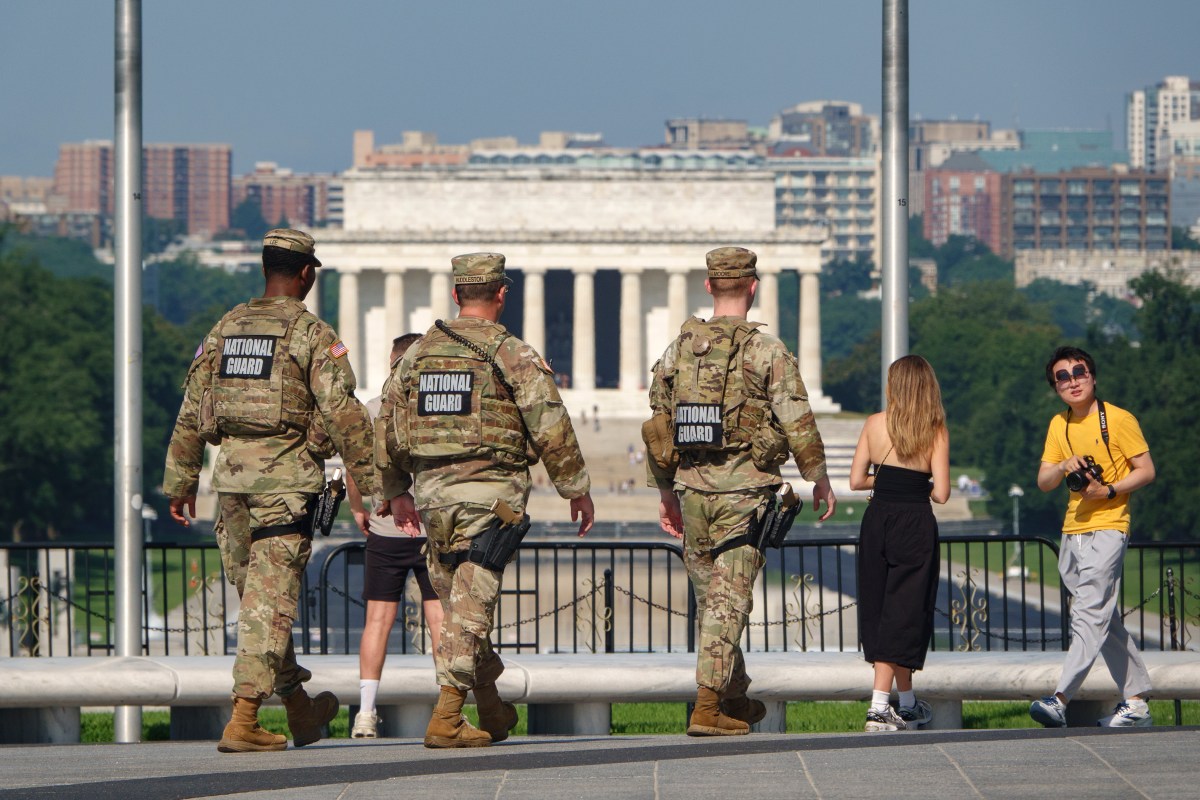
The prolonged federal footprint has drawn sustained pushback from local leaders who argue that armed patrols on city streets challenge democratic norms and infringe upon home rule. During the initial rollout of the operation, President Trump told military leaders that the government was fighting a “war from within” and suggested that U.S. cities could serve as training grounds for the military. Those remarks, combined with the long-term encampment of troops, have amplified tensions between city hall and federal authorities regarding who holds ultimate jurisdiction over public safety in the nation’s capital.
Next Steps and Official Oversight
As the federal intervention enters its second year, local and federal stakeholders are bracing for further legislative and budgetary battles in Congress over district autonomy and federal policing funding. Residents and visitors seeking official updates on crime statistics, neighborhood safety initiatives, and MPD operational reports can consult the District of Columbia Metropolitan Police Department portal.
We welcome your perspectives on this developing story. Please share your thoughts or join the discussion in the comments below.
Related reading