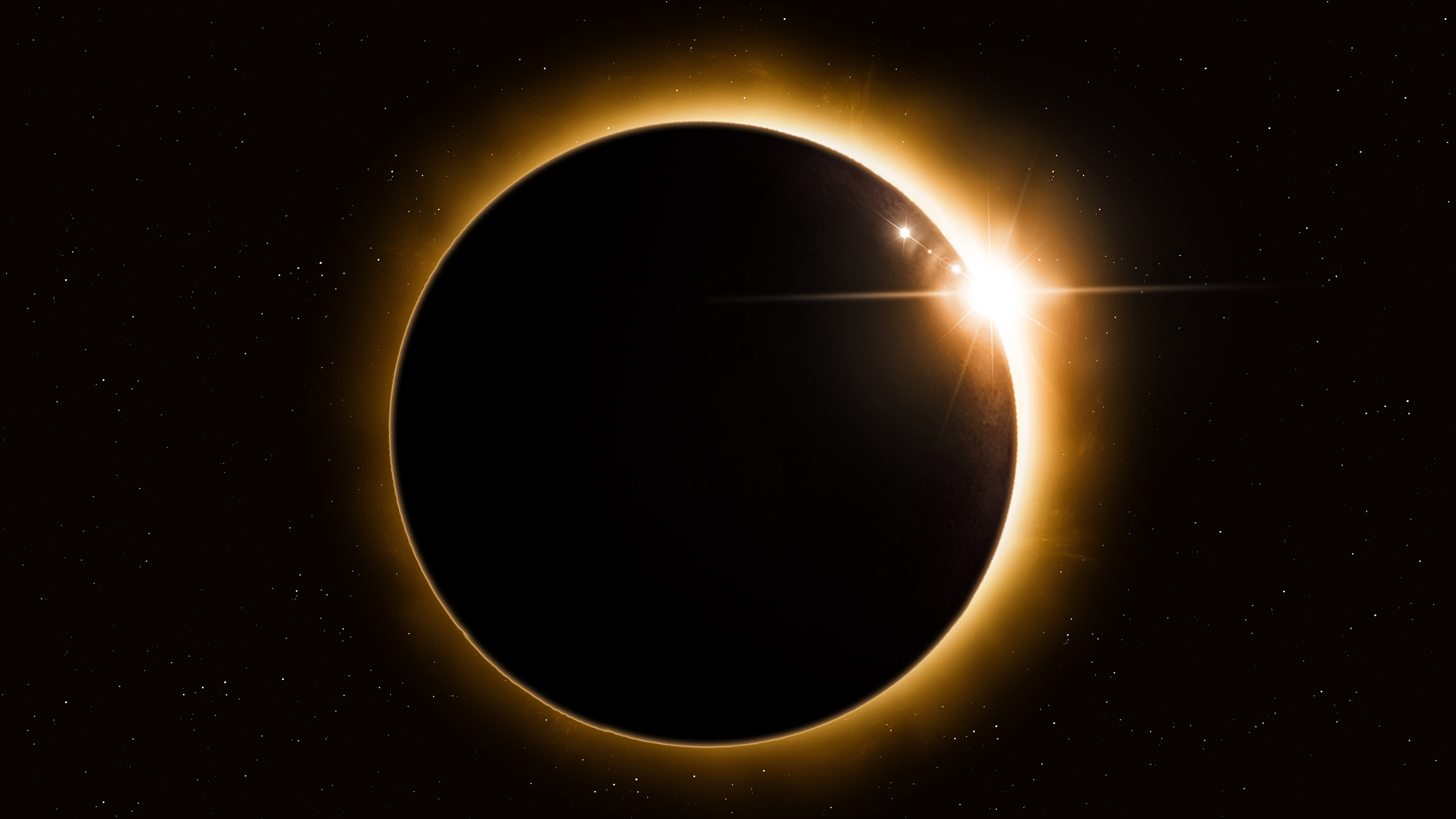
Earth is entering a rare astronomical stretch that some observers and astronomy enthusiasts are calling a golden age of solar eclipses, featuring three total solar eclipses and three annular “ring of fire” eclipses over a compressed three-year window from 2026 to 2028, according to reports from Forbes and Space.com. Following a quieter period in 2025, this double eclipse cascade begins with a total solar eclipse crossing eastern Greenland, western Iceland, and northern Spain, marking Europe’s first total solar eclipse since 2015 and its first on the mainland since 1999.
According to Forbes, the upcoming sequence gives travelers and skywatchers an unusually accessible chance to witness one of nature’s rarest spectacles without requiring voyages across remote oceans. The paths of totality over the next 710 days cross regions with established tourism infrastructure across Europe, North Africa, the Middle East, and Australia. This concentration of events occurs because three separate Saros series happen to align over a short timeframe, a celestial alignment last observed between 2008 and 2010.
Space.com notes that the broader pattern encompasses a double cascade of three total solar eclipses occurring in August 2026, August 2027, and July 2028, alongside three annular solar eclipses taking place in February 2026, February 2027, and January 2028. While a trio of total solar eclipses naturally starts roughly every 18 years, 11 days, and eight hours—the duration of a single Saros cycle—few historical sequences have crossed so many accessible and culturally significant destinations.
The 2026 European Opener and Arctic Views
The sequence kicks off with the August 12, 2026, total solar eclipse, which Space.com reports will begin in remote Siberia before cutting across eastern Greenland’s Scoresby Sund, western Iceland’s Reykjanes and Snæfellsnes peninsulas, and northern Spain. Observers positioned in Spanish cities including León, Burgos, and Valladolid will fall directly inside the path of totality, watching the sun’s ghostly corona emerge above medieval cities and volcanic terrain.
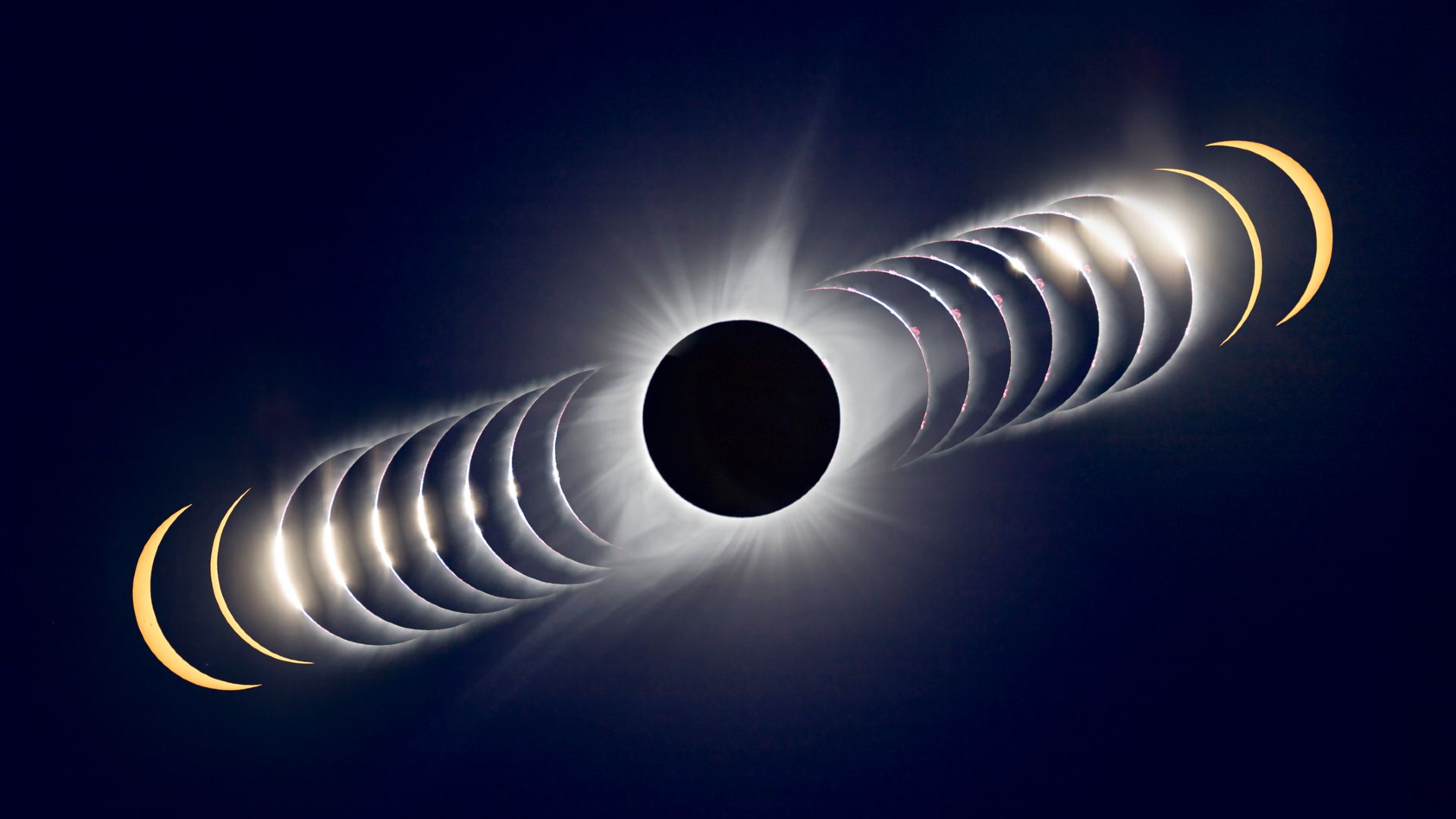
Forbes highlights that while maximum totality during this opening event will last just over two minutes, the low position of the eclipsed sun, particularly over Spain, will create dramatic photographic opportunities. For many European travelers, it represents the easiest and most accessible opportunity to experience totality for years to come.
The Eclipse of the Century in 2027
Less than a year later, the astronomical community will focus on what Forbes and Space.com describe as the centerpiece of the trilogy: the August 2, 2027, total solar eclipse. Often dubbed the “eclipse of the century,” this event will produce a maximum totality lasting 6 minutes and 23 seconds near Luxor, Egypt, according to Forbes data. It stands as the longest land-based total solar eclipse between 1991 and 2114.

Space.com reports that the moon’s shadow will move slowly across southern Spain, North Africa, and the Middle East, offering a near-guaranteed view of the sun’s corona against clear skies, though dust storms are possible. The path crosses iconic historical monuments, ancient temples, Mediterranean coastlines, and the Nile Valley, prompting years of advance planning by dedicated eclipse chasers.
Concluding the Trilogy in Australia and New Zealand
The total solar eclipse trilogy concludes on July 22, 2028, when totality sweeps across New Zealand and the Australian Outback, as detailed by Forbes. Sydney, Australia’s largest city, will experience its first total solar eclipse since 1857. Meanwhile, Space.com notes that remote parts of Western Australia will enjoy over five minutes of totality under conditions where clear skies are likely, allowing observers to combine stargazing with extended road trips across the Outback.
Unlike eclipses that require voyages across remote oceans, all three events in this trilogy occur during the Northern Hemisphere summer months and pass through regions with established tourism infrastructure, cruise ship access, and land-based tourism options. Observers looking to track upcoming visibility maps, safety guidelines, and local viewing times can consult updates provided by astronomical institutions and official science portals as each date approaches.
- Iran Conditions Reopening of Strait of Hormuz on US Ceasefire and Asset Release
- 22 Korean Content Startups Secure 10 MOUs and 515 Consultations at US Expansion Events
- Augusta Health News and Events Updates (news-usa.today)
- Perseids Meteor Shower & Solar Eclipse: A Rare Celestial Double Feature (archyworldys.com)