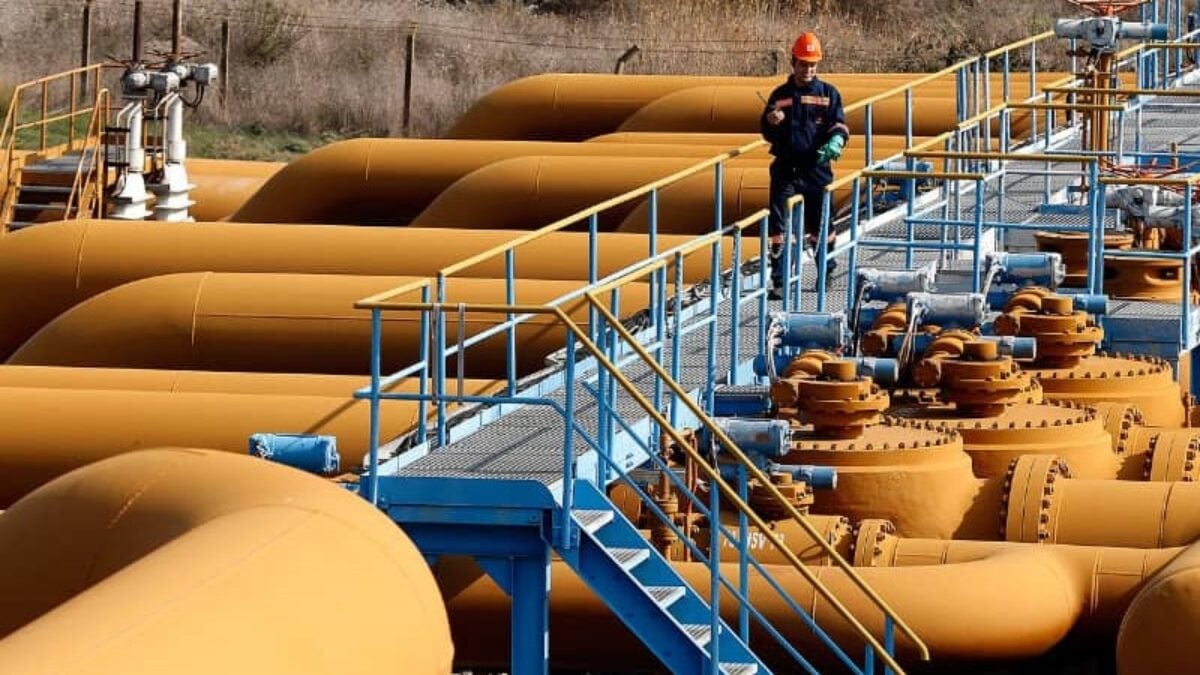
The economic partnership between Morocco and the United Arab Emirates continues to expand across energy, infrastructure, and water sectors, with the multi-billion-dollar Nigeria-Morocco gas pipeline emerging as a central focus of bilateral cooperation following a key institutional milestone within the Economic Community of West African States (ECOWAS).
According to an Observer Research Foundation Middle East report published on August 11, 2026, the expanding ties between Rabat and Abu Dhabi encompass transportation, energy, water resources, and tourism. The planned transnational pipeline, designed to transport Nigerian natural gas along the Atlantic coast of West Africa, has been integrated into this broader framework of strategic financial engagement.
Data cited in the report indicates that the United Arab Emirates has become the leading Arab investor in Morocco, committing over 15 billion dollars to the North African nation. Non-oil bilateral trade reached 1.3 billion dollars in 2023, marking a 30% increase over the previous year. This institutional expansion follows a joint declaration signed in December 2023 by King Mohammed VI and UAE President Mohammed ben Zayed, which formally broadened bilateral cooperation to include railways, ports, airports, financial markets, and data storage.
Pipeline Scope and Regional Integration
The Nigeria-Morocco gas pipeline project spans approximately 6 900 kilometers, connecting natural gas fields in Nigeria to Morocco while traversing 13 West African nations along the Atlantic seaboard. The infrastructure will incorporate both offshore and onshore sections, with a projected transport capacity of 30 billion cubic meters of natural gas annually.
Institutional momentum for the project advanced on July 19 in Freetown, Sierra Leone, where ECOWAS member states signed an intergovernmental agreement supporting the pipeline. This development followed the completion of comprehensive feasibility studies and detailed front-end engineering design (FEED) work for the 25 billion dollars infrastructure undertaking.
Project planners intend to allocate 15 billion cubic meters of the annual capacity to Moroccan and European domestic markets. A portion of the gas destined for European buyers is slated to transit through the existing gas pipeline connecting Morocco to Spain. Promoters note that subsequent steps require a specific agreement between Morocco and Mauritania, executed in the presence of the President of Nigeria.
Complementary Energy and Water Investments
The energy infrastructure alignment between Morocco and the UAE builds upon a series of substantial capital commitments. In May 2024, the two nations announced bilateral agreements totaling 14 billion dollars dedicated to energy and water projects.
Complementing these initiatives, a consortium comprising TAQA Morocco, Nareva, and the Mohammed VI Investment Fund launched a comprehensive domestic program in 2025. This domestic program focuses on seawater desalination, water transfer systems, renewable energy installations, a gas-fired power plant, and a 1 400-kilometer extra-high-voltage power line. Projected investments for this domestic program approach 130 billion dirhams through 2030.
Beyond heavy energy and water assets, the bilateral economic portfolio includes large-scale tourism developments. Emirati planners have advanced proposals for a coastal tourism complex in Lagouira in southern Morocco, featuring upscale hotels, residential villas, a marina, and conference facilities. Direct Emirati investments in Morocco stood at approximately $188 million at the close of the first half of 2025, reflecting a diversified economic strategy that anchors the trans-African pipeline within a wider network of infrastructure projects.
- Westjordanland: Israelische Soldaten räumen Siedler-Zelt nach tagelanger Belagerung von Palästinenser-Haus in Kusra
- Assistance Coordinator Job Opening in Lyon – ARC Europe France
- Country Singer’s ACM Nomination and Latest Partnership (archynewsy.com)
- Samsung and SK Hynix Shares Rally as Temasek Considers Direct Investment (time.news)