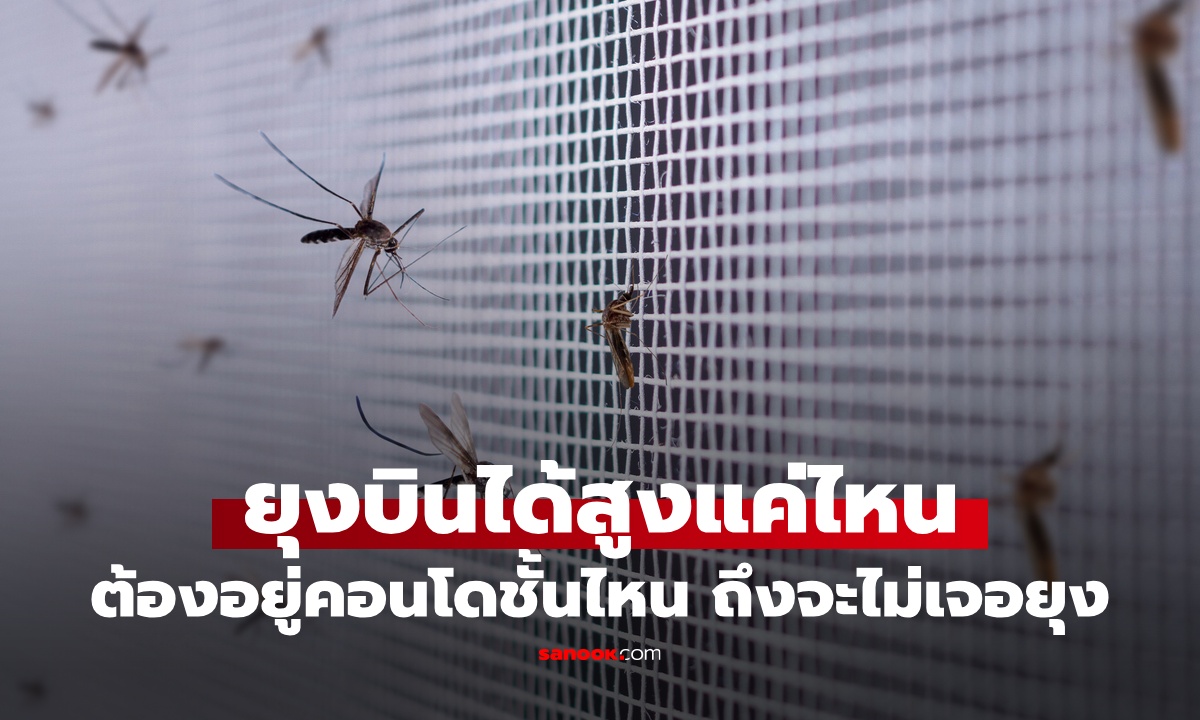
Living on the 20th floor of a modern high-rise condominium offers sweeping views and city skylines, but urban residents often discover they are not entirely alone. For years, a widespread assumption suggested that high-altitude apartments remain naturally shielded from mosquitoes simply due to height. However, scientific research demonstrates that no single floor number guarantees a mosquito-free environment. While many mosquito species thrive near ground level, field studies examining multi-story buildings have documented active mosquito populations at dozens of meters above the ground.
According to field research investigating vertical pest distribution, mosquitoes do not face a hard vertical limit. A study examining high-rise residential buildings in Malaysia utilized ovitraps to track the vertical spread of the yellow fever mosquito, Aedes aegypti, and the Asian tiger mosquito, Aedes albopictus. Researchers documented both species from ground level all the way up to the 21st floor, reaching heights of approximately 61.1 to 63 meters. Similarly, investigations into Aedes albopictus distribution within multi-story buildings in Shanghai, China, and prior housing surveys in Singapore found that mosquitoes routinely disperse vertically up to roughly 60 meters, successfully breeding and foraging on upper balconies.
Understanding Mosquito Vertical Dispersal in Urban High-Rises
The presence of mosquitoes on upper floors does not necessarily mean an individual insect flew straight up a 60-meter building in a single, uninterrupted journey. Urban entomologists note that human activity plays a significant role in transporting pests to upper stories. Elevators frequently act as transit mechanisms, carrying mosquitoes that hitch a ride alongside human residents. Once an adult mosquito arrives on an upper floor, the presence of human hosts for blood meals, suitable resting sites, and standing water allows the insect to establish itself locally.
Furthermore, structural features on high-rise buildings often create micro-habitats that support mosquito life cycles far above the street. Balcony gardens, potted plant trays, and vases can collect rainwater, turning upper-level ledges into active breeding grounds. Centers for Disease Control and Prevention (CDC), mosquitoes readily lay eggs in or near standing water. Public health agencies advise residents to inspect and empty, scrub, turn over, or cover water-holding containers at least weekly to prevent local populations from proliferating.
Neurobiology and Sensory Adaptations
The ability of mosquitoes to locate human hosts within complex urban architecture stems from highly evolved sensory systems. Research examining the neuroanatomy of the adult Aedes aegypti reveals that an individual mosquito possesses an average of approximately 217,000 neurons within its brain. This compact nervous system processes critical environmental signals, including carbon dioxide, body heat, visual cues, airborne sounds, and distinct human scent profiles.
Rather than possessing conscious thought, a mosquito relies on sophisticated sensory ganglia and peripheral nerves spanning its head, thorax, and abdomen to navigate and track targets. This biological machinery allows the insect to detect subtle chemical signatures and evade defensive gestures, giving the impression of heightened tactical awareness while actually operating entirely on evolutionary instinct.
Climate Factors and Global Expansion
Broader environmental pressures continue to influence mosquito populations worldwide. Data published by the World Health Organization (WHO) highlight that climate change, deforestation, and rapid urbanization are primary drivers behind expanding mosquito habitats. Global reported cases of dengue fever escalated significantly over the past two decades, rising from approximately 500,000 cases in the year 2000 to over 5,200,000 cases by 2019, with continued upward trends globally.
Rising global temperatures alter the biological development of mosquitoes and accelerate their life cycles. Warmer ambient conditions shorten the maturation period of mosquito larvae and increase metabolic rates, while drought conditions can drive adult mosquitoes to seek blood meals more frequently to maintain hydration and egg development.
Effective Prevention in High-Rise Dwellings
Because building height alone fails to guarantee safety, public health authorities recommend a multi-layered approach to indoor vector control. Installing and maintaining fine mesh screens on doors and windows, utilizing air conditioning when feasible, and routinely inspecting indoor and balcony containers for accumulated moisture remain essential practices. Addressing these vulnerabilities helps ensure that high-altitude living spaces remain secure against unwelcome urban pests. Readers are encouraged to share their thoughts or experiences with high-rise pest management in the comments below.