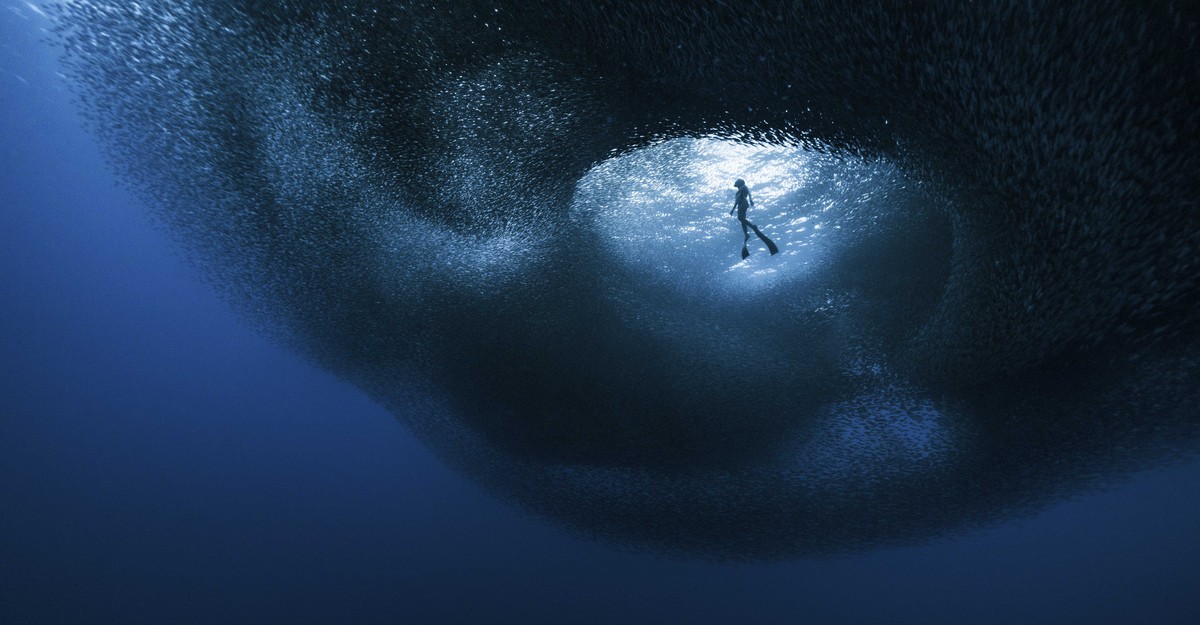
The Ocean Photographer of the Year 2026 competition has unveiled its official finalists, showcasing twenty breathtaking entries that capture the beauty, fragility, and complex dynamics of the world’s marine ecosystems. Co-presented by Oceanographic Magazine and luxury watchmaker Blancpain, the annual contest celebrates the expanse of Earth’s waters while drawing urgent attention to environmental pressures like warming temperatures and habitat loss, according to event organizers.
Oceans cover 71 percent of Earth across approximately 321 million cubic miles of water, harboring vast mountain ranges and deep canyons. Yet, contemporary marine life faces escalating threats from human activity and climate shifts. The newly revealed collection of finalist imagery aims to bridge the gap between aesthetic wonder and ecological documentation.
“These photographs don’t just capture what’s beneath the surface; they surface the stories our planet most needs us to hear,” Ocean Photographer of the Year founder and director Will Harrison said in a statement reported by Popular Science. “As the pressures on our ocean grow, so does the importance of the artists who bear witness to them.”
Wildlife Encounters and Predatory Dynamics
This year’s wildlife category finalists document raw survival instincts across diverse global waters. In the Pacific waters off Mexico, photographer Rafael Fernandez Caballero captured the aftermath of an orca hunt. Nearly an hour after a pod separated a humpback whale calf from its mother, the orcas resurfaced carrying their prey between them, illustrating cooperative hunting strategies among marine mammals.
Further south, in New Zealand coastal waters, photographer Allan Cronin documented a New Zealand fur seal tearing apart a rough skate while seabirds gathered for scraps. Unable to swallow such large prey whole, the seal repeatedly tossed the skate to break it into manageable pieces. In Indonesia, photographer Henley Spiers photographed a bottlenose dolphin biting a small fish beside a traditional bagan fishing platform, demonstrating how wild predators adapt to human-lit fishing structures at night.
Other wildlife entries highlight intimate biological moments. Julien Anton photographed an adult seahorse surrounded by newly born juveniles in the shallow seaweed-filled waters of French Polynesia. Meanwhile, Andrea Michelutti captured a scorpionfish consuming a lizardfish on a coral reef, highlighting the constant balance between survival and vulnerability.
Human Connection and Ocean Adventure
The human connection and adventure categories explore how people interact with coastal and deep-sea environments. At Tamarama Beach in Sydney, photographer Gergo Rugli captured a pod of dolphins riding waves alongside surfers during a powerful swell. The animals remained with the surfers for more than an hour, moving naturally through the lineup.
In another human-focused entry, Qingsheng Sun documented thousands of fish-farming cages stretching across the sea, connected by walkways and small wooden huts to form a vast floating aquaculture network that supports local livelihoods while altering coastal landscapes.
Freediving and deep-sea exploration also feature prominently among the finalists. Daan Verhoeven photographed freediver Arnaud Jerald descending into Dean’s Blue Hole in the Bahamas during a world record attempt at the Vertical Blue competition. Shot from more than 30 meters below, the frame emphasizes the scale of one of the planet’s deepest marine sinkholes.
Hidden Worlds and Conservation Impact
Microscopic marine life and pressing environmental issues take center stage in the “Hidden Worlds” and “Conservation Impact” selections. Eduardo Santana de Vega photographed an octopus peering from inside a lobster pot off the coast of southwest England. While the scene initially suggests an animal trapped, the octopus frequently enters the traps to feed on captured crabs and lobsters before escaping, reflecting broader population shifts linked to warming seas.

Additional macro photography includes Ajiex Dharma’s image of a tiny urchin shrimp hiding among the venomous spines of a sea urchin, and Maryline Renault’s depiction of a translucent shrimp glowing within the folds of a green tunicate in Tulamben, Indonesia. Suliman Alatiqi captured a male Banggai cardinalfish sheltering newly hatched juveniles inside his mouth, showcasing extended parental care.
The competition’s category winners and the overall 2026 winner will be announced in September. Complete galleries of the finalist imagery are available for viewing through Oceanographic Magazine.
Worth a look