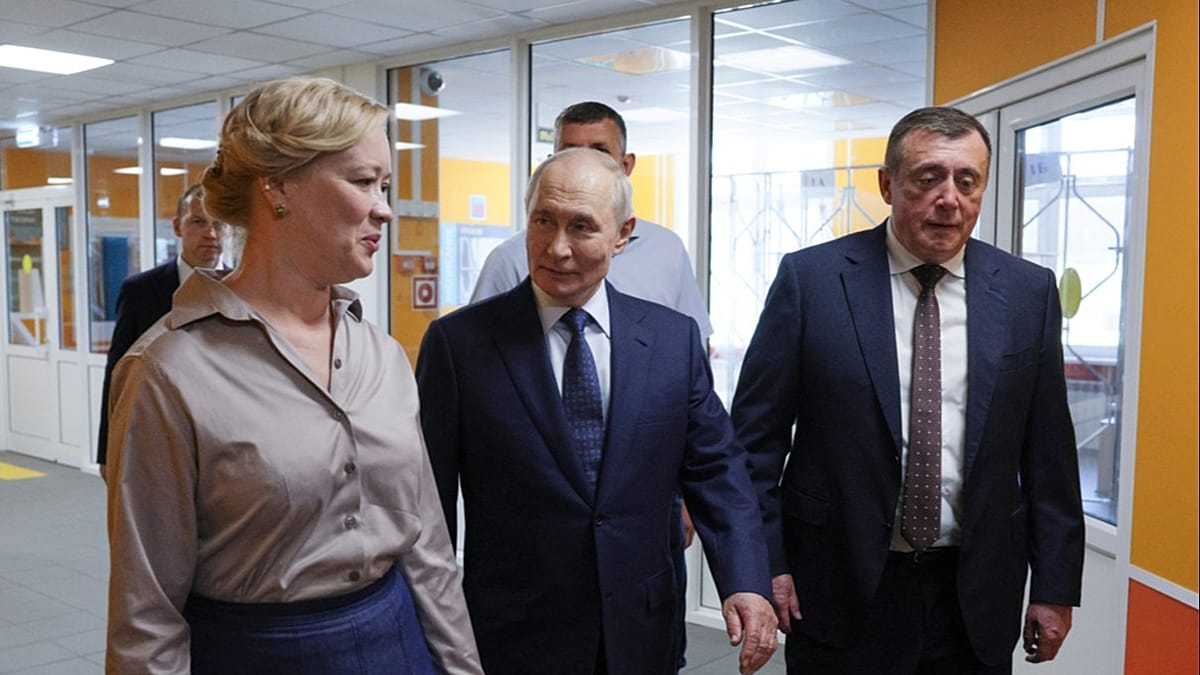
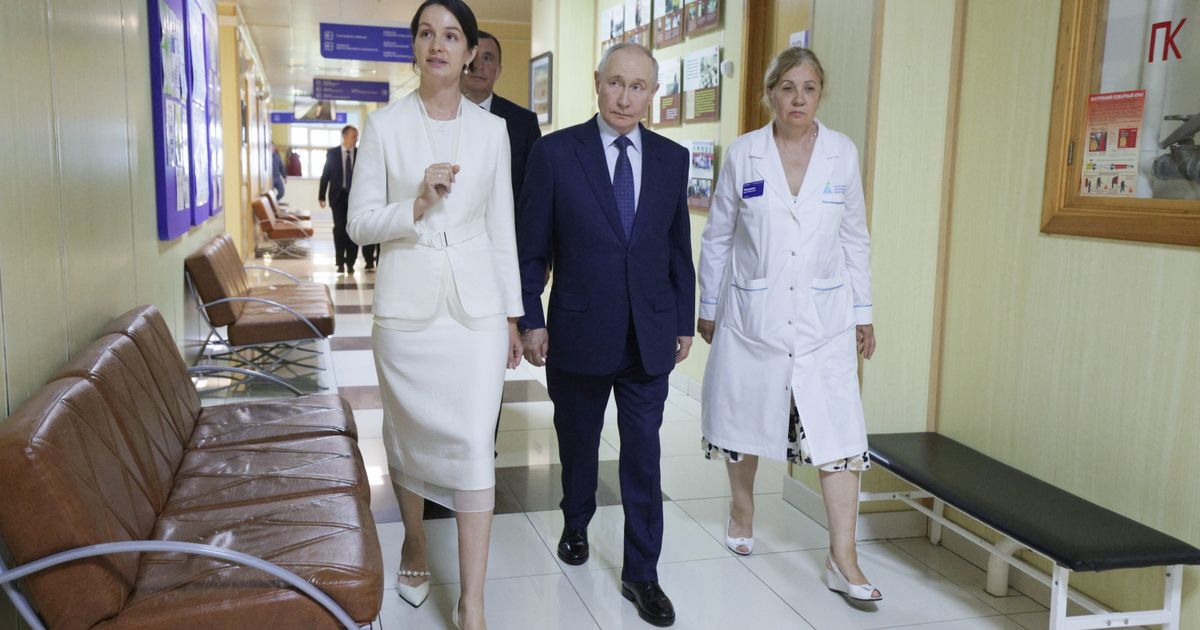
Russian President Vladimir Putin traveled to Iturup island within the Kuril archipelago on Thursday, August 13, 2026, marking the first time he has personally stepped foot on the disputed island chain, according to reports from state media agency Tass. The journey to the remote territory immediately triggered a sharp diplomatic backlash from Tokyo, underscoring deep-seated geopolitical tensions that have persisted between Moscow and Japan since the end of World War II.
Putin arrived in the region after visiting the nearby Russian island of Sakhalin, where naval forces conducted military drills. While on Sakhalin, the Russian leader convened a meeting focused on securing the country’s eastern borders, as reported by the state-owned news agency RIA Novosti. He subsequently flew to the Kuril islands, where video footage released by the Kremlin showed him touring a fish processing facility and being offered caviar.
The diplomatic fallout was swift. The Japanese government lodged a strong formal protest against the visit, viewing the move as a direct challenge to its sovereignty claims over the island chain. The territorial dispute remains a primary obstacle preventing Russia and Japan from signing a formal peace treaty to conclude the Second World War.
Tokyo Lodges Formal Protest and Summons Ambassador
In response to the visit, Japanese Foreign Minister Toshimitsu Motegi announced a firm diplomatic remonstrance, stating that the government in Tokyo regards the islands as an integral part of its sovereign territory. Motegi declared in a public statement that the territory represents an essential part of Japan under both historical precedent and international law.
Further details provided by Italian news agency AGI indicate that Japanese Prime Minister Sanae Takaichi condemned the trip as entirely unacceptable, asserting that it offends the sentiments of the Japanese public and contradicts the nation’s consistent diplomatic stance. To register its strong displeasure, the Japanese Ministry of Foreign Affairs summoned the Russian Ambassador to Japan, Nikolai Nozdrev, to deliver a formal reprimand regarding the visit to Etorofu, which is known as Iturup in Russian terminology, as reported by AGI.
Relations between Moscow and Tokyo have experienced a severe cooling period following the escalation of the conflict in Ukraine in 2022. Japan joined international partners in implementing sanctions against Russia, while Moscow has concurrently deepened its strategic and diplomatic alignment with China and North Korea.
Decades of Territorial Friction Over the Kuril Chain
The strategic chain of volcanic islands extends across a broad arc from the Russian Kamchatka Peninsula down to Hokkaido, Japan’s northernmost main island. Known in Japan as the Northern Territories and in Russia as the Southern Kurils, the archipelago comprises four primary islands: Kunashir (Kunashiri), Habomai, Shikotan, and Iturup (Etorofu). The Soviet Union occupied the archipelago during the final days of World War II, following a declaration of war against Japan on August 8, 1945, which came immediately after the atomic bombing of Hiroshima and days prior to the end of the conflict.
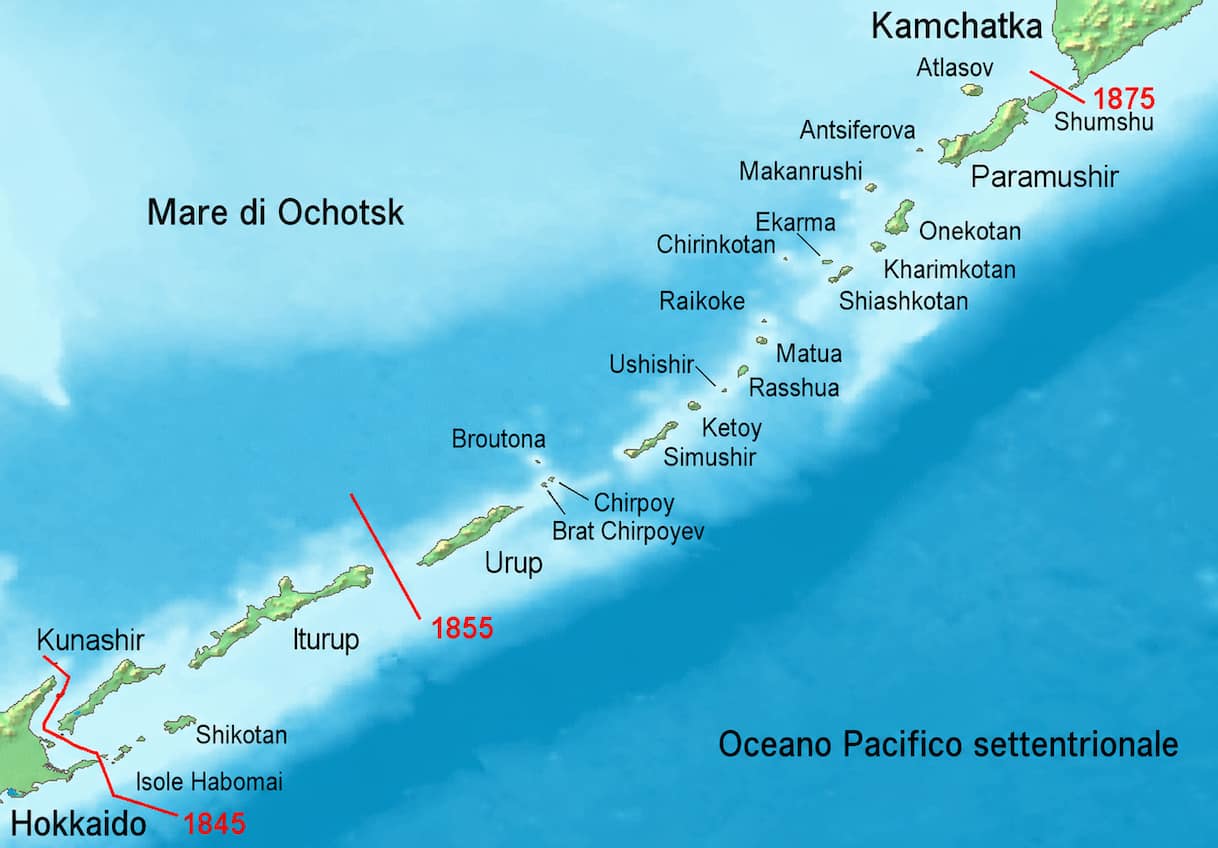
According to records cited by AGI, Mosca deported the Japanese population of the islands following the 1945 occupation. Today, Russian citizens reside across the archipelago, which features harsh climatic conditions alongside rich fishing grounds and mineral deposits, including gold and silver. Throughout the Cold War, the islands served as a vital military outpost hosting air and naval installations to counter United States and Japanese influence in the Pacific.
Prior presidential visits set historical precedents for the 2026 trip. In 2010, then-Russian President Dmitry Medvedev became the first Kremlin leader to visit the disputed territory, later returning during his tenure as prime minister. While intermittent bilateral negotiations offered brief glimpses of potential compromise—such as a 1956 Soviet proposal by Nikita Khrushchev suggesting the return of two islands under a prospective peace treaty—no permanent resolution has materialized since talks resumed following the 1991 dissolution of the Soviet Union.
Next Diplomatic Steps
With the Russian ambassador formally summoned in Tokyo and bilateral ties strained by the unfolding diplomatic crisis, both foreign ministries have yet to announce a schedule for future diplomatic talks or high-level meetings. Observers will monitor upcoming multilateral forums and diplomatic briefings for further statements from the Japanese Foreign Ministry and the Kremlin regarding regional security in the North Pacific.
Related reading