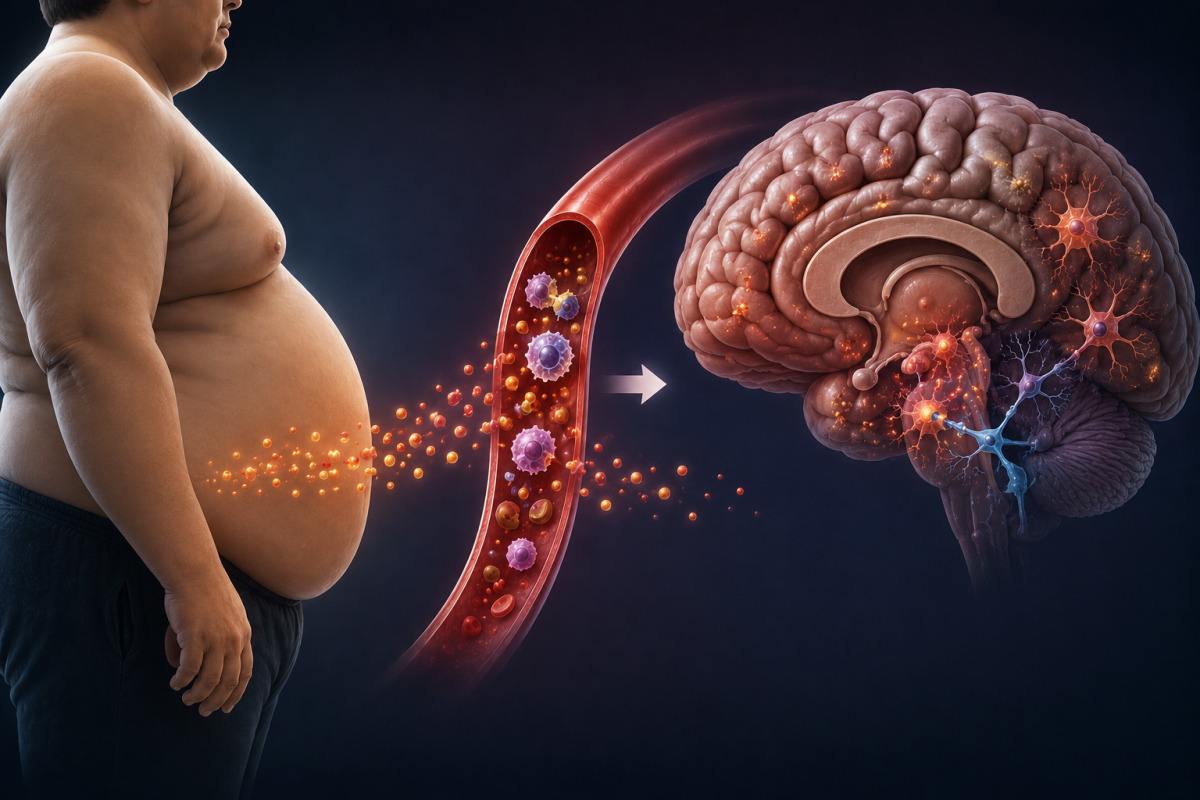
Midlife obesity has long been recognized as a major risk factor for Alzheimer’s disease, but the exact biological mechanics linking extra body weight to neurodegeneration remained unclear. Now, a breakthrough study published in the peer-reviewed journal Molecular Neurodegeneration has illuminated how specific lipid molecules travel from peripheral body tissue into the brain, disrupting neurological defenses and triggering cognitive decline.
The research, led by Dr. Stephen Wong and investigator Li Yang of the Houston Methodist Academic Institute and Weill Cornell Medicine, demonstrates that obesity elevates concentrations of a distinct fatty molecule known as phosphatidylethanolamine, or PE. According to the scientific team, these excess lipid molecules cross the blood-brain barrier, disrupting cellular membranes and lipid homeostasis. This biochemical disruption interferes with normal communication between neurons and brain immune cells, weakening the central nervous system’s immune defenses and encouraging the dangerous accumulation of toxic amyloid-beta proteins—the hallmark pathology of Alzheimer’s disease.
This new work shifts our understanding away from viewing Alzheimer’s as purely an isolated cerebral malfunction, highlighting instead how deeply brain health is intertwined with whole-body metabolism.
How PE Lipids Disrupt Brain Immunity
When high concentrations of phosphatidylethanolamine flood the brain's microenvironment, the delicate balance of cellular membranes is compromised. As these protective cells struggle to maintain proper communication with surrounding neurons, inflammatory signaling pathways activate.
This breakdown in neuroimmune regulation impairs the brain’s ability to clear metabolic waste products efficiently. Consequently, toxic amyloid-beta proteins begin to aggregate within neural tissue. The findings suggest that excess circulating fats do not merely sit in adipose tissue; rather, they actively participate in a biochemical signaling cascade that compromises cerebral integrity over time.
Reversing Damage Through Lipid Balance
Perhaps the most promising aspect of the new study is its indication that this neurodegenerative process may be reversible. To test whether lipid disruption could be corrected, the researchers screened more than 2,400 candidate compounds and identified a promising therapeutic agent known as ebselen.
When tested on mouse models exhibiting Alzheimer’s-like pathology, administering ebselen successfully restored PE lipid balance within the brain. The treatment improved neuroimmune function and significantly reduced disease-related pathological markers. Furthermore, treated mice demonstrated measurable improvements in cognitive performance, including enhanced learning, memory, and attention spans.
The discoveries open fresh avenues for precision medicine, suggesting that future prevention and treatment strategies should target lipid balance rather than relying on a one-size-fits-all approach to cognitive decline. Investigators note that clinicians might eventually combine metabolic therapies—such as GLP-1 receptor agonists widely prescribed for diabetes and weight management—with targeted lipid-modulating treatments to intervene during midlife, when metabolic risk factors exert their greatest toll.
“Instead of treating Alzheimer’s as a universal disease, we need personalized interventions tailored to each patient’s metabolic profile,” Dr. Wong noted regarding the strategic implications for high-risk populations.
As academic institutions and clinical researchers continue to evaluate these metabolic mechanisms, further updates on therapeutic candidates like ebselen and their progression toward human clinical trials are expected through peer-reviewed medical literature and institutional announcements from Weill Cornell Medicine and the Houston Methodist Academic Institute.
We invite our readers to share their thoughts and perspectives on the intersection of metabolism and neurological health in the comments below.
Keep reading