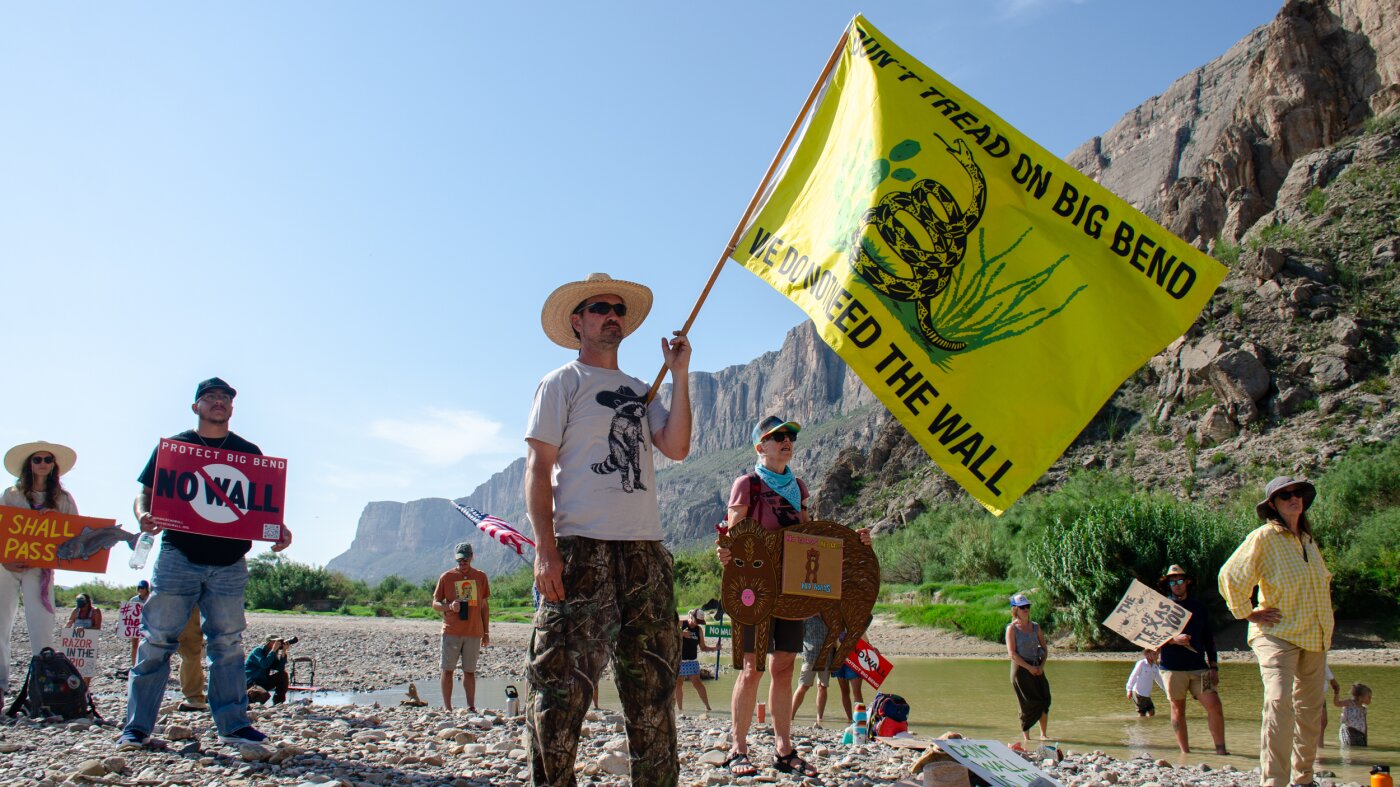
Federal contractors have moved heavy machinery into Big Bend National Park, beginning the process of clearing pristine desert land for border barrier infrastructure along the Rio Grande. Heavy equipment, including excavators, bulldozers, and trailers, has arrived at staging sites just north of the park, while pink construction markers now trace paths through sensitive terrain where willow and mesquite trees previously stood.
The construction effort forms part of a $1.7 billion initiative by the federal government aimed at curbing illegal border crossings in the region. Although initial proposals featured 30-foot walls, Customs and Border Protection officials revised the design following widespread public outcry to focus on vehicle barriers, winding patrol roads, and upgraded surveillance technology. The Trump administration is bypassing environmental laws to accelerate the project, and a federal judge recently declined to block the construction.
Opposition to the project has united a broad coalition of local landowners, outdoor enthusiasts, business owners, and conservation groups across the political spectrum. Critics argue that permanent infrastructure inside the remote and ecologically fragile landscape will cause irreparable harm to a region frequently celebrated as Texas’ gift to the nation. Legal challenges led by organizations such as the Center for Biological Diversity are currently moving through the courts to halt the developments.
Border Security Metrics and Federal Defense
Defenders of the project maintain that the new infrastructure is necessary to secure isolated terrain and assist enforcement personnel. In a statement provided to NPR, CBP Commissioner Rodney Scott asserted that the work will help border patrol officers detect illegal crossings, respond faster, and assist visitors in danger. Scott also emphasized that current activities visible within the park involve preliminary survey and design work rather than heavy construction.
Official encounter data, however, indicates that unauthorized crossings in the Big Bend Sector have fallen sharply. According to Customs and Border Protection figures reported by NPR, the 517-mile sector recorded the fewest number of encounters along the Texas border during fiscal year 2025, with internal park numbers dropping even lower according to local advocacy groups.
Local stakeholders have questioned the necessity of the barrier given these low statistics. Bernadette Devine, a local educator and former river guide, noted that the region already maintains effective border security. Elected officials have also expressed concern; Republican Sen. John Cornyn urged federal authorities last week to meet directly with local residents before advancing any further construction inside the park boundary.
Environmental and Economic Impacts on the Region
The ecological stakes in Big Bend remain high for conservationists and former park personnel. Raymond Skiles, a retired wildlife biologist who spent decades working within Big Bend National Park, recently led public demonstrations featuring protesters chanting against the barrier plans. Conservation advocates warn that fragmenting the desert habitat will disrupt wildlife corridors and destroy native vegetation.

Economic concerns also drive local resistance. Outfitters, guides, and tourism-dependent business owners worry that industrializing the pristine viewsheds around landmarks like Santa Elena Canyon will diminish the unique wilderness experience that draws visitors from around the world. Joan Stutts Escamilla, a 70-year-old visitor sitting near the 1,500-foot limestone cliffs along the Rio Grande, described the canyon as a irreplaceable natural gift.
State leadership has offered a different perspective on utilizing modern infrastructure in remote sectors. Andrew Mahaleris, press secretary for Texas Governor Greg Abbott, emphasized in previous statements shared with NPR that rugged and isolated areas like Big Bend present significant opportunities to deploy technology for border security enhancement.
Next Steps and Legal Proceedings
Federal contractors continue survey and site preparation work under exemptions from standard environmental protection statutes. Legal challenges from conservation nonprofits remain active in federal court following the judge’s decision not to block the construction. Local advocacy groups and concerned residents are pressing federal officials for direct consultations regarding future phases of the project.
Worth a look