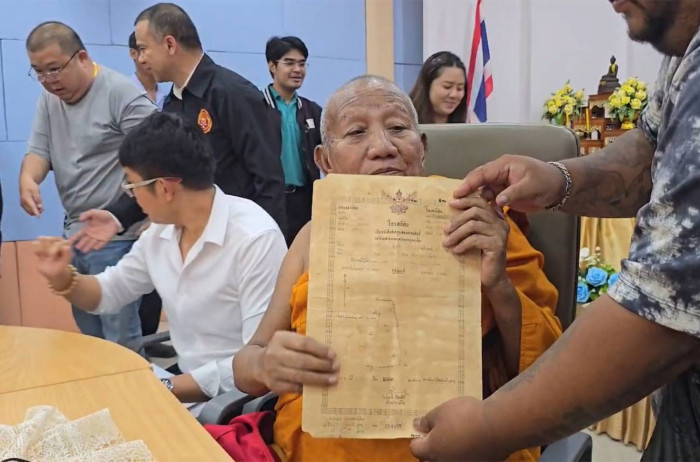
The abbot of a forest temple in Khon Kaen province has produced an original title deed for land donated over three decades ago, presenting the decades-old document as heirs of the original donor intensify their efforts to reclaim the site. The ongoing property dispute centers on monastic boundaries and generational land rights in Thailand’s northeastern region, drawing scrutiny from local administrative bodies and community members tracking the legal status of religious endowments.
Disputes over long-standing land donations to Buddhist monasteries frequently involve complex transitions between family inheritance claims and formal ecclesiastical registration under Thai law. Legal frameworks governing land tenure in Thailand require clear documentation of property transfers, making historical deeds central to resolving conflicting claims between monastic authorities and private families.
Historical Title Deed and Monastic Tenure
The current contention revolves around property granted to the forest monastery more than thirty years ago. Forest temples, known locally as wat pa, often occupy remote tracts dedicated to meditation and monastic residence, relying on traditional community consensus or early administrative filings that occasionally lack the comprehensive digital mapping found in modern land registries.
By producing the original title deed, the temple abbot aims to substantiate the monastery’s continuous occupancy and legal claim to the acreage. Land tenure experts note that historical donations executed decades ago often present evidentiary challenges when subsequent generations of a donor family seek to reverse or reinterpret earlier verbal agreements or incomplete administrative transfers.
Heirs’ Claims and Legal Frameworks
Descendants of the original donor argue that the initial arrangement did not constitute a permanent legal alienation of the property or that specific conditions of the donation were unfulfilled. Under Thai property law, resolving title disputes involving religious properties typically requires intervention from provincial land offices and, in complex cases, the National Office of Buddhism to verify the validity of historical land titles and donation records.
Community stakeholders and local administrative organizations are monitoring the situation to determine whether formal mediation can resolve the disagreement before it advances to the provincial courts. Legal practitioners emphasize that documentary evidence, such as the title deed presented by the abbot, remains the primary factor in determining ownership under the Land Code.
Next Steps in the Khon Kaen Dispute
Local authorities have indicated that both parties will be invited to review the historical land documents at the provincial land office to verify the chain of title and boundary markers. Further developments depend on whether the heirs submit formal contesting documentation to challenge the authenticity or legal scope of the thirty-year-old deed.
Keep reading