
Quadruped Rovers Set for South Pole Construction
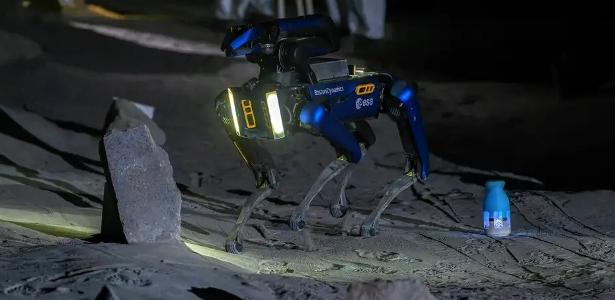
China is pushing its crewed spaceflight ambitions past Earth orbit and straight to the lunar surface. The plan calls for deploying quadruped robotic dogs to build and operate the upcoming International Lunar Research Station (ILRS).
The strategy comes from a study published in the journal Chinese Space Science and Technology and detailed by the South China Morning Post. Scientists at the China Academy of Space Technology laid out a blueprint relying on close coordination between human astronauts and autonomous machines near the lunar south pole, all ahead of a targeted 2035 operational window. A three-person crew will manage complex construction, resource extraction, and scientific operations.
Division of Labor Inside the Lunar Base
Under the proposed mission model, responsibilities are split precisely. One astronaut will operate two robotic dogs directly on the ground. A second crew member will gather rock samples and handle separate scientific tasks.
Meanwhile, a third astronaut will stay inside a van-sized pressurized vehicle to coordinate the overall mission and manage extra robotic assets. Beyond basic mobility, the network is built for heavy industrial labor. Quadruped robots, wheeled rovers, and articulated robotic arms will work in tandem to collect water ice, execute mining operations, build structures using local materials, and convert subterranean lava tubes into pressurized habitats.
Station Maintenance and Psychological Support
Acting as long-term partners rather than passive tools, the autonomous systems will shoulder routine station upkeep. Daily patrols, safety inspections, environmental controls for air and temperature, living space sanitation, plant care, and meal preparation will fall largely to the machines.
The scientific publication Interesting Engineering noted that humans and machines will live and work side by side. The quadruped units will provide perimeter security for the outpost. They are also envisioned to converse with astronauts and offer companionship to ease the psychological strain of isolation in a harsh environment. Even so, the study’s authors acknowledge significant technological hurdles ahead, noting that most artificial intelligence models are trained on terrestrial simulations of the lunar landscape rather than actual regolith conditions.
Phased Timeline and the Chang’e-7 Milestone
China aims to land astronauts on the Moon before 2030, working with Russia and other international partners to build the ILRS near the south pole by 2035. Plans also include constructing an orbiting lunar station by 2045.
Each planned lunar module measures approximately three meters in diameter, featuring an internal volume of 16 cubic meters and a mass of roughly ten tons. Built from radiation-resistant materials to withstand extreme thermal shifts and abrasive lunar dust, the modules will link together via dedicated docking corridors.
Before crewed construction begins, the uncrewed Chang’e-7 mission is scheduled for launch in late August 2026 to scout for water ice deposits in the south polar region. Researchers stress that deploying these systems requires building digital infrastructure, including communication and navigation networks, completely from scratch. Ultimately, future lunar exploration will hinge on astronaut-led decision-making paired with the autonomous execution of remote robotic labor.
Related reading