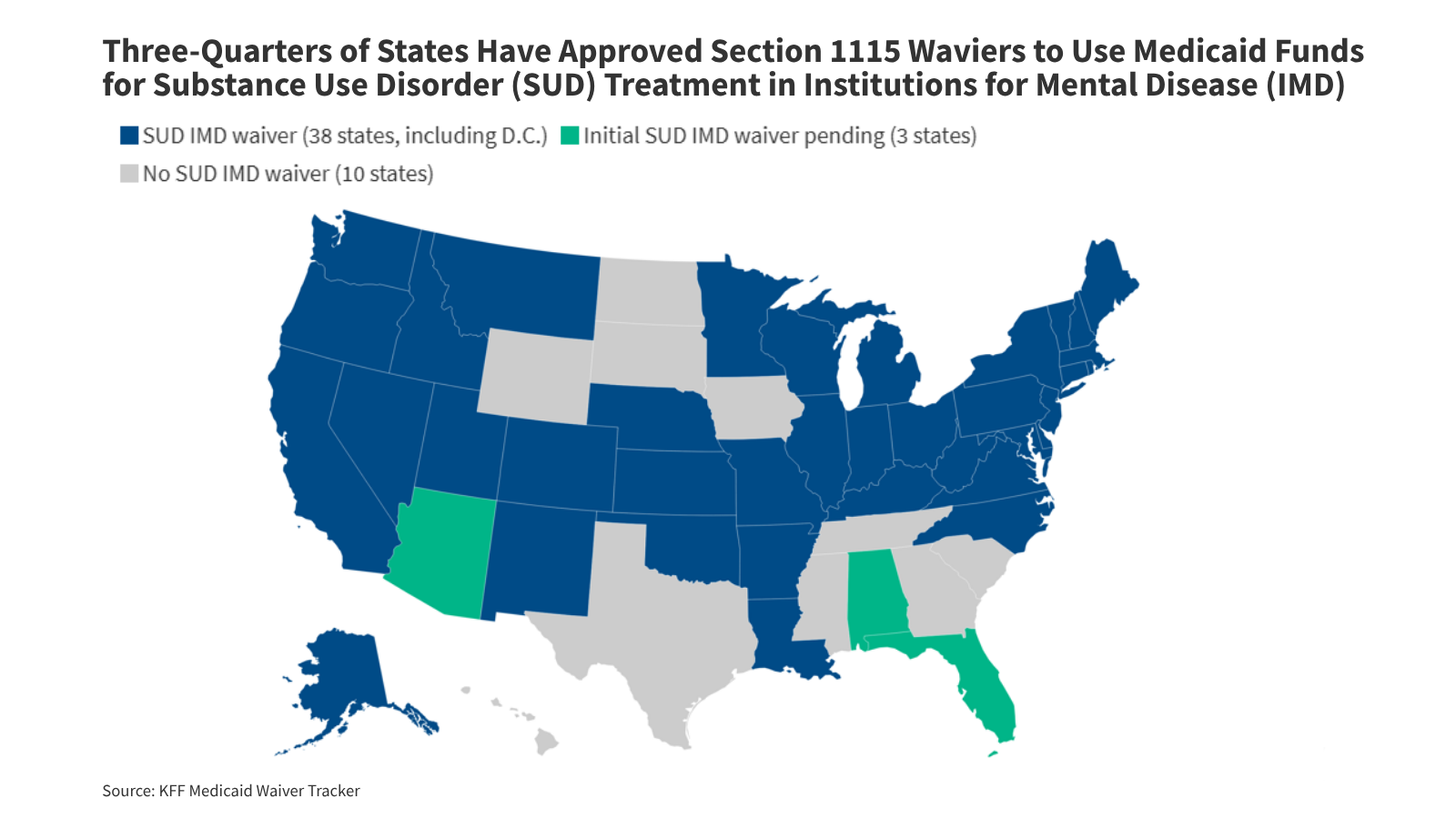
States across the United States are currently re-evaluating their Medicaid coverage policies for substance use disorder (SUD) treatment as they navigate the expiration and renewal of 1115 demonstration waivers. These federal-state agreements allow states to bypass long-standing restrictions on Medicaid funding for residential treatment in Institutions for Mental Disease (IMD), facilities that traditionally faced a federal prohibition on reimbursement for patients aged 21 to 64. As summative evaluations for these waivers become public, policymakers are scrutinizing whether the increased access to residential care is effectively meeting clinical goals or if further shifts in the Medicaid landscape are required to address the ongoing overdose crisis.
The 1115 waiver framework, administered by the Centers for Medicare & Medicaid Services (CMS), permits states to test new approaches to healthcare delivery. For SUD treatment, these waivers were designed to expand the continuum of care, ensuring that Medicaid beneficiaries have access to a full range of services, from community-based outpatient care to intensive residential stays. According to the CMS official guidance on Section 1115 demonstrations, states must demonstrate that these waivers support the objectives of the Medicaid program, primarily by improving health outcomes and increasing the efficiency of care delivery.
Evaluating the Impact of IMD Waivers on SUD Treatment
The transition from policy implementation to formal evaluation marks a critical juncture for state Medicaid programs. Summative evaluations are now providing the first comprehensive data sets on how the removal of the IMD exclusion—a rule established in the 1965 Social Security Act—impacts patient outcomes. Under the Social Security Act Section 1905(a), federal financial participation is generally unavailable for services provided to individuals in facilities with more than 16 beds that specialize in psychiatric or substance use treatment. The 1115 waivers provide a specific exception to this, provided the state meets strict monitoring requirements.
Evaluators are currently analyzing several key performance indicators, including the average length of stay in residential facilities, the transition rates from residential to outpatient settings, and the overall reduction in emergency department visits for overdose-related complications. For many states, the goal is not merely to increase the volume of residential beds but to ensure that these beds are part of an integrated system.
Challenges in Meeting Federal Milestones
A primary challenge identified in recent state reports is the difficulty of tracking patients across different levels of care. While the waivers provide the funding mechanism for IMD stays, the effectiveness of the treatment often hinges on the “warm handoff” between inpatient facilities and community clinics. Federal requirements mandate that states track the utilization of medication-assisted treatment (MAT) and ensure that patients have access to follow-up care within seven and thirty days of discharge. Data from the Substance Abuse and Mental Health Services Administration (SAMHSA) emphasizes that integrated care models, which combine behavioral therapy with medication, remain the gold standard for treating opioid use disorder.
States have encountered hurdles regarding workforce shortages and facility capacity. Even with the financial bridge provided by the 1115 waiver, many rural areas struggle to staff residential facilities with the necessary licensed clinical professionals. Furthermore, the administrative burden of reporting compliance to CMS has led some states to request modifications during the renewal process. These adjustments reflect a broader, evolving policy landscape where states are attempting to balance federal oversight with the flexibility needed to address local public health emergencies.
The Evolving Medicaid Landscape
Looking ahead, the focus of 1115 waiver renewals is shifting toward long-term sustainability. CMS has signaled a stronger emphasis on “health equity,” requiring states to collect data on whether waiver programs are closing the gap in treatment access for marginalized populations. The next phase of these demonstrations will likely involve more rigorous scrutiny of how residential treatment fits into the broader Medicaid managed care environment. As states prepare for their next reporting cycles, stakeholders are watching for how federal authorities interpret the balance between expanding residential access and investing in preventative, community-based infrastructure.
For patients and providers, the next major checkpoint involves the submission of updated state strategy documents and the publication of subsequent rounds of federal monitoring reports. These documents, which are typically posted to the Medicaid.gov demonstration portal, provide the most accurate account of which programs are successfully reducing recidivism and improving recovery rates. As the policy environment stabilizes, the focus will remain on whether these institutional investments translate into lasting community health benefits.
She monitors developments in public health policy and clinical innovation. If you have insights or updates regarding local Medicaid initiatives in your region, please share them in the comments below or contact our editorial desk.