Colombian Politician Abelardo de la Espriella’s Provocative Rally Sparks National Debate Over Gang Leader Imprisonment
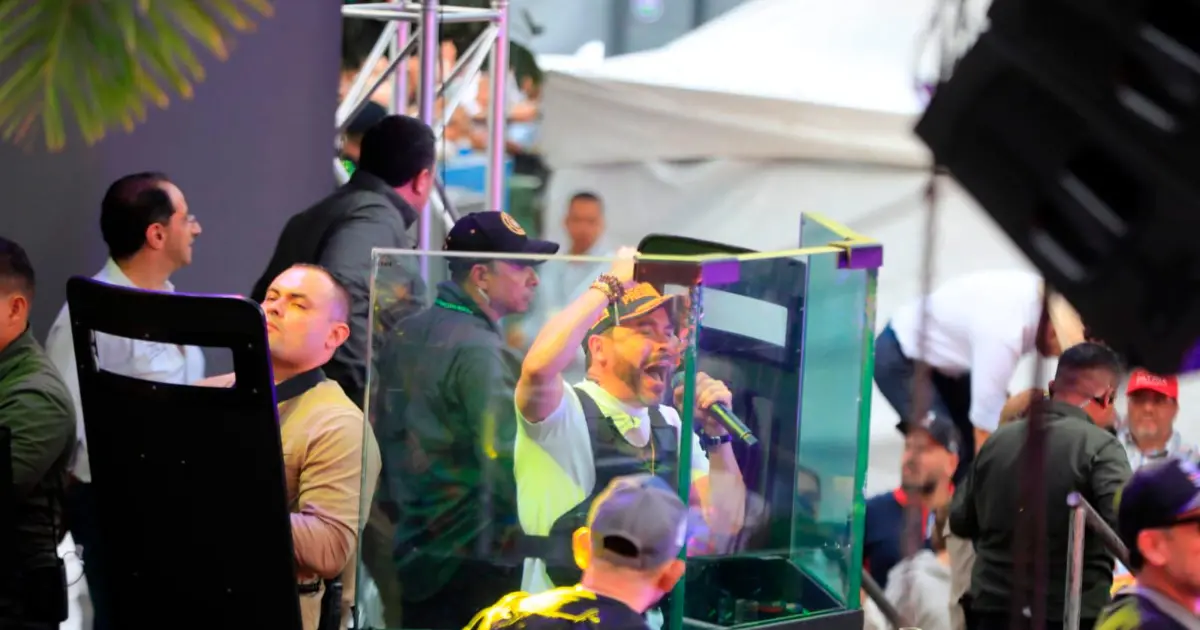
London, UK — Colombian lawyer and far-right politician Abelardo de la Espriella made headlines this week after delivering a fiery speech in Envigado, where he publicly called for the imprisonment of notorious gang leader Pinturita Quintero, a figure linked to Colombia’s powerful Clan del Golfo cartel. The rally, attended by supporters of his Defenders of the Homeland movement, has reignited debates about law enforcement priorities and the role of political rhetoric in Colombia’s volatile security landscape.
The incident occurred during a campaign-style event where de la Espriella, a candidate in Colombia’s 2026 presidential election, addressed a crowd in Envigado—a city with a history of gang violence. According to verified accounts from the rally, de la Espriella directed a direct question to his supporters: “¿Ustedes quieren ver a Pinturita (Quintero) preso?” (“Do you want to see Pinturita Quintero in prison?”). The crowd responded with enthusiastic approval, amplifying the political controversy surrounding his comments.
While de la Espriella’s remarks have drawn widespread attention, they come amid broader concerns about Colombia’s security challenges. The Clan del Golfo, one of Latin America’s most powerful criminal organizations, has faced increased pressure from government forces in recent years, though its influence remains significant in regions like Antioquia, where Envigado is located. Legal experts warn that public calls for the imprisonment of cartel figures—without clear evidence or legal process—could undermine ongoing judicial efforts and provoke dangerous reactions.
Who is Abelardo de la Espriella? A 47-year-old lawyer and businessman, de la Espriella rose to prominence through his high-profile defense of David Murcia during the D.M.G. Grupo Holding S.A. fraud scandal, which involved one of Colombia’s largest Ponzi schemes. He has since built a political following as an outspoken critic of corruption and advocate for stricter law enforcement measures. His Defenders of the Homeland movement, which describes itself as a “patriotic” platform, has gained traction among voters frustrated with Colombia’s political establishment.
The Political Context: Why This Rally Matters
De la Espriella’s remarks must be understood within Colombia’s complex political landscape. As the country prepares for its 2026 presidential election, candidates are increasingly adopting hardline stances on security—a topic that resonates deeply with voters weary of persistent crime and violence. The Clan del Golfo, in particular, has become a symbol of Colombia’s enduring challenges with organized crime, despite the government’s efforts to dismantle its operations.
Legal scholars caution that public figures’ calls for the imprisonment of individuals like Quintero—who has not been publicly charged with any crimes in recent years—could have unintended consequences. “Without a legal basis, such statements can undermine due process and potentially incite violence,” said María Victoria Llorente, a constitutional law professor at Universidad de los Andes. “It’s crucial that political rhetoric aligns with the rule of law, especially in a country where the judiciary is already under significant strain.”
De la Espriella’s campaign has framed his security proposals as necessary to protect Colombian citizens, particularly in regions where cartel influence remains strong. His supporters argue that his unfiltered approach contrasts with what they perceive as weak responses from traditional political parties. However, critics accuse him of exploiting security fears for political gain, pointing to his lack of detailed policy proposals beyond rhetoric.
Who is Pinturita Quintero?
Pinturita Quintero is a mid-level leader within the Clan del Golfo, a criminal organization responsible for drug trafficking, extortion, and armed violence across Colombia. While his exact role and current status are not publicly confirmed by law enforcement sources, reports indicate he has been a target of anti-cartel operations in recent years. Unlike high-profile figures such as Dairo Antonio Úsuga (alias Otoniel), who was captured in 2021, Quintero operates with a lower public profile, making him a less immediate target for authorities.
According to a 2025 United Nations Office on Drugs and Crime (UNODC) report, the Clan del Golfo remains active in at least 32 of Colombia’s 32 departments, with Envigado serving as a key logistics hub for drug distribution. The group’s ability to maintain operations despite government crackdowns highlights the challenges Colombia faces in achieving lasting peace.
Reactions and Fallout: What Happens Next?
The rally has sparked a mix of reactions across Colombia’s political spectrum. President Gustavo Petro’s administration has not publicly commented on de la Espriella’s remarks, but officials have previously emphasized the importance of judicial processes in addressing organized crime. Meanwhile, opposition leaders have used the incident to criticize what they describe as the government’s perceived softness on security issues.
De la Espriella’s campaign team has defended his comments, arguing that they reflect the will of the Colombian people. “The security of Colombians comes first,” said a campaign spokesperson in a statement to Bloomberg. “We will continue to demand accountability for those who threaten our communities.”
Legal experts suggest that de la Espriella’s remarks could face scrutiny if they are perceived as inciting violence or interfering with ongoing investigations. Under Colombian law, public figures can be held liable for statements that endanger public order or undermine judicial proceedings. However, no formal complaints have been filed against de la Espriella as of this writing.
Key Takeaways
- Political Strategy: De la Espriella’s hardline stance on security is part of a broader campaign to position himself as a tough-on-crime alternative to Colombia’s political establishment.
- Legal Risks: Public calls for the imprisonment of individuals without legal charges could violate due process laws and provoke backlash from criminal groups.
- Security Context: The Clan del Golfo remains a dominant force in Colombia’s criminal underworld, with operations spanning the country despite government efforts.
- Election Implications: The incident underscores the growing influence of far-right rhetoric in Colombia’s presidential race, where security is a top voter concern.
- Judicial Challenges: Colombia’s courts are already strained by high caseloads, and public figures’ statements could complicate ongoing anti-cartel investigations.
- Regional Impact: Envigado, where the rally took place, has historically been a flashpoint for gang violence, making de la Espriella’s comments particularly resonant with local residents.
What’s Next for De la Espriella and Colombia’s Security Debate?
With Colombia’s presidential election now less than 18 months away, de la Espriella’s provocative remarks are likely to feature prominently in the campaign. His supporters will continue to frame his approach as necessary to combat crime, while critics will highlight the risks of rhetoric over substance. Legal observers will be watching closely to see if his comments lead to any formal actions, either from prosecutors or from the Clan del Golfo itself.

For now, the focus remains on Colombia’s broader security challenges. The United States Institute of Peace (USIP) recently warned that cartel fragmentation—with smaller, more decentralized groups emerging—could make Colombia’s criminal landscape even more hard to manage. “The government’s success in capturing high-profile leaders like Otoniel has not translated to a reduction in overall violence,” noted a USIP analyst. “This suggests that the fight against organized crime is far from over.”
As the political debate intensifies, one thing is clear: Colombia’s security situation will remain a defining issue in the 2026 election. For voters, the question is whether de la Espriella’s unfiltered approach—or the more measured strategies of his opponents—will prove more effective in addressing the root causes of crime and violence.
Where to Follow Updates
For the latest developments on Colombia’s political landscape and security situation, readers can monitor:
- Colombia Reports – Independent news coverage of Colombia’s political and social issues.
- Registraduría Nacional de Colombia – Official election updates and candidate filings.
- Fiscalía General de la Nación – For official statements on legal proceedings related to organized crime.
- UNODC Colombia – Reports on drug trafficking and organized crime trends.
What do you think? Should political leaders in Colombia adopt tougher rhetoric on crime, even if it risks legal or security repercussions? Share your thoughts in the comments below or join the discussion on our social media channels.
Related reading