
Sixty percent of U.S. adults believe abortion should be legal in all or most cases, according to a 2024 Pew Research Center survey, reflecting a persistent majority even as state-level restrictions and federal legal battles reshape access. The data reveals sharp regional divides, declining abortion rates in some states alongside surging demand in others, and a healthcare system increasingly strained by inconsistent policies. With the U.S. Supreme Court set to hear arguments on emergency abortion access this fall, the numbers underscore the urgency of the debate.
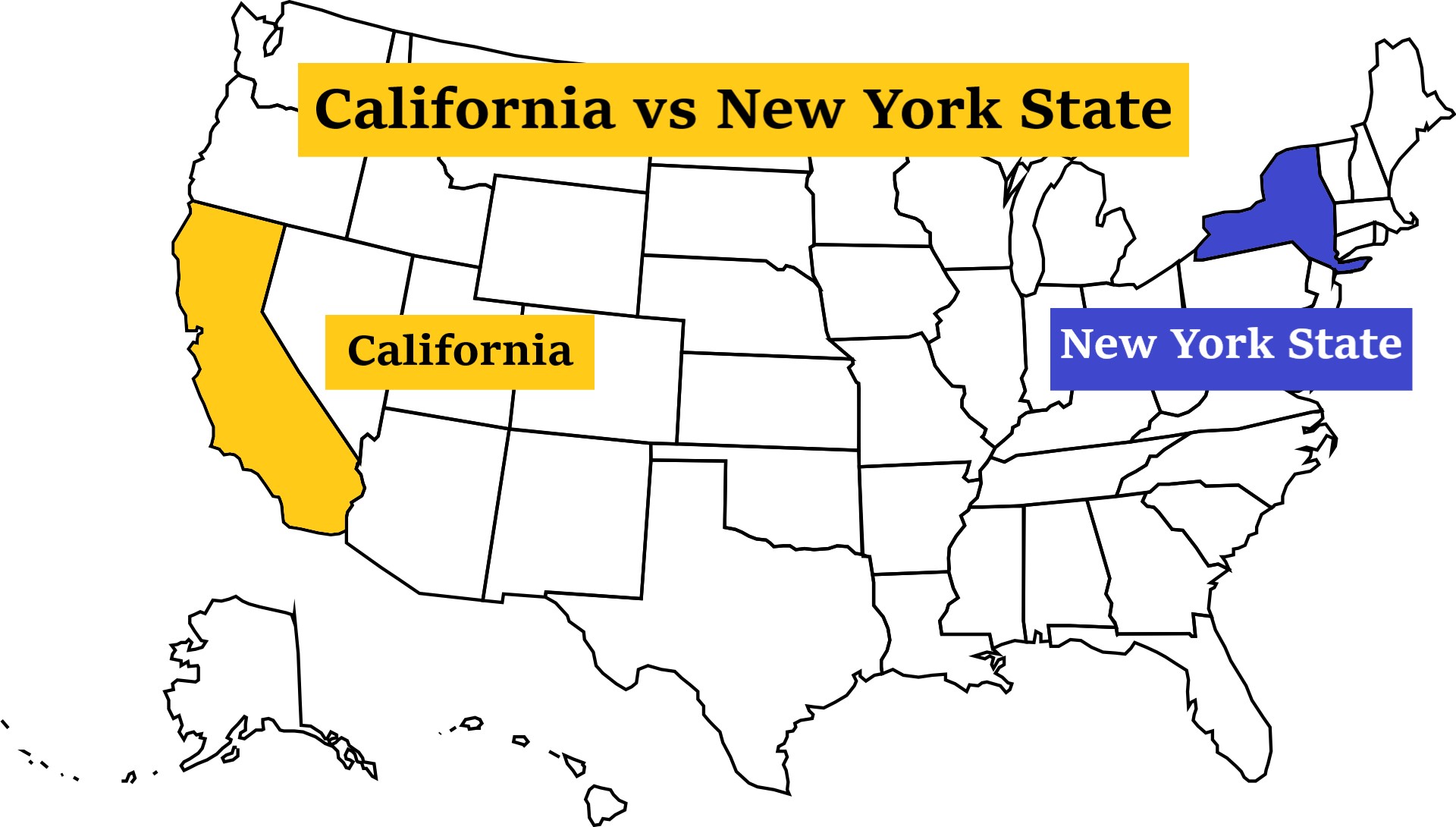
The picture emerging from federal health data, state records, and polling shows a country at a crossroads. While national abortion rates have fallen since the pre-Roe v. Wade era—from 1.3 million procedures in 1990 to 930,000 in 2020, per the CDC—geographic disparities have widened dramatically since the 2022 Dobbs decision overturned federal protections. States with near-total bans, such as Texas and Alabama, now account for just 1% of U.S. abortions, while states like California and New York handle nearly half of all procedures, according to the Guttmacher Institute. Meanwhile, public support for abortion rights remains resilient, with 60% of Americans favoring legal access in all or most cases—a figure that holds steady even among Republicans, where support has crept up to 51% in recent polling.
But the data also highlights critical gaps in access. Nearly one in four U.S. women of reproductive age live in counties with no abortion providers, per the Guttmacher Institute’s 2024 provider map, forcing many to travel hundreds of miles or cross state lines. Telemedicine abortions, which surged during the pandemic, now face legal challenges in half the states. And for low-income women, the financial burden is acute: the average cost of an abortion in the U.S. is $550, with prices climbing to $1,500 or more for later-term procedures, according to the Planned Parenthood Federation of America. These disparities fall disproportionately along racial and economic lines, with Black and Hispanic women more likely to live in abortion deserts.
Abortion Rates in the U.S.: A National Decline Masking Regional Shifts
The overall U.S. abortion rate has declined by 18% since 2017, dropping from 14.4 procedures per 1,000 women aged 15–44 to 11.7 in 2020, according to the Centers for Disease Control and Prevention (CDC). However, this trend obscures dramatic shifts driven by state policies. In states with restrictive laws, such as Missouri and Oklahoma, abortion rates fell by up to 40% after bans took effect, while neighboring states saw spikes in demand. For example, Illinois abortions rose by 17% in 2023 as women traveled from neighboring states with bans, per state health department data.

Key takeaway: The national decline in abortions is largely a result of fewer unintended pregnancies—down 2% annually since 2017, per the CDC—but also reflects the impact of state-level restrictions. The Guttmacher Institute tracks 23 states with bans or near-total bans, covering 40% of the U.S. population. These policies have forced providers to close: between 2017 and 2023, the U.S. lost 10% of its abortion clinics, with 90% of those closures in restrictive states.
Yet the data also shows that abortion remains a common experience. Nearly one in four U.S. women will have an abortion by age 45, according to a 2021 study in The Lancet. The procedure accounts for 1% of all pregnancy outcomes nationwide—a figure that has remained stable for decades, suggesting that restrictions do not significantly reduce the overall number of abortions but instead push them underground or out of state.
Who Is Getting Abortions—and Where?
Demographic data from the CDC and Guttmacher reveals that abortion patients are diverse but face unequal access. In 2020, 54% of abortion patients were white, 27% were Black, and 17% were Hispanic, mirroring the racial composition of U.S. women of reproductive age. However, Black and Hispanic women are more likely to live in counties with no abortion providers. For instance, in Mississippi—where abortion is banned except in cases of rape, incest, or life endangerment—80% of Black women live in counties with no clinic, per a 2023 ACLU analysis.
The age of abortion patients has also shifted slightly. In 2020, 61% of patients were under 30, with the largest group (32%) aged 20–24. However, women over 30 now account for a growing share of procedures, rising from 22% in 2017 to 28% in 2023. This reflects later childbearing trends and increased use of abortion for chronic health conditions, such as heart disease or cancer, which now account for 1–2% of all abortions, per the Guttmacher Institute.
Regional hotspots:
- California and New York handle nearly half of all U.S. abortions, with California alone performing 12% of procedures in 2023 (California Department of Public Health).
- Texas and Florida saw abortion rates rise by 8% and 10%, respectively, in 2023 as women traveled from neighboring states with bans (Florida Department of Health).
- Southern states with bans now account for just 1% of U.S. abortions, down from 25% in 2017 (Guttmacher Institute).
Public Opinion: Why Support for Abortion Rights Remains Strong—Even Among Republicans
Despite political polarization, support for abortion rights has held steady. A March 2024 Pew Research Center survey found that 60% of Americans believe abortion should be legal in all or most cases—a figure that has remained unchanged since 2019. Even among Republicans, support has inched up to 51%, with younger Republicans (ages 18–29) showing 65% support. The data suggests that personal experience—rather than party affiliation—drives opinion: women who have had an abortion are twice as likely to support legal access, per a 2023 Kaiser Family Foundation analysis.

However, the political divide is widening on the issue of later-term abortions. While 58% of Americans support legal access in all cases, that drops to 38% when asked about third-trimester abortions, per Pew. The Gallup poll shows that 60% of Democrats support legal access in all cases, compared to just 35% of Republicans. Yet even among Republicans, 47% say abortion should be legal in most cases—a majority when excluding the strictest bans.
What the polling misses: State-level data reveals that residents of restrictive states are more likely to support abortion rights when polled anonymously. In Texas, for example, a 2023 University of Texas poll found that 60% of Texans support abortion rights—double the share of state legislators who oppose them. This suggests that public opinion polls may understate support in conservative-leaning states due to social desirability bias.
Legal Battles and the Future of Abortion Access
The U.S. Supreme Court’s upcoming review of emergency abortion access—set for oral arguments in October 2024—could further reshape the landscape. The case, FDA v. Alliance for Hippocratic Medicine, challenges the FDA’s approval of mifepristone, a drug used in 60% of U.S. abortions. If the Court restricts access, an estimated 3.5 million women could lose their primary abortion option, per the Planned Parenthood Action Fund.
Meanwhile, state-level legal challenges continue. In April 2024, a federal judge in Texas blocked the state’s near-total ban, citing unconstitutional enforcement. The ruling—pending appeal—could set a precedent for other restrictive states. Conversely, Idaho’s 2023 ban, which includes no exceptions for rape or incest, remains in effect, forcing providers to refer patients to neighboring states. The ACLU is tracking over 50 active lawsuits related to abortion restrictions nationwide.
What happens next:
- October 2024: Supreme Court hears FDA v. Alliance for Hippocratic Medicine on mifepristone access.
- November 2024: Midterm elections could shift state legislatures, with abortion a top voter issue in key races.
- 2025: Expected rulings on state bans, including Texas and Idaho cases.
Where to Find Official Updates and Resources
For readers seeking verified data or legal updates, the following sources provide authoritative information:
- CDC Abortion Surveillance Reports (annual national data).
- Guttmacher Institute State Policy Tracker (real-time state laws and provider maps).
- Planned Parenthood Abortion Resources (costs, telemedicine options, and legal aid).
- ACLU Abortion Rights Tracker (court cases and state bans).
- Kaiser Family Foundation Abortion Policy Analysis (impact of restrictions on health outcomes).
The next major checkpoint is the Supreme Court’s October 2024 hearing on mifepristone. A ruling restricting access could force millions of women to travel for care or seek unsafe alternatives. For now, the data shows one clear trend: abortion remains a fundamental part of reproductive healthcare in the U.S., but access is increasingly determined by zip code.
Have questions about how these policies affect you or your community? Share your experiences or ask for clarifications in the comments below—or share this article to help others navigate the changing landscape.
Worth a look