
Guggenheim has raised its price target for Absci Corp (Nasdaq: ABSI) to $15 per share, citing the significant commercial potential of the company’s generative AI-driven drug discovery platform. The analyst’s upgrade follows increased interest in Absci’s ability to develop therapeutic candidates, specifically those targeting the hair loss market, such as the program identified as ABS-201.
The price target revision reflects growing confidence in Absci’s proprietary technology, which aims to accelerate the identification and optimization of biologics. While many biotechnology companies struggle with the high costs and long timelines of traditional drug discovery, Absci’s approach utilizes artificial intelligence to predict how new molecules will interact with human targets, potentially reducing the time required to move from concept to clinical trials.
The move by Guggenheim comes as the broader biotechnology sector experiences a shift in investor sentiment toward “AI-first” drug discovery firms. These companies are being evaluated not just on their current pipeline, but on the scalability and efficiency of their computational platforms.
Why did Guggenheim raise the Absci price target?
Analysts at Guggenheim adjusted the target for Absci to $15 per share based on the company’s progress in utilizing generative AI to design novel antibodies and other biologics. According to the firm’s assessment, the company’s ability to generate high-quality, functional drug candidates at a faster rate than traditional methods provides a significant competitive advantage.

The upgrade specifically highlights the potential for Absci to monetize its platform through both internal drug development and strategic partnerships. Absci has previously entered into collaborations with major pharmaceutical entities, such as Merck & Co., to utilize its AI platform for antibody discovery. These partnerships provide both non-dilutive capital and validation of the company’s technological capabilities.
Guggenheim’s valuation model appears to account for the “platform effect,” where a single technological breakthrough can be applied across multiple therapeutic areas. This differs from traditional biotech models that rely on a single “blockbuster” drug; instead, Absci’s value is tied to the continuous output of its AI-driven engine.
Market potential for hair loss therapeutics and ABS-201
A central driver of the recent optimistic outlook is the projected revenue from candidates targeting alopecia and other forms of hair loss. Market analysts have pointed to the “billion-dollar potential” of the hair loss treatment market, which continues to expand due to increasing global awareness and a growing consumer demand for effective, non-invasive solutions.

The program designated as ABS-201 is being watched closely by investors as a potential proof-of-concept for Absci’s ability to tackle highly lucrative, high-demand consumer health markets. If the candidate can demonstrate safety and efficacy in clinical settings, it could capture a significant share of the global alopecia market, which includes treatments for androgenetic alopecia and other hair loss conditions.
The economic scale of this sector is substantial. According to various market research reports, the global hair loss treatment market is expected to maintain a steady compound annual growth rate (CAGR) over the next decade. For a biotechnology company, successfully navigating the regulatory pathway for a hair loss biologic would represent a major milestone in diversifying its revenue streams beyond oncology or immunology.
How generative AI is transforming drug discovery
To understand the optimism surrounding Absci, it is necessary to examine the mechanics of generative AI in a biological context. Traditional drug discovery often relies on “wet lab” experimentation, where thousands of compounds are physically tested against a target to see which ones react. This process is often described as “searching for a needle in a haystack.”
Absci’s platform utilizes a “closed-loop” system that integrates computational design with rapid biological testing. The process typically follows these steps:
- Generative Design: AI models suggest new molecular structures designed to bind to specific disease targets.
- Rapid Synthesis: These designs are synthesized into actual biological molecules.
- Automated Testing: The molecules are tested in automated labs to confirm their function.
- Data Feedback: The results of these tests are fed back into the AI, allowing the model to “learn” and refine the next generation of candidates.
This iterative cycle allows the company to optimize drug candidates with a level of precision that was previously impossible. By simulating these interactions digitally before physical testing begins, Absci aims to increase the “hit rate” of successful drug candidates, thereby reducing the high failure rates that typically plague the pharmaceutical industry.
The competitive landscape of AI-driven biotechnology
Absci does not operate in a vacuum; it is part of a burgeoning sub-sector of biotechnology known as “TechBio.” This field is characterized by companies that treat software and data as core assets rather than secondary tools. Absci faces competition from other established players in the AI drug discovery space, such as Recursion Pharmaceuticals and Schrödinger, Inc.
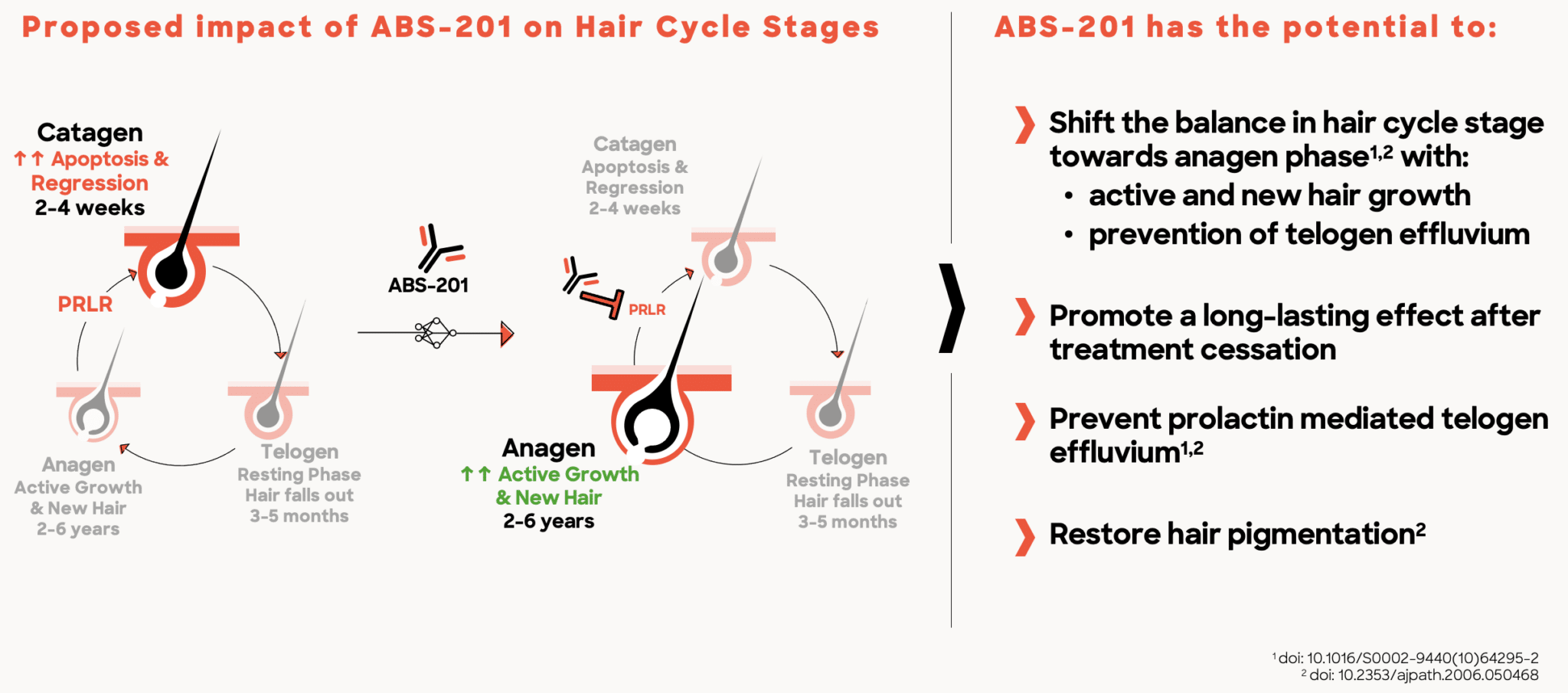
The primary differentiator for Absci lies in its specific focus on biologics—large, complex molecules like antibodies—rather than small-molecule drugs. Biologics are notoriously difficult to design and manufacture, but they offer more targeted therapies with potentially fewer side effects. Absci’s specialization in the generative design of these complex proteins positions it uniquely within the competitive landscape.
The success of these companies will likely depend on their ability to move beyond “discovery” and into “development.” While many AI firms can identify promising molecules, the real challenge lies in proving that these molecules can safely and effectively function within the human body during clinical trials.
Risks and considerations for biotechnology investors
Despite the upward revision of the price target, investing in companies like Absci carries inherent risks characteristic of the biotechnology sector. Clinical trial outcomes are binary; a failure to meet primary endpoints in a phase 1 or phase 2 trial can lead to significant declines in stock value.

Other primary risks include:
- Regulatory Hurdles: The FDA and other global regulators are still refining the frameworks for evaluating drugs discovered primarily through artificial intelligence.
- Cash Burn: Developing new therapies is capital-intensive. Investors must monitor Absci’s “cash runway” to ensure the company can fund its operations through upcoming clinical milestones without needing frequent dilutive capital raises.
- Intellectual Property: The legal landscape regarding AI-generated inventions is evolving. Ensuring that AI-designed molecules are fully patentable is critical for long-term commercial protection.
Investors often look to upcoming quarterly earnings reports and clinical data readouts as the most reliable indicators of a company’s health and progress. For Absci, the transition from a platform-focused company to a clinical-stage company remains the most significant hurdle to achieving its $15 price target.
Comparison of Absci’s Strategic Focus
| Feature | Traditional Biotech | Absci (AI-Driven Biotech) |
|---|---|---|
| Primary Discovery Method | High-throughput physical screening | Generative AI modeling & digital simulation |
| Development Timeline | Years of manual lab iteration | Accelerated via closed-loop digital feedback |
| Core Asset Type | Specific drug candidates | Scalable generative AI platform |
| Risk Profile | High (candidate-specific failure) | High (platform and regulatory uncertainty) |
The next major checkpoint for Absci will be the release of its upcoming quarterly financial results and any subsequent updates regarding the progression of its lead programs in clinical or preclinical stages. Investors should monitor official SEC filings for updates on cash positions and partnership developments.
What are your thoughts on the role of AI in the future of medicine? Do you believe AI-driven platforms like Absci will fundamentally change the cost of healthcare? Share your comments below and share this article with your network.