
Abu Dhabi National Oil Company (ADNOC) has signaled a massive acceleration in its infrastructure and operational expansion, targeting the award of projects valued at 200 billion AED. This strategic move represents one of the most significant capital deployment phases in the company’s history, aimed at enhancing the United Arab Emirates’ production capacity and reinforcing its position as a reliable global energy supplier.
The scale of this investment underscores a broader economic pivot within the UAE, where energy wealth is being aggressively leveraged to catalyze domestic industrialization. By channeling such vast sums into project awards, ADNOC is not merely expanding its upstream and downstream capabilities but is acting as a primary engine for the nation’s non-oil GDP growth.
Central to this strategy is a rigorous focus on In-Country Value (ICV). Under the leadership of Sultan Al Jaber, the CEO of ADNOC Group, the company is moving beyond simple procurement toward a model of integrated industrial partnership. This approach ensures that a substantial portion of the 200 billion AED spend remains within the local economy, fostering a sophisticated ecosystem of Emirati manufacturers and service providers.
As the global energy landscape navigates the tension between immediate security of supply and the long-term transition to net-zero, ADNOC’s current trajectory suggests a “dual-track” strategy: maximizing the efficiency of hydrocarbon assets while investing heavily in the low-carbon technologies required for the future.
The 200 Billion AED Blueprint: Scaling Energy Infrastructure
The target to award projects worth 200 billion AED according to official ADNOC strategic directions is designed to optimize the company’s entire value chain. This includes significant upgrades to existing fields, the development of new reservoirs, and the expansion of refining and petrochemical capacities to capture higher margins from processed products.

Industry analysts suggest that this wave of project awards will likely focus on three critical areas: digitalization of oil fields to increase recovery rates, the expansion of gas processing facilities to meet rising domestic and export demand, and the integration of carbon capture and storage (CCS) technologies into new builds.
The timing of these awards is critical. With global energy markets remaining volatile, Abu Dhabi is positioning itself to fill potential supply gaps while ensuring that its own production is the most cost-effective and lowest-carbon intensity available. This capital expenditure (CAPEX) surge is not a random increase in spending but a calculated effort to secure energy leadership for the next two decades.
Driving Local Industry: The ’70 Factories’ Initiative
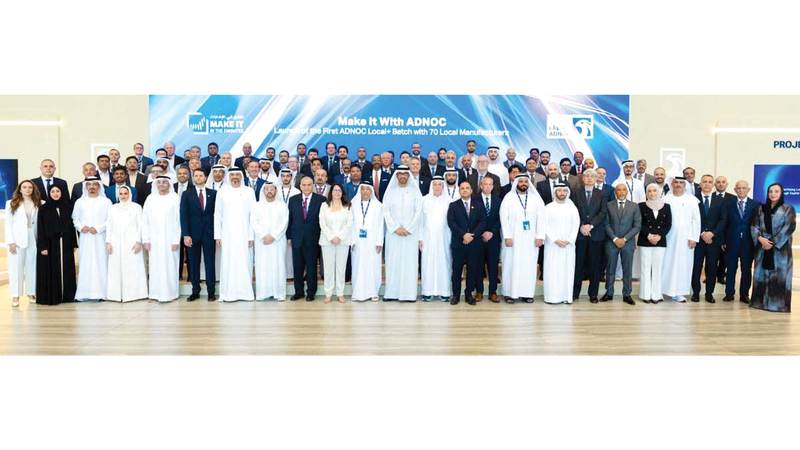
A pivotal component of this expansion is the mandate to link international and local contractors with domestic manufacturing. Sultan Al Jaber has emphasized a strategic initiative to connect contractors with 70 Emirati factories, a move specifically designed to boost the national content of ADNOC’s supply chain. By mandating or incentivizing the use of local components, ADNOC is effectively transferring technical expertise and capital to the UAE’s private sector.
This initiative is a cornerstone of the In-Country Value (ICV) program. The ICV program is a procurement policy that rewards suppliers who invest in the UAE, employ UAE nationals, and source materials locally. For contractors bidding on the 200 billion AED of upcoming projects, a high ICV score is no longer a “bonus” but a competitive necessity.
“Connecting contractors with 70 Emirati factories enhances national content and ensures that the benefits of our growth are shared across the domestic economy.” Sultan Al Jaber, CEO of ADNOC Group
By bridging the gap between global EPC (Engineering, Procurement, and Construction) firms and local workshops, ADNOC is solving a perennial challenge in the Gulf: the reliance on imported specialized equipment. The goal is to transform the UAE from a consumer of energy technology into a regional hub for energy-related manufacturing.
The $55 Billion Investment Horizon through 2028
Beyond the immediate project awards, ADNOC has committed to a long-term investment framework, pledging to invest $55 billion in new projects by 2028 as reported in recent financial disclosures. This figure represents a sustained commitment to capital growth that transcends short-term market fluctuations.

This $55 billion envelope is expected to be split between traditional capacity expansion and the “energy transition” portfolio. A significant portion is earmarked for the development of hydrogen production, the expansion of the Ruwais refinery complex, and the deployment of advanced AI to optimize energy consumption across its plants.
From an economic perspective, this sustained investment provides a predictable pipeline of operate for the construction and engineering sectors. It creates a “multiplier effect” where every dollar spent by ADNOC stimulates secondary and tertiary spending in logistics, housing, and professional services across the Emirates.
Investment Allocation and Strategic Goals
| Focus Area | Primary Objective | Economic Impact |
|---|---|---|
| Upstream Expansion | Increase maximum sustainable capacity | Enhanced national revenue streams |
| Downstream/Petrochemicals | Shift from raw crude to high-value polymers | Diversification of export portfolio |
| Decarbonization/CCS | Reduce carbon intensity per barrel | Compliance with global climate accords |
| ICV Integration | Localization of supply chains | Growth of SME manufacturing sector |
Synergy with ‘Make it in the Emirates’ 2026
The alignment between ADNOC’s spending and the Make it in the Emirates
2026 initiative is a deliberate policy choice. The national industrial strategy aims to increase the contribution of the manufacturing sector to the UAE’s GDP. By directing 200 billion AED toward projects that prioritize local sourcing, ADNOC is acting as the primary “anchor client” for the nation’s industrial ambitions.
This synergy is particularly evident in the production of valves, piping, and specialized steel components. Previously, these items were predominantly imported from Europe or East Asia. Now, through the integration of the 70 identified factories into the ADNOC ecosystem, the UAE is building the capacity to manufacture these critical components domestically.
This transition reduces lead times for project execution and insulates the UAE’s energy infrastructure from global supply chain shocks. It creates high-skilled jobs for Emirati engineers and technicians, fulfilling a core objective of the UAE’s vision for a knowledge-based economy.
What This Means for Global Markets and Stakeholders
For global investors and energy firms, ADNOC’s aggressive expansion signals that Abu Dhabi views the current energy era not as a sunset, but as a transformation. The commitment to 200 billion AED in awards suggests that the UAE intends to be the “last producer standing”—the entity with the lowest cost of production and the lowest carbon footprint.
For international contractors, the message is clear: access to ADNOC’s massive project pipeline is contingent upon a genuine commitment to the UAE’s local economy. The era of “fly-in, fly-out” contracting is being replaced by a requirement for deep local integration and knowledge transfer.
From a macroeconomic standpoint, the scale of this investment helps stabilize the UAE’s fiscal position. By diversifying the industrial base through the ICV program, the government is creating a cushion against future oil price volatility, ensuring that the wealth generated by hydrocarbons is permanently embedded in the nation’s industrial fabric.
Key Takeaways for Industry Observers
- Massive Capital Deployment: The 200 billion AED target for project awards indicates an unprecedented scale of infrastructure growth.
- Localization Mandate: The focus on 70 local factories marks a shift from procurement to industrial partnership.
- Long-term Stability: The $55 billion investment commitment through 2028 provides a clear roadmap for sectoral growth.
- Economic Diversification: ADNOC is functioning as a catalyst for the ‘Make it in the Emirates’ 2026 industrial goals.
- Low-Carbon Transition: Investments are balanced between capacity growth and decarbonization technologies.
The next critical milestone for the industry will be the formal announcement of the first major tranches of these project awards, expected to be detailed in upcoming quarterly procurement cycles. These announcements will reveal the specific technologies and partners ADNOC has selected to lead its next era of growth.
Do you believe the shift toward local content (ICV) will accelerate the UAE’s transition to a non-oil economy, or will it create bottlenecks in project execution? Share your analysis in the comments below.