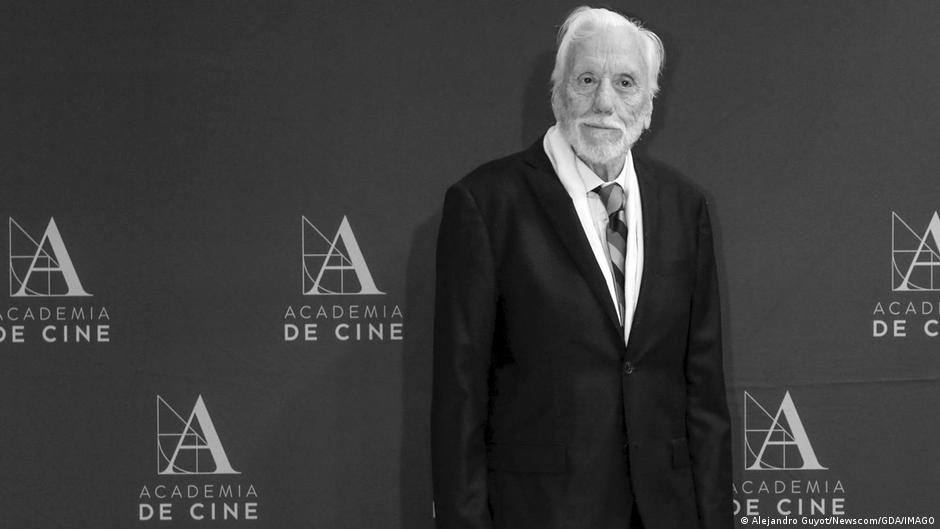
Argentine Cinema Mourns the Loss of Adolfo Aristarain, Master Storyteller of Latin American Film
BUENOS AIRES — The world of cinema lost one of its most revered voices on Sunday, April 26, 2026, when Argentine director Adolfo Aristarain passed away at the age of 82. Aristarain, a towering figure in Latin American film, leaves behind a legacy defined by his uncompromising storytelling, sharp social commentary, and a body of perform that bridged continents and generations. His death, confirmed by the Academia de las Artes y Ciencias Cinematográficas de la Argentina, has sent ripples of grief through the global film community, with tributes pouring in from actors, filmmakers, and cultural institutions worldwide.
Aristarain’s career spanned over four decades, during which he crafted some of the most iconic films in Argentine and Spanish-language cinema. Known for his ability to blend genre filmmaking with profound humanism, his works often explored themes of power, justice, and the complexities of human relationships. Among his most celebrated films are Un lugar en el mundo (1992), Tiempo de revancha (1981), and Martín (Hache) (1997), each a testament to his mastery of narrative and his deep connection to the social and political realities of his time.
Born in 1943 in the Buenos Aires neighborhood of Parque Chas, Aristarain’s journey to becoming a filmmaker was marked by perseverance and an unwavering commitment to his craft. Before directing his own films, he honed his skills as an assistant director, working alongside legendary figures such as Sergio Leone, Vicente Aranda, and Mario Camus. This apprenticeship, which took him across Europe and Argentina, shaped his distinctive style—a seamless fusion of classical storytelling and a keen eye for the nuances of human behavior. His debut feature, La parte del león (1978), set the stage for a career that would redefine Argentine cinema.
A Cinematic Legacy Built on Defiance and Dignity
Adolfo Aristarain’s filmography is a chronicle of resilience, both personal and political. His 1981 film, Tiempo de revancha, is often regarded as a masterpiece of subtlety and subversion. Released during Argentina’s brutal military dictatorship, the film used the framework of a thriller to deliver a scathing critique of authoritarianism, all while navigating the constraints of censorship. The film’s protagonist, played by Federico Luppi—Aristarain’s frequent collaborator and muse—embodies the quiet defiance of an individual caught in the gears of an oppressive system. The film’s success not only cemented Aristarain’s reputation as a filmmaker of great courage but also demonstrated his ability to speak truth to power without resorting to overt confrontation.
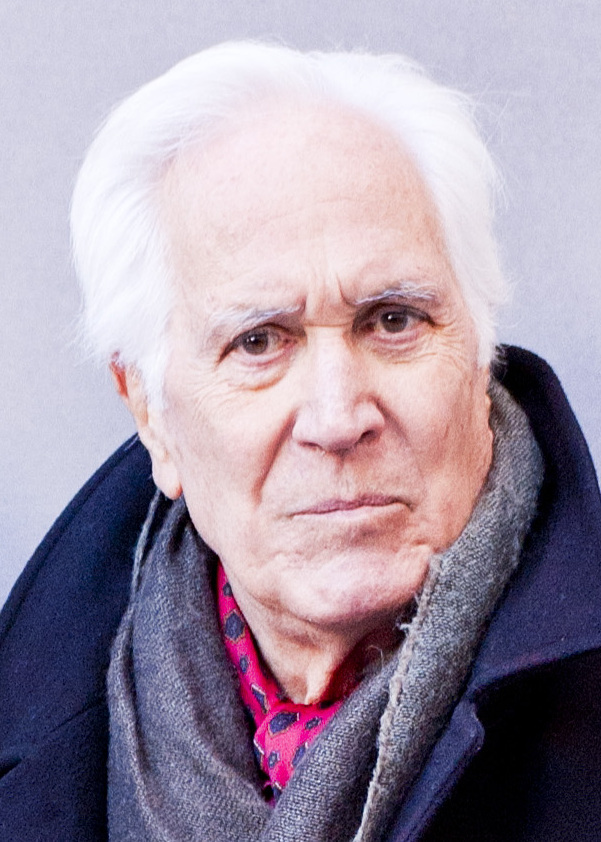
Aristarain’s international breakthrough came in 1992 with Un lugar en el mundo, a film that would become one of the most celebrated works in Latin American cinema. The story, set in a rural Argentine village, follows a family’s struggle to preserve their land and dignity in the face of corporate greed. The film won the prestigious Concha de Oro at the San Sebastián International Film Festival, a rare honor for a Latin American director at the time. It also earned Aristarain a Goya Award for Best Iberoamerican Film, further solidifying his status as a transatlantic cinematic force.
However, Un lugar en el mundo is perhaps best remembered for the controversy it sparked at the Academy Awards. Initially nominated for Best Foreign Language Film in 1993, the film was later disqualified due to a technicality: it had been submitted by Uruguay, not Argentina, and the Academy ruled that it did not meet the criteria for Uruguayan representation. The decision was met with widespread criticism, with many viewing it as a missed opportunity to recognize a film that had already garnered international acclaim. Despite the setback, Aristarain remained philosophical, later reflecting that the film’s true value lay in its ability to resonate with audiences, regardless of awards.
A Filmmaker Who Bridged Continents
Adolfo Aristarain’s work was deeply rooted in Argentina, but his influence extended far beyond its borders. His films often explored the tensions between Europe and Latin America, reflecting his own experiences as a filmmaker who moved between the two continents. This duality is perhaps most evident in Lugares comunes (2002), a poignant drama about an aging professor and his wife navigating the challenges of retirement and displacement. The film, which won Aristarain his second Goya Award—this time for Best Adapted Screenplay—was a co-production between Argentina and Spain, a testament to his ability to create stories that transcended national boundaries.
Aristarain’s relationship with Spain was particularly significant. Over the years, he became a familiar figure in Spanish cinema, collaborating with some of the country’s most respected actors and filmmakers. His work was frequently recognized by the Academia de las Artes y las Ciencias Cinematográficas de España, which awarded him its Medalla de Oro in 2024. The honor, one of the highest distinctions in Spanish cinema, was bestowed upon him in recognition of his “decisive contribution to Argentine cinema and his invaluable contribution to Spanish-language filmmaking.” Aristarain was the first Argentine director to receive the award, a milestone that underscored his unique position as a cultural bridge between the two nations.
His films were also celebrated for their strong performances, often drawing out the best from his actors. Federico Luppi, who starred in several of Aristarain’s most acclaimed works, once described the director as a “maestro of human emotion,” a sentiment echoed by many who worked with him. In Martín (Hache) (1997), Aristarain explored the complexities of father-son relationships through the story of a young man navigating the aftermath of his mother’s death. The film, which featured standout performances from Juan Diego Botto and Cecilia Roth, was a critical and commercial success, further establishing Aristarain as a director capable of blending intimate character studies with broader social themes.
Tributes Pour In from the Global Film Community
News of Aristarain’s death has prompted an outpouring of tributes from across the film world, with actors, directors, and cultural figures taking to social media to express their grief and admiration. Among those paying homage was Argentine actress Griselda Siciliani, who shared a heartfelt message on Instagram alongside a photograph of Aristarain behind the camera. “Adolfo Aristarain. Gracias,” she wrote, accompanying the post with a scene from Martín (Hache), the film in which she had appeared alongside Cecilia Roth. Siciliani’s tribute was one of many that highlighted the deep personal connections Aristarain forged with those he worked with, as well as his enduring influence on Argentine cinema.