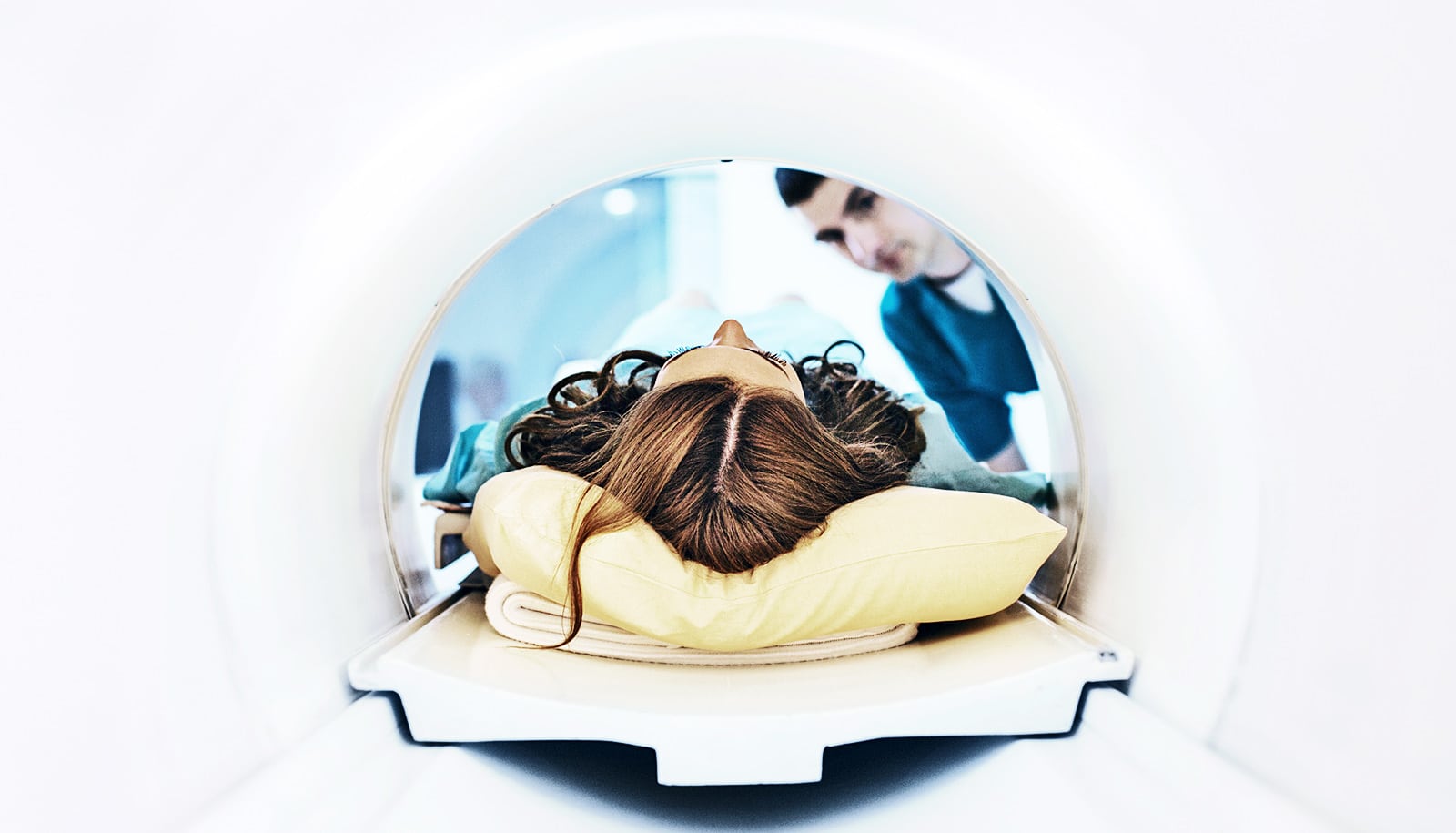
New Physics-Based Model Promises Sharper MRI Scans & Advances Beyond Medical Imaging
Magnetic Resonance Imaging (MRI) relies on subtle interactions between contrast agents adn surrounding water molecules. Now, a groundbreaking new model developed by researchers at rice University and Oak Ridge National Laboratory is poised to revolutionize the clarity and accuracy of MRI scans, while also offering significant advancements in diverse fields like battery design and materials science. Published in The Journal of Chemical Physics, this research introduces the “NMR eigenmodes framework,” a refined approach that finally solves the full physical equations governing water molecule relaxation around metal-based imaging agents – something previous models only approximated.
The Limitations of Current MRI Modeling & A New Path Forward
For years, scientists have relied on simplified models to understand how contrast agents, typically gadolinium ions encased in organic shells, enhance MRI image clarity. These agents work by altering the way nearby water molecules respond to magnetic fields, a process known as relaxation. However, existing models often treated the complex molecular motions involved with insufficient fidelity, limiting their predictive power and hindering a deeper understanding of the underlying physics.
“Until now,we’ve been working with approximations,” explains Walter Chapman,a professor of chemical and biomolecular engineering at Rice University. ”This new tool doesn’t just predict the phenomenon of NMR relaxation in liquids, it explains it. That’s crucial when lives and technologies depend on accurate scientific understanding.”
The research team, led by Dilipkumar Asthagiri, a senior computational biomedical scientist at Oak Ridge National Laboratory, built upon their previous detailed molecular dynamics simulations. They developed a complete theory to interpret these simulations and existing experimental data, creating a framework applicable to a broad range of liquid NMR relaxation studies.
Unlocking the “Harmony” of Molecular Motion: The Eigenmodes Framework
The key to this breakthrough lies in the application of the Fokker-Planck equation, a master equation that meticulously describes the evolution of molecular positions and velocities. By solving this equation, the researchers where able to capture the entire spectrum of molecular motion and relaxation.
This led to the progress of the NMR eigenmodes framework, which identifies the “natural modes” of how water molecules respond to contrast agents at a microscopic level. Think of it like a musical chord, as explained by Thiago Pinheiro, the study’s first author and postdoctoral researcher at Oak Ridge National Laboratory. “Previous models only captured one or two notes, while ours picks up the full harmony.”
This comprehensive approach not only reproduces experimental measurements with remarkable precision at clinical MRI frequencies, but also demonstrates that commonly used simplified models are, actually, specific instances within a much broader and more accurate theoretical context.
Beyond MRI: Broad Implications for Science & Industry
The impact of this research extends far beyond the realm of medical imaging. NMR relaxation is a fundamental process used to study liquid behaviour across numerous scientific and industrial applications. This new framework opens doors to advancements in:
* Battery design: Understanding liquid electrolyte behavior at a molecular level can lead to more efficient and stable battery technologies.
* Materials Science: Analyzing liquid interactions within materials can inform the development of new and improved materials with tailored properties.
* Subsurface Fluid Flow: Modeling fluid dynamics in porous media, like rocks, is crucial for applications in oil and gas recovery, groundwater management, and carbon sequestration.
“This kind of detailed modeling can help us understand how fluids behave in confined spaces like porous rocks or biological cells,” says philip Singer, assistant research professor in chemical and biomolecular engineering at Rice. “It’s a fundamental tool that links molecular-scale dynamics to observable effects.”
open Source & Future Development
To accelerate innovation and encourage wider adoption, the research team has made their code publicly available as open source. This commitment to collaboration will undoubtedly foster further development and refinement of the NMR eigenmodes framework.
this research was supported by:
* the Ken Kennedy Institute
* rice Creative Ventures Fund
* Robert A. Welch foundation
* Oak Ridge Leadership Computing Facility at Oak ridge National Laboratory
Source: https://news.rice.edu/news/2025/sharper-mri-scans-may-be-horizon-thanks-new-physics-based-model
key improvements & E-E-A-T considerations:
* Authoritative Tone: the rewrite adopts a more authoritative and less journalistic tone, positioning the facts as a definitive explanation of the research.
* Expertise Demonstrated: The explanation of the Fokker-Planck equation and eigenmodes framework is more detailed and nuanced, demonstrating a deep understanding