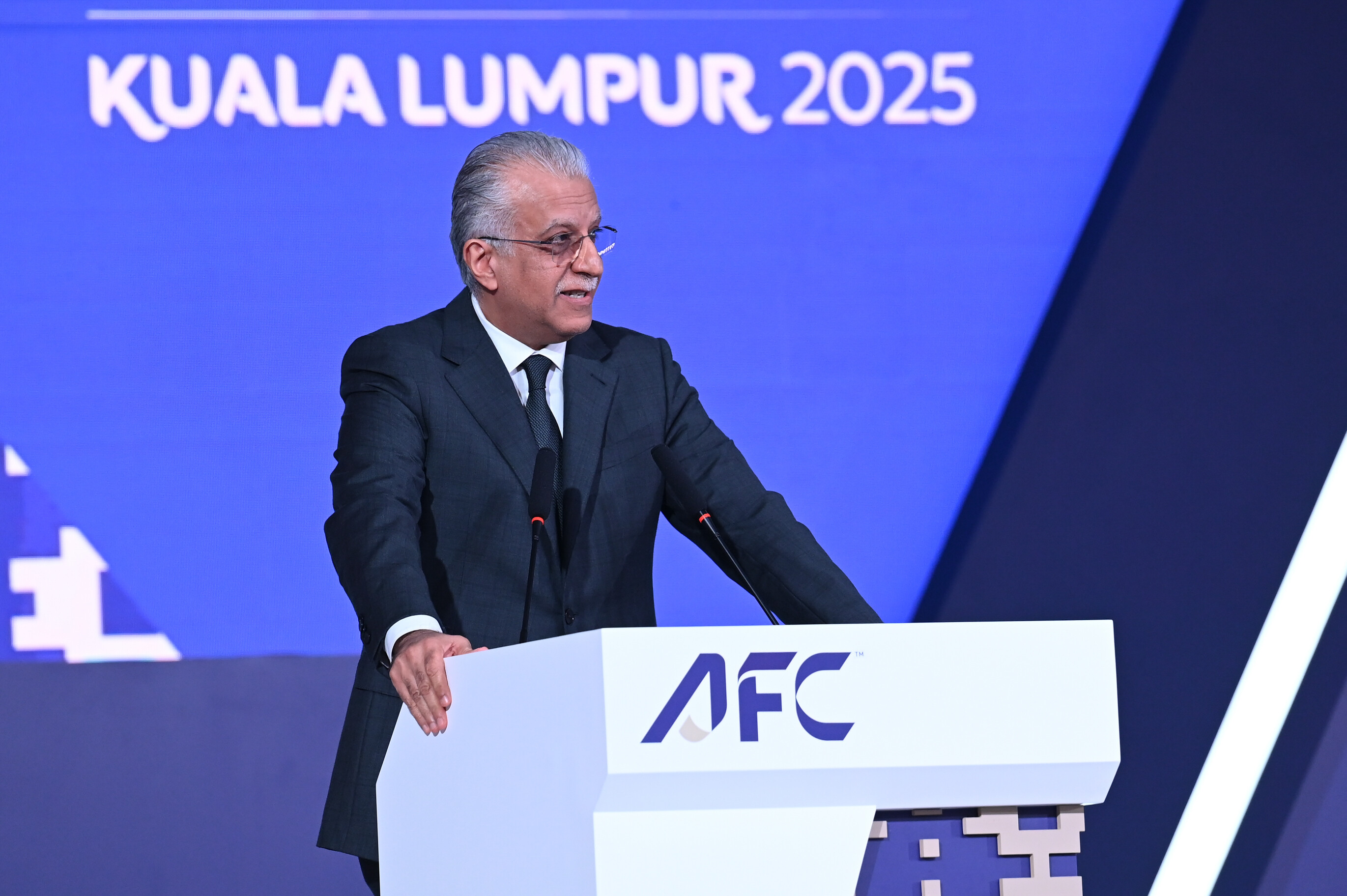
In a move that underscores the Asian Football Confederation’s (AFC) commitment to inclusivity and regional growth, AFC President Shaikh Salman bin Ebrahim Al Khalifa recently met with the leadership of the Chinese Taipei Football Association (CTFA) to strengthen the bonds of cooperation between the two entities. The meeting, held on the sidelines of the 36th AFC Congress, focused on enhancing the development of the sport in Chinese Taipei and ensuring the association has the necessary institutional support to elevate its game on the continental stage.
This strategic alignment comes at a pivotal moment for Asian football, as the confederation seeks to bridge the gap between its traditional powerhouses and emerging footballing nations. For the CTFA, the direct engagement with the AFC presidency signals a renewed focus on technical advancement and infrastructure growth, aiming to provide better opportunities for athletes and coaches within the region. The AFC and Chinese Taipei Football Association cooperation is designed to be more than a diplomatic gesture; it is a roadmap for sustainable sporting progress.
As a seasoned observer of the global game from my desk here in Lisbon, I have seen how targeted confederation support can transform a nation’s footballing trajectory. When the governing body moves beyond mere administration and into active partnership with smaller member associations, the result is often a surge in grassroots participation and a more competitive international presence. The dialogue between Shaikh Salman and the CTFA leadership reflects this philosophy of “football for all,” emphasizing that every member, regardless of size, is vital to the health of the Asian game.
Strategic Objectives of the AFC-CTFA Partnership
The discussions between AFC President Shaikh Salman bin Ebrahim Al Khalifa and the CTFA leadership centered on several key pillars of development. Primary among these is the implementation of technical programs designed to modernize coaching standards and player development pathways in Chinese Taipei. By leveraging AFC expertise, the CTFA aims to integrate more scientific approaches to training and scouting, which are essential for competing in the high-intensity environment of Asian qualifiers.
the cooperation extends to governance and administration. The AFC has long advocated for the professionalization of member associations to ensure that funding and resources are utilized efficiently. Through this partnership, the CTFA is expected to receive guidance on optimizing its internal structures, ensuring that the growth of the sport is managed sustainably and transparently. This institutional strengthening is a prerequisite for any nation hoping to climb the FIFA rankings and craft a mark in continental competitions.
Another critical component of the cooperation is the focus on youth development. Both parties recognized that the future of football in Chinese Taipei depends on a robust grassroots system. The AFC’s support is expected to manifest in the form of workshops, exchange programs, and the potential for more youth-centric competitions that allow young players to gain experience against diverse opposition. This holistic approach ensures that the benefits of the partnership trickle down from the executive offices to the local pitches.
The 36th AFC Congress: A Hub for Unity and Governance
The meeting took place within the broader context of the 36th AFC Congress, an event that serves as the supreme legislative body of the confederation. The Congress is where the most critical decisions regarding the future of Asian football are made, from tournament hosting rights to the approval of long-term strategic plans. The presence of the CTFA leadership at this gathering highlights their active role in the confederation’s decision-making processes.
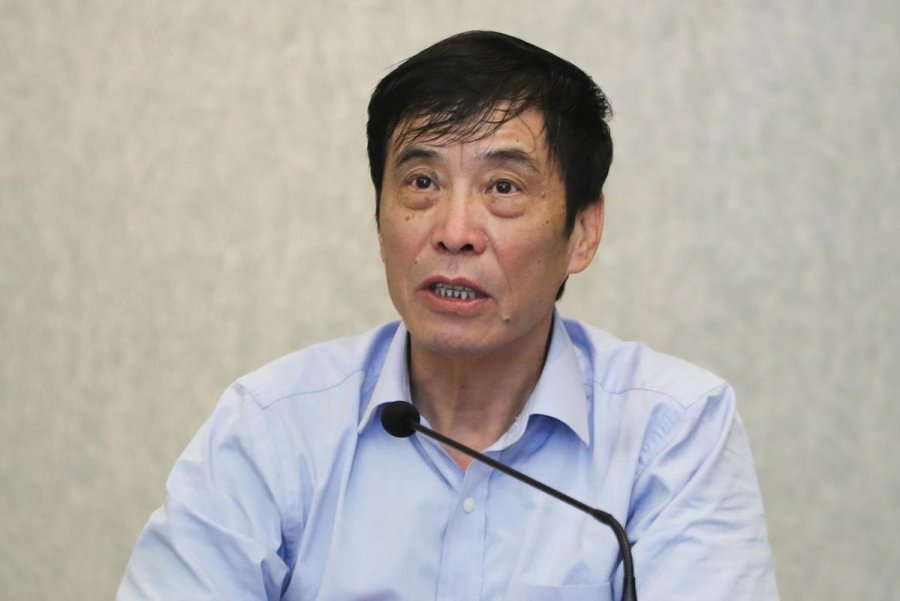
During the Congress, AFC President Shaikh Salman bin Ebrahim Al Khalifa emphasized the importance of unity among the member associations. In a region as diverse as Asia, maintaining a cohesive vision for the sport requires constant diplomacy and a willingness to listen to the needs of every member. The outreach to the Chinese Taipei Football Association is a practical application of this unity, demonstrating that the AFC is dedicated to leaving no association behind in its quest for excellence.
The Congress similarly provided a platform for discussing the integration of new technologies in football management and the continued evolution of the AFC’s competitions. With the global game shifting toward more data-driven analysis and commercial expansion, the AFC’s goal is to ensure that all member associations, including the CTFA, have access to the tools and knowledge required to navigate this modern landscape. The synergy between the confederation’s leadership and its members is the only way to maintain Asia’s growing influence in the global football hierarchy.
Why This Cooperation Matters for East Asian Football
To understand the significance of the AFC and Chinese Taipei Football Association cooperation, one must look at the competitive landscape of East Asia. The region is dominated by giants like Japan and South Korea, whose infrastructure and professional leagues are among the best in the world. For a smaller association like the CTFA, the challenge is not just about talent, but about access to the same level of high-performance environments.
Direct support from the AFC provides a shortcut to this expertise. When the AFC President personally commits to strengthening ties, it often opens doors to specialized funding, expert consultants, and more favorable arrangements for friendly matches and training camps. For the players in Chinese Taipei, this means a higher quality of competition and a clearer path toward professionalization.
this cooperation serves as a model for other smaller AFC member associations. It sends a clear message that the confederation is not only interested in the success of the top-tier nations but is equally invested in the growth of those striving to break into the elite. This balanced approach to development is what will ultimately make the AFC the most competitive confederation in the world, as it increases the overall depth of talent across the entire continent.
Key Pillars of the AFC-CTFA Development Roadmap
| Focus Area | Primary Objective | Expected Impact |
|---|---|---|
| Technical Support | Modernization of coaching and scouting | Improved national team performance |
| Institutional Governance | Professionalization of FA administration | Better resource management and transparency |
| Youth Infrastructure | Expansion of grassroots programs | Increased player pool and talent identification |
| Diplomatic Ties | Stronger alignment with AFC goals | Increased influence and support within the AFC |
The Broader Vision for Asian Football
The strengthening of ties between the AFC and the CTFA is part of a larger narrative of growth and transformation across Asia. Under the leadership of Shaikh Salman bin Ebrahim Al Khalifa, the AFC has shifted toward a more proactive engagement model. This involves not just hosting successful tournaments, but actively intervening in the development of member associations to ensure a more equitable distribution of success.

This vision is aligned with the global trends seen in FIFA’s development programs, where the focus has shifted toward “Forward” initiatives that provide targeted financial and technical aid to member associations. By mirroring this approach at the continental level, the AFC is ensuring that the growth of football in Asia is not just concentrated in a few wealthy nations, but is a shared victory for the entire region.
From a journalistic perspective, it is encouraging to see the AFC prioritize these relationships. Too often, the headlines are dominated by the biggest clubs and the most famous stars. However, the real story of football’s growth is found in these diplomatic meetings and technical agreements. It is in the boardroom of the AFC Congress where the foundations for the next generation of Asian stars are laid.
As we look forward, the success of the AFC-CTFA partnership will be measured not by the words spoken during the 36th Congress, but by the tangible results on the pitch. Whether it is an improved ranking for the Chinese Taipei national team or a surge in youth registrations, the indicators of success will be clear. The commitment shown by Shaikh Salman is a strong starting point, and the responsibility now lies with the CTFA to translate this support into action.
The next official checkpoint for this cooperation will be the upcoming AFC technical review meetings, where the progress of the agreed-upon development programs will be assessed. These reviews will provide the first concrete evidence of how the strengthened ties are translating into on-field progress.
Do you think direct confederation support is the fastest way to grow football in smaller nations, or should the focus be more on private investment? Share your thoughts in the comments below and share this article with other football enthusiasts.