In the quiet corners of a remote Afghan mountain farming village, two cousins are documenting a reality that few outside their immediate community ever witness. Working under the pseudonyms Mahnaz Ebrahimi and Somayeh Ebrahimi, these photographers have produced a series of stark, black-and-white images that serve as both a record of survival and a visual manifestation of dreams deferred. Their work, which explores the tension between the constraints of life under Taliban rule and the enduring spirit of Afghan women, is currently being showcased at the Photoville Festival in Brooklyn, New York.
The collection captures a duality that defines their daily existence: the crushing weight of systemic restrictions and the resilient, often defiant, imagination of those living through them. For these two women, who were born in 2000 and 2001 respectively, the camera has become a tool for narrative reclamation. By choosing to remain anonymous and utilizing pseudonyms, they navigate the significant risks associated with their creative output, fearing potential retribution for documenting a perspective that challenges the status quo in a region marked by gender-based limitations.
Art as a Tool for Resilience
The photographs rely on powerful, symbolic imagery to articulate the experiences of women living under strict social codes. In one evocative piece, titled “It will not stand in my way,” a woman is depicted riding a bicycle while wearing a burka. Despite the garment enfolding her body from head to ankles and a meshed veil restricting her vision, the subject’s posture—hands firmly on the handlebars—conveys a profound sense of determination. The image challenges the viewer to consider the persistence of individual agency even when physical and social mobility are severely curtailed.
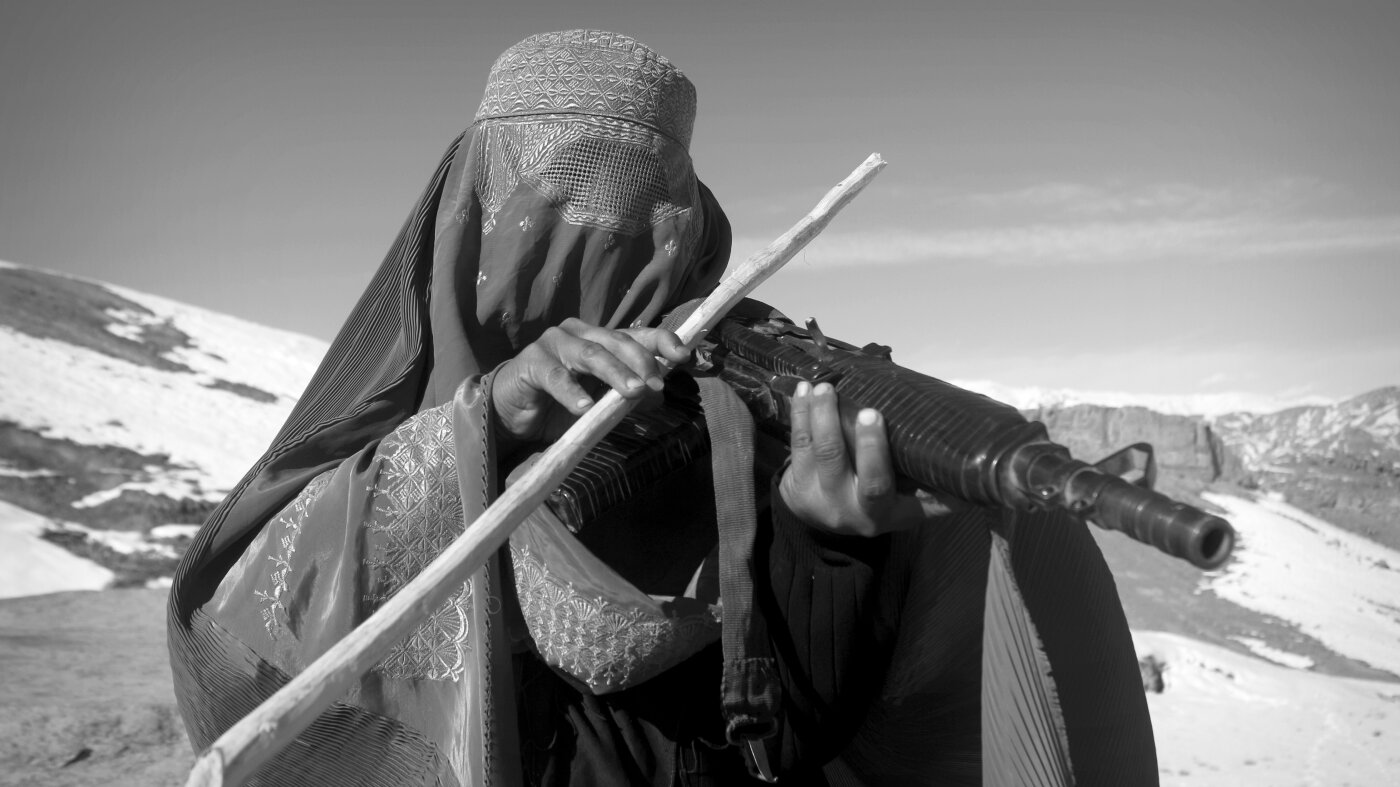
Another striking image, “The Music of Poverty and Violence,” features a woman holding an automatic weapon, positioning it against her shoulder as if it were a violin. By “bowing” the weapon with a long wooden stick, the subject transforms an instrument of conflict into a symbol of expressive, albeit painful, art. This juxtaposition highlights the harsh realities of their environment while simultaneously emphasizing the human need to create beauty and meaning, even in the most adverse circumstances.
Somayeh Ebrahimi has described this philosophy, noting, “Courage means being afraid and trembling in the face of adversity, but with the courage, dance!” This sentiment echoes throughout the series, particularly in a photograph of a burka-clad figure swirling with such velocity that the fabric appears to lift her upward. Across a brick wall in the background, a phrase is scribbled in Farsi: “I dreamed that my homeland was prosperous.”
The Context of Their Craft
The photographers are members of the Hazara ethnic group and identify as Shia Muslims. Before the current political shifts, they and their families were involved in the carpet-weaving trade in Kabul. This background in traditional craftsmanship informs the meticulous, deliberate nature of their photography. Their transition from the looms of Kabul to the stark landscapes of a remote mountain village represents a significant shift in both their professional lives and their personal safety.
The decision to display these works at an international venue like the Photoville Festival provides a global platform for voices that are frequently silenced. It invites observers to engage with questions regarding the nature of reality: Do these images depict fiction, or are they a profound reflection of the lived experience? By blurring the lines between the two, the cousins offer a complex portrait of Afghan women—not merely as victims of their environment, but as active participants in the struggle for dignity and self-expression.
Navigating Global Visibility
The exhibition in Brooklyn serves as a vital point of connection between the isolated mountain village and the wider world. As these images circulate, they contribute to a broader international discourse on gender equality, human rights, and the role of art in political resistance. For the audience at Photoville, the work provides a rare, intimate look at the dreams of women who are often defined in western media only by their limitations.

The project remains an ongoing endeavor. While the photographers operate under the cloak of anonymity, their images continue to speak with clarity. As of this writing, the exhibition remains a focal point for those interested in the intersections of photography, gender politics, and the human condition. Readers interested in following the developments of the Photoville Festival and viewing future updates regarding this exhibition can visit the official Photoville website for schedules and further information on featured artists.
The resilience captured by the Ebrahimi cousins is a testament to the power of visual storytelling. As they continue their work in the mountains of Afghanistan, their images remain a stark, necessary reminder of the dreams that persist even when the path forward is obscured. We welcome your thoughts on how visual art can reshape our understanding of global conflicts. please share your perspective in the comments section below.
Related reading