
Afghanistan Earthquake: A Crisis Deepened by Restrictions on Women’s Aid & Cultural Barriers
The recent 6.0 magnitude earthquake that struck eastern Afghanistan on August 31st has left a trail of devastation, claiming over 2,200 lives and displacing thousands more. But beyond the immediate physical destruction, a complex humanitarian crisis is unfolding, one substantially hampered by existing restrictions on women’s participation in aid efforts and deeply ingrained cultural norms. This article delves into the challenges facing survivors, the critical role of women in the response, and the urgent need for a more inclusive and effective aid strategy.
A Landscape of Loss and urgent Need
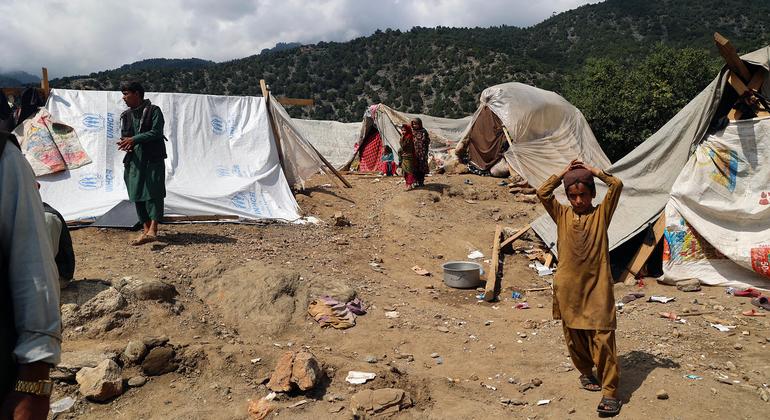
The earthquake’s epicenter was in Kunar province,a region characterized by steep,mountainous terrain. Reaching affected communities has proven incredibly difficult, frequently enough requiring aid workers to travel on foot. Homes built precariously on hillsides were particularly vulnerable,collapsing in the midnight quake and burying families within the rubble.
Survivors are facing a desperate situation. As UN Women representative Alison Ferguson observed after visiting a makeshift camp in Chawkay district, “These women had fled thier village in the middle of the night…walking for hours to find temporary shelter.” The stories are heartbreaking: lost relatives, destroyed homes, vanished livelihoods. “Now we have nothing,” one woman poignantly stated, echoing the sentiment of countless others. With winter approaching and temperatures plummeting, the need for sturdy shelter is becoming increasingly critical.
The Disproportionate Impact on Women and Girls
The earthquake hasn’t impacted all populations equally.Alarmingly, women and girls account for over half of those killed and injured, and a staggering 60% of those still missing. This disparity underscores the pre-existing vulnerabilities faced by women in Afghanistan, vulnerabilities now exacerbated by the disaster.
Beyond the immediate casualties, the destruction of infrastructure is creating new dangers. Women and girls are forced to travel further distances to access basic necessities like water and sanitation, increasing their exposure to the risk of violence and the ever-present threat of landmines. The disruption of daily life,already challenging for women in this cultural context,now presents an exponential increase in hardship.
A Critical Obstacle: Restrictions on Female Aid Workers
The humanitarian response is facing a significant, and deeply concerning, obstacle: the Taliban’s ban on Afghan women working for UN organizations and NGOs, effective September 5th. This policy prevents female staff from entering UN compounds in Kabul, severely limiting the capacity of aid organizations to operate effectively.
While women are still able to work directly in the earthquake-affected areas, the ban creates a logistical and operational bottleneck. As Ms. Ferguson explained, “the ban is impacting us as our women staff are not allowed to come to the office to work.” This restriction is not merely an inconvenience; it’s a fundamental impediment to delivering aid to those who need it most.
Navigating Cultural Sensitivities: The Importance of Female Healthcare Providers
The cultural context of eastern Afghanistan presents unique challenges to the aid effort. Reports from health workers and survivors highlight a strong preference – and in certain specific cases, a necessity - for female healthcare providers.
“What I heard…was that there was a particular area…where there were cultural norms that meant that women themselves didn’t want men to touch them and that men also didn’t want to touch women as they were trying to rescue them,” Ms.Ferguson noted. This underscores the vital importance of ensuring that aid teams include enough qualified women to provide culturally sensitive care.
Moreover, the lack of access for women to share their needs and concerns directly with aid organizations is a critical gap. As one woman working with assessment teams reported, “there was no other channel for women to share their needs and concerns, as they are restricted from speaking to men.” This highlights the need for dedicated mechanisms to ensure women’s voices are heard and their specific needs are addressed.
The Scale of the Challenge: Debris Removal and Displacement
The sheer scale of the destruction is daunting. Satellite imagery analyzed by the UN growth Program (UNDP) reveals over 649,000 tonnes of debris – equivalent to 40,500 truckloads – that must be cleared. The UNDP estimates that at least 23,000 people have been displaced from their homes, adding to the already immense humanitarian burden.
Looking Ahead: A Call for inclusive and Effective Aid
The situation in eastern afghanistan demands a swift, coordinated, and – crucially – inclusive response. The following steps are essential:
* **Lifting the Ban on Female Aid Workers





