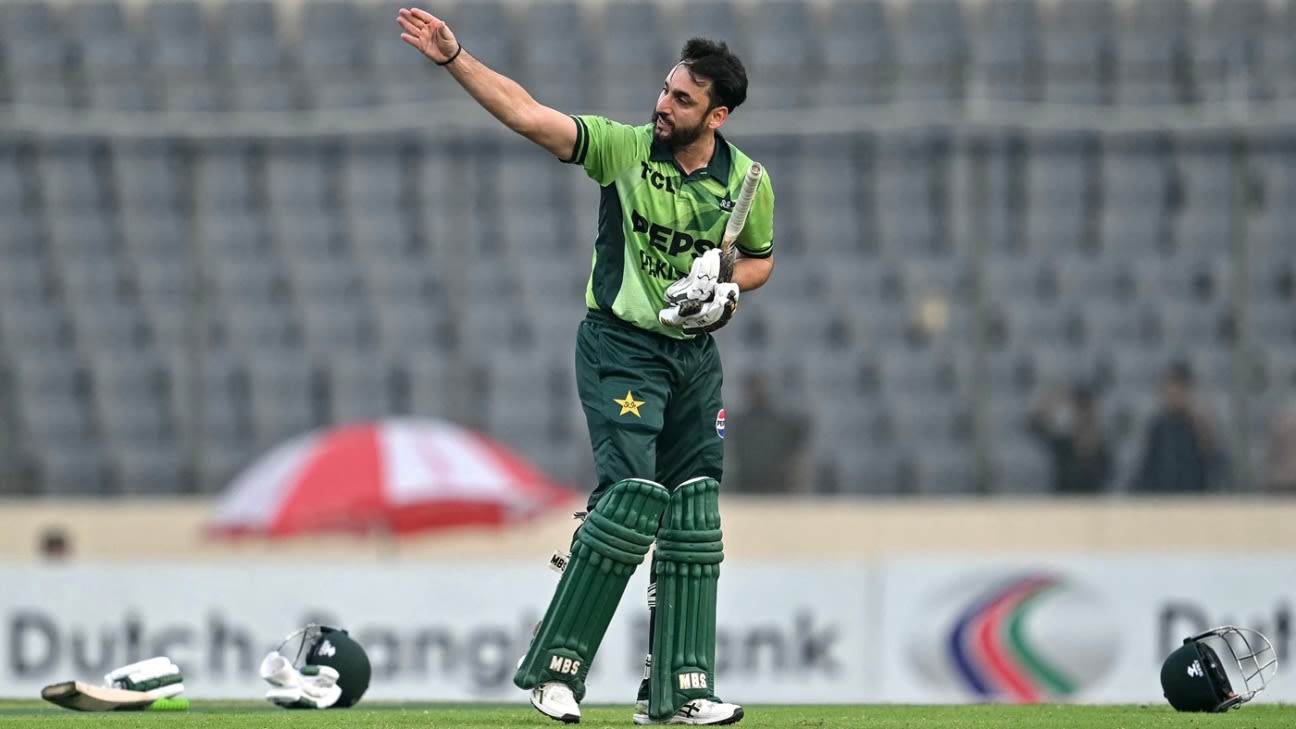
Dhaka, Bangladesh – A controversial run-out during the second One Day International (ODI) between Pakistan and Bangladesh has sparked debate and a call for greater “sportsman spirit” from Pakistan batsman Salman Ali Agha. The incident, involving Bangladesh fielder Mehidy Hasan Miraz, occurred while Agha was backing up at the non-striker’s end, and has dominated post-match discussions. Pakistan ultimately won the match by 128 runs, decided by the Duckworth-Lewis-Stern (DLS) method, but the dismissal cast a shadow over their victory.
The incident unfolded when Mohammad Rizwan drove the ball back towards Agha. As Agha moved to potentially return the ball to the bowler, Mehidy Hasan Miraz swiftly gathered it and completed a run-out. Agha initially reacted with visible frustration, throwing his gloves and helmet in protest. However, he later addressed the media, offering a measured response and emphasizing the importance of upholding sporting values in the game of cricket. This incident has reignited discussions surrounding the ethics of such dismissals, even when within the laws of the game.
Agha Calls for Sportsman Spirit
Speaking at the post-match press conference, Agha acknowledged that Mehidy Hasan Miraz’s actions were technically within the rules, but expressed his personal belief that a different approach would have been more aligned with the spirit of cricket. “I think sportsman spirit has to be there,” Agha stated, as reported by multiple news outlets. “What he [Mehidy] has done is in the law. I think if he thinks it’s right, it’s right, but if you ask me my perspective, I would have done differently. I would have gone for sportsman spirit. We haven’t done this [type of thing] previously, we would never do that in the future as well.” This statement highlights a tension between adhering strictly to the letter of the law and prioritizing the unwritten code of conduct that often governs sporting contests.
Agha further explained his understanding of the situation, stating he believed the ball had already touched his bat and pad, rendering him safe from a run-out. “Actually, the ball hit on my pad and then my bat,” he explained. “So I thought he can’t secure me run-out now, because the ball already hit on my pad and my bat.” He clarified that his intention was to return the ball to the bowler, believing it would be considered a dead ball situation. “I was just trying to give him the ball back. I was not looking for the run or anything like that, but he already decided [to make the run-out].”
Regret Over Reaction, Ongoing Dialogue
While initially displaying visible anger, Agha expressed regret over his immediate reaction, attributing it to the heat of the moment. “It was just heat-of-the-moment kind of stuff,” he conceded. “If you ask me what would I have done, I would have done things differently. But it was everything, whatever happened after that, it was in the moment.” This admission demonstrates a level of self-awareness and a willingness to reflect on his behavior, even amidst the intensity of international competition.
The incident wasn’t limited to the on-field dismissal. Agha also revealed a robust exchange with Bangladesh wicketkeeper Litton Das following the run-out. While he refrained from divulging specifics, he acknowledged the intensity of the conversation. “I can’t remember what I was saying and I can’t remember what he was saying,” Agha said. “I’m sure I wasn’t saying nice things, and I’m sure he wasn’t saying nice stuff as well. But it was just heat of the moment, so we are fine.”
When asked about whether he had reconciled with Mehidy Hasan Miraz, Agha indicated that the conversation hadn’t yet taken place, but expressed his intention to address the matter. “I haven’t yet, but don’t worry, I’ll find him,” he stated, suggesting a desire to resolve any lingering tension and maintain a respectful relationship with his opponent.
Context of the Match and DLS Decision
The controversial dismissal occurred during Pakistan’s innings. Agha contributed 64 runs off 62 balls before being dismissed. Pakistan ultimately posted a total that proved too challenging for Bangladesh, securing a victory by 128 runs. However, the match was affected by weather conditions, leading to the application of the DLS method to determine the final result. The DLS method is a mathematical formulation designed to calculate a revised target score for the team batting second in a limited-overs cricket match interrupted by weather or other circumstances. ESPNcricinfo provides a detailed explanation of the DLS method.
The Run-Out Rule and its Controversies
The legality of the run-out itself stems from Law 33 of the Laws of Cricket, which governs run-outs. The law states that a batsman is out if their ground is not within the popping crease and the wicket is position down. While perfectly legal, the manner of the dismissal – capitalizing on a batsman attempting to return the ball – has sparked debate about the spirit of the game. Similar incidents have occurred in the past, often leading to heated discussions among players, commentators, and fans. The Marylebone Cricket Club (MCC), the guardian of the Laws of Cricket, periodically reviews and updates the laws, and this incident may prompt further consideration of the relevant regulations.
The debate surrounding this run-out echoes previous controversies in cricket, where the application of the laws has clashed with perceptions of fair play. The ‘spirit of cricket’ is a concept that emphasizes respect for opponents, upholding the game’s traditions, and playing within the boundaries of ethical conduct. While not explicitly codified in the laws, it is widely considered an integral part of the game’s culture.
Maaz Sadaqat was named player of the match for his performance in the second ODI. He scored 64 runs and took two wickets. Captain Shaheen Shah Afridi also addressed the media following the match, but the focus remained on Agha’s dismissal and his subsequent comments.
The Pakistan team will now prepare for the final ODI of the series, scheduled to take place on March 16th. The series is currently level at 1-1, setting the stage for a decisive final match. The Bangladesh Cricket Board (BCB) has not yet issued a formal statement regarding the incident, but it is expected that the matter will be discussed internally.
As Agha seeks to connect with Mehidy Hasan Miraz, the cricket world will be watching to witness if this incident leads to a broader conversation about the balance between playing within the rules and upholding the spirit of the game. The next match in the series promises to be a compelling contest, both on and off the field.
Stay tuned to World Today Journal for further updates on this developing story and comprehensive coverage of the Pakistan vs. Bangladesh ODI series. Share your thoughts on the run-out controversy in the comments below.