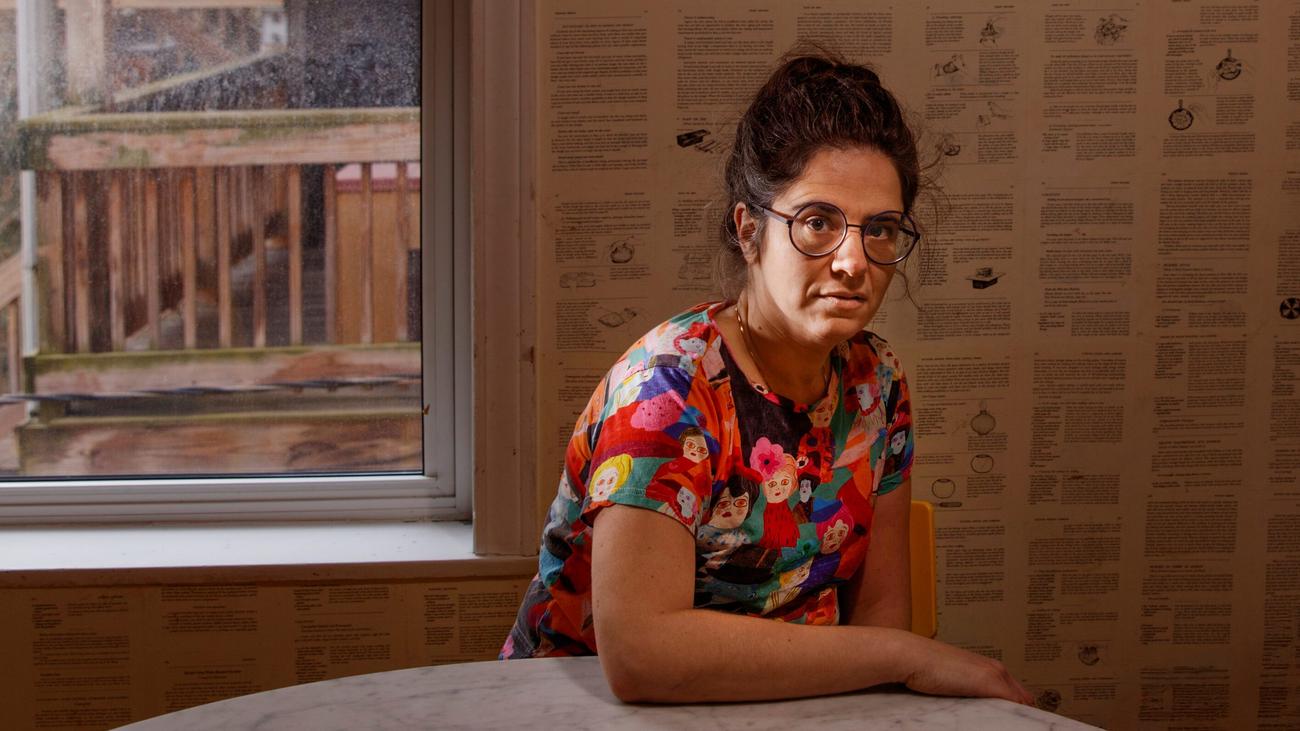
Agnes Callard has emerged as one of the most distinctive voices in contemporary philosophy, known for bridging ancient thought with modern ethical dilemmas. Her work, particularly in the realms of Socratic philosophy and practical ethics, has garnered attention not only in academic circles but also among general readers seeking thoughtful reflections on how to live. Described by some as embodying the spirit of Socrates in the 21st century, Callard’s approach emphasizes questioning, self-examination, and the pursuit of wisdom through dialogue. This reputation has been reinforced by her recent book and public engagements, which continue to draw interest from readers worldwide.
Born in Budapest in 1976, Callard moved to the United States during her childhood and pursued her academic training at some of the nation’s most prestigious institutions. She earned her bachelor’s degree from the University of Chicago in 1997 before studying classics at the University of California, Berkeley. After a period of study at Princeton, she returned to Berkeley to complete her doctorate in philosophy in 2008 under the supervision of Samuel Scheffler. Her dissertation, titled “An Incomparabilist Account of Akrasia,” explored the philosophical problem of acting against one’s better judgment—a theme that has remained central to her scholarly work.
Since joining the faculty at the University of Chicago in 2008, Callard has held the position of Associate Professor of Philosophy, with a focus on ancient philosophy and ethics. In addition to her teaching responsibilities, she has served as Director of Undergraduate Studies in the philosophy department, a role she held through the 2025–2026 academic year. Her office is located in Stuart Hall on the university’s campus, where she continues to advise students and conduct research. Her academic profile highlights her commitment to making philosophical ideas accessible beyond the classroom.
Callard’s scholarship centers on the interpretation of ancient Greek philosophers, especially Socrates, Plato, and Aristotle, and how their ideas apply to contemporary moral psychology. She has written extensively on concepts such as akrasia (weakness of will), aspiration, and the nature of human motivation. Her 2017 book Aspiration: The Agency of Becoming examines how individuals strive to turn into someone new—not merely by achieving goals, but by transforming their values and self-understanding. The work was reviewed in outlets including the Times Literary Supplement and Philosophers’ Imprint, and has been cited in discussions about personal development and ethical growth.
In 2025, Callard published Open Socrates: The Case for a Philosophical Life, a book that reexamines the Socratic method as a way of life rather than merely a technique for argumentation. The book received widespread attention, with reviews appearing in major publications such as The New York Times, The New Yorker, The Guardian, and The Washington Post. Critics praised its clarity and relevance, noting how it invites readers to consider philosophy not as an abstract discipline but as a practice that shapes everyday decisions and relationships.
Beyond her books, Callard has contributed essays to popular publications, exploring emotions like anger, jealousy, and grief through a philosophical lens. Her writing often reflects on how common human experiences are shaped by unexamined assumptions and social mimicry. In one widely cited reflection, she questioned how society arrives at shared beliefs about how to live, suggesting that many of our values are absorbed rather than chosen. This perspective has resonated with readers interested in the intersection of philosophy, psychology, and culture.
Callard’s personal life has also attracted public interest, particularly following a 2013 profile in The New Yorker that detailed the beginning of her relationship with Arnold Brooks, a former graduate student who confessed his feelings for her during a discussion of Aristotle’s Metaphysics. The article described how their connection developed during weekly philosophy meetings and eventually led to marriage. She was previously married to Ben Callard, also a philosophy professor at the University of Chicago, from 2003 until their divorce in 2011. She and Arnold Brooks have two sons together.
As a public intellectual, Callard frequently participates in lectures, interviews, and panel discussions that bring philosophical inquiry into public discourse. Her ability to explain complex ideas in accessible language has made her a sought-after speaker at universities, literary festivals, and media outlets. She continues to teach and write from her base in Chicago, where she remains an active member of the philosophy department at the University of Chicago.
Her work stands out for its insistence that philosophy is not confined to academia but is a vital tool for understanding oneself and others. By returning to the Socratic ideal of the examined life, Callard offers a model for how ancient wisdom can address modern struggles with identity, change, and moral uncertainty. For readers navigating questions of purpose and authenticity, her writings provide both intellectual rigor and empathetic insight.
Those interested in following her latest work can find updates through the University of Chicago’s philosophy department website, where her publications, course listings, and public appearances are regularly posted. Her books are available through major retailers and academic publishers, and her essays continue to appear in journals and magazines that bridge scholarly and general audiences.
As philosophy seeks renewed relevance in an age of rapid change, thinkers like Agnes Callard demonstrate how enduring questions about virtue, knowledge, and the great life can still guide contemporary thought. Her ongoing contributions ensure that the Socratic tradition remains not just a historical subject, but a living practice.
To stay informed about new developments in philosophy and ethics, readers are encouraged to follow trusted academic publishers and university announcements. Share your thoughts on how ancient philosophy applies to modern life in the comments below, and consider passing this article along to others interested in thoughtful, examined living.
Keep reading