
Swiss agricultural policy is at a crossroads, where consumer preferences for familiar foods clash with the need for sustainable farming practices. In a recent discussion, agricultural economists Andreas Wyss and Hansjürg Jäger highlighted how the Swiss public’s attachment to traditional farming methods—summarized by the phrase “Was du kennst, magst du” (“What you know, you like”)—is shaping policy debates. Their analysis reveals tensions between consumer expectations, regulatory frameworks, and the economic realities facing Swiss farmers.
According to Wyss, professor of agricultural economics at the University of Bern, the Swiss public’s preference for locally produced, recognizable foods creates both opportunities and constraints for policymakers. “Swiss consumers have a strong emotional connection to their food,” he said in a recent interview with Agenda Agrar. “They want to see familiar products on their plates, but this often conflicts with the need for innovation in farming practices.” Jäger, a senior researcher at Agroscope, Switzerland’s national agricultural research institute, echoed this sentiment, noting that “policy decisions must now balance consumer trust in traditional methods with the realities of climate change and resource scarcity.”
The discussion comes as Switzerland grapples with rising costs for farmers, including higher input prices and stricter environmental regulations. While 72% of Swiss consumers surveyed by GfK in 2023 expressed a willingness to pay more for locally sourced food, only 43% were open to trying new, sustainable farming methods like regenerative agriculture or precision farming. This disconnect, Wyss argues, forces policymakers to navigate a delicate balance between maintaining consumer satisfaction and supporting farmers’ ability to adapt.
Why Swiss Consumers Prefer Familiar Foods—and What It Means for Farmers
Switzerland’s agricultural sector is deeply intertwined with its cultural identity. The country’s small-scale, family-run farms—which make up 98% of all agricultural operations—produce goods that align closely with consumer expectations. From AOP-protected cheeses like Appenzeller to organic milk and pasture-raised meat, Swiss products are often marketed on their tradition, quality, and regional origin.

However, this attachment to familiarity creates challenges. A 2023 study by the Swiss Federal Institute for Agricultural Research (Agroscope) found that 68% of Swiss consumers associate traditional farming with higher quality, even when presented with data showing that modern sustainable practices can deliver equivalent or better outcomes. Jäger explains that “this perception gap is a major hurdle for policy initiatives aimed at transitioning to more sustainable agriculture.”
For example, while Swiss farmers are increasingly adopting precision farming techniques to reduce resource use, consumer skepticism remains high. A survey by Fachhochschule Nordwestschweiz (FHNW) revealed that only 34% of respondents trust farms using drones or AI for crop monitoring, compared to 89% who trust farms that rely on manual labor and traditional methods.
How Swiss Agricultural Policy Is Adapting to Consumer Demands
Swiss agricultural policy has long been shaped by direct democracy, where public referendums play a decisive role. The 2017 farmland initiative, which aimed to limit pesticide use, passed with 86% voter approval—demonstrating the public’s willingness to support stricter regulations when framed as protecting traditional farming. Yet, as Wyss points out, “the challenge now is to translate this public support into actionable policies that don’t stifle innovation.”
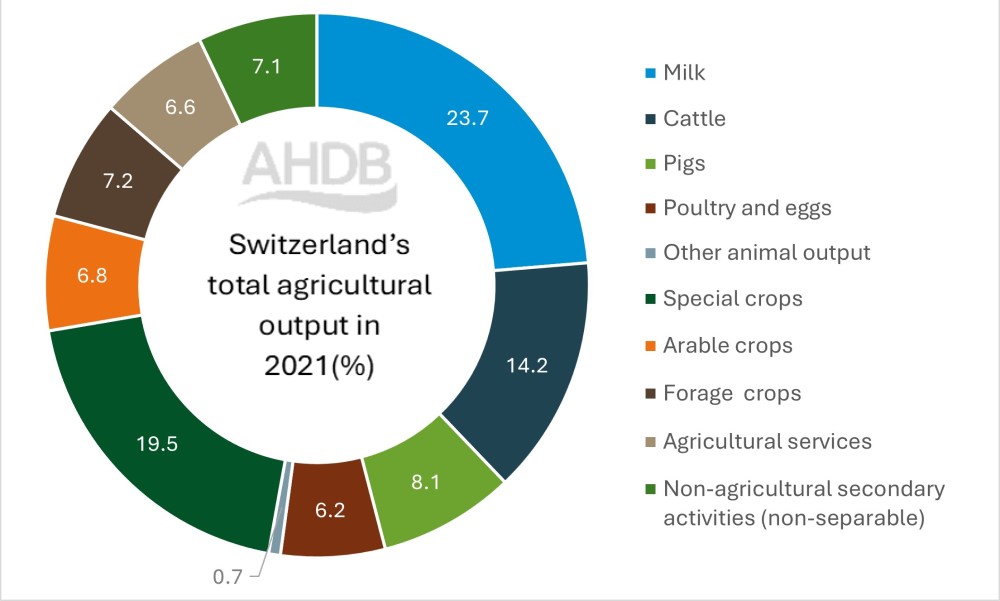
One key policy area under scrutiny is the Swiss Agricultural Policy 2022–2025 (AP 22+), which allocates CHF 3.1 billion annually to support sustainable farming. However, critics argue that the current system favors direct payments to farmers based on historical land use rather than environmental performance. Jäger notes that “this creates perverse incentives, where farmers may maintain outdated practices simply to qualify for subsidies.”
To address this, the Swiss government is exploring new funding models that tie subsidies to measurable sustainability outcomes, such as reduced pesticide use or increased biodiversity. However, implementing these changes requires careful communication to avoid backlash from consumers who associate stricter regulations with lower-quality food.
The Economic Reality: Can Swiss Farmers Survive Without Consumer Trust?
The financial pressures on Swiss farmers are intensifying. According to the Federal Statistical Office (FSO), the average Swiss farm lost CHF 12,000 in 2023 due to rising costs for feed, energy, and labor. Meanwhile, consumer demand for affordable food remains strong, with 57% of Swiss households reporting they prioritize price over sustainability when shopping, per a 2023 Coop survey.
Wyss warns that this economic strain could lead to a “race to the bottom,” where farmers cut corners on sustainability to remain competitive. “If consumers don’t see the value in sustainable practices, farmers will struggle to justify the higher costs,” he says. Jäger adds that “without policy interventions, we risk losing the very traditions that Swiss agriculture is built on.”
One potential solution lies in regenerative agriculture, which combines traditional methods with modern techniques to improve soil health and carbon sequestration. Pilot projects in regions like Bern and Zurich have shown promising results, with participating farms reporting a 20% reduction in input costs while maintaining yields. However, scaling these initiatives requires consumer education—a challenge given the public’s skepticism toward “unproven” methods.
What Happens Next? The Policy Roadmap for Swiss Agriculture
The Swiss government is set to finalize its Agricultural Policy 2026–2030 (AP 26+) by mid-2025, with key decisions expected by the end of 2024. Stakeholders are closely watching whether the new policy will:
- Increase funding for farmer training in sustainable practices, particularly for younger generations.
- Introduce performance-based subsidies that reward environmental outcomes rather than historical land use.
- Launch public campaigns to educate consumers about the benefits of sustainable farming, bridging the trust gap.
The next critical milestone is the June 2024 parliamentary hearings on AP 26+, where lawmakers will debate these proposals. Wyss predicts that “the biggest hurdle will be convincing consumers that change is necessary—without alienating them in the process.”
Key Takeaways: The Future of Swiss Agrarpolitik
- Consumer familiarity drives policy: Swiss public support for traditional farming creates both opportunities and constraints for agricultural innovation.
- Economic pressures are rising: Farmers face declining profits, forcing a reckoning with sustainability and efficiency.
- Policy must evolve: Direct payments tied to environmental performance could reduce incentives for outdated practices.
- Education is critical: Bridging the trust gap between consumers and modern farming methods will determine the sector’s future.
As Switzerland navigates these challenges, the insights from Wyss and Jäger serve as a reminder: Was du kennst, magst du—but in an era of climate change and resource scarcity, what Swiss consumers know may no longer be enough.
For the latest updates on Swiss agricultural policy, visit the Swiss Federal Office for Agriculture or follow discussions on Agenda Agrar. Share your thoughts in the comments below or on our contact page—how do you think Swiss agriculture should balance tradition with innovation?
Related reading