The rapid expansion of artificial intelligence and a wider push toward electrification will push US electricity consumption to unprecedented highs over the coming years, according to data released by the US Energy Information Administration (EIA). Total electricity demand is projected to climb from a previous peak of 4,195 terawatt-hours in 2025 to 4,268 terawatt-hours this year, before accelerating further to 4,391 terawatt-hours by 2027.
The EIA attributes the surging demand primarily to the massive power requirements of data centers supporting artificial intelligence and cryptocurrency mining. Beyond the tech sector, commercial enterprises and residential households are increasingly adopting electricity in place of fossil fuels for heating and transportation needs.
While the overall trajectory points firmly upward, regional friction is beginning to reshape local deployment. The EIA revised its 2027 growth outlook downward exclusively for Texas, where electricity demand is now expected to expand by just 6 percent rather than the previously projected 14 percent. That adjustment follows a directive issued in early August by the state governor halting the construction of new data centers.
Infrastructure Expansion Meets Local and Political Resistance
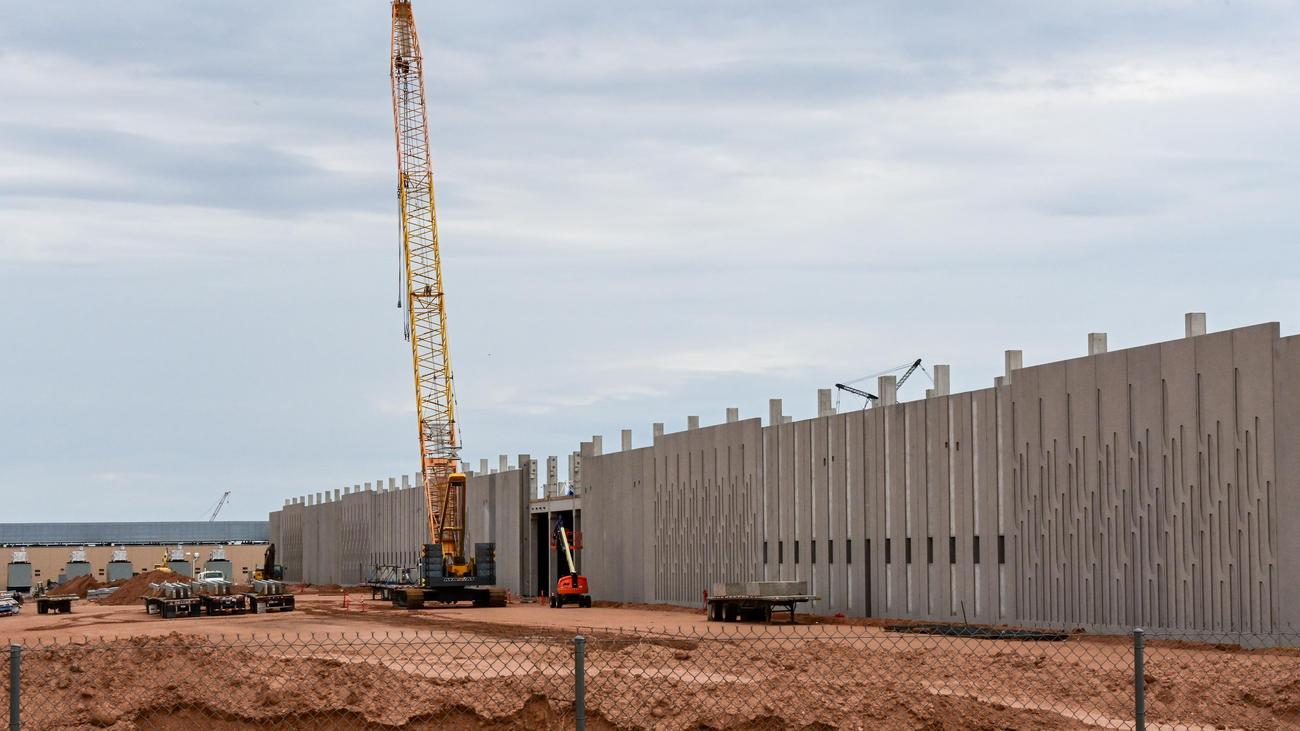
Across the United States, data centers are actively under construction or sitting in planning portfolios, but public pushback has intensified concurrently. New York stands as the first US state to implement a formal ban on the construction of artificial intelligence data facilities, driven by mounting anxiety among residents over heavy electricity and water consumption.
Opposition to these massive digital infrastructure projects has crossed traditional political lines. Criticism emanates from both Democratic and Republican voters, creating a complex political dynamic given that many of the planned facilities are slated for construction in predominantly Republican districts.
Conversely, Donald Trump recently reiterated his stance that data centers are critically important for the US economy, dismissing local opposition as a mistake and sharply criticizing the decision taken by New York state.
Shifts in the American Power Generation Mix
To meet the soaring energy demand, the EIA anticipates structural shifts within the national power generation portfolio. Renewable energy sources are expected to expand their share of total electricity generation, rising from approximately 24 percent in 2025 to 27 percent by 2027.

At the same time, coal-fired generation is projected to contract, dropping from 17 percent down to 15 percent over the same two-year window. Baseload sources such as natural gas and nuclear power are expected to hold steady, maintaining respective shares of roughly 40 percent and 18 percent of the national mix.
Official updates and ongoing energy consumption data releases can be tracked directly through the US Energy Information Administration portal.
Keep reading