Ancient Roman Game Deciphered with the Help of Artificial Intelligence
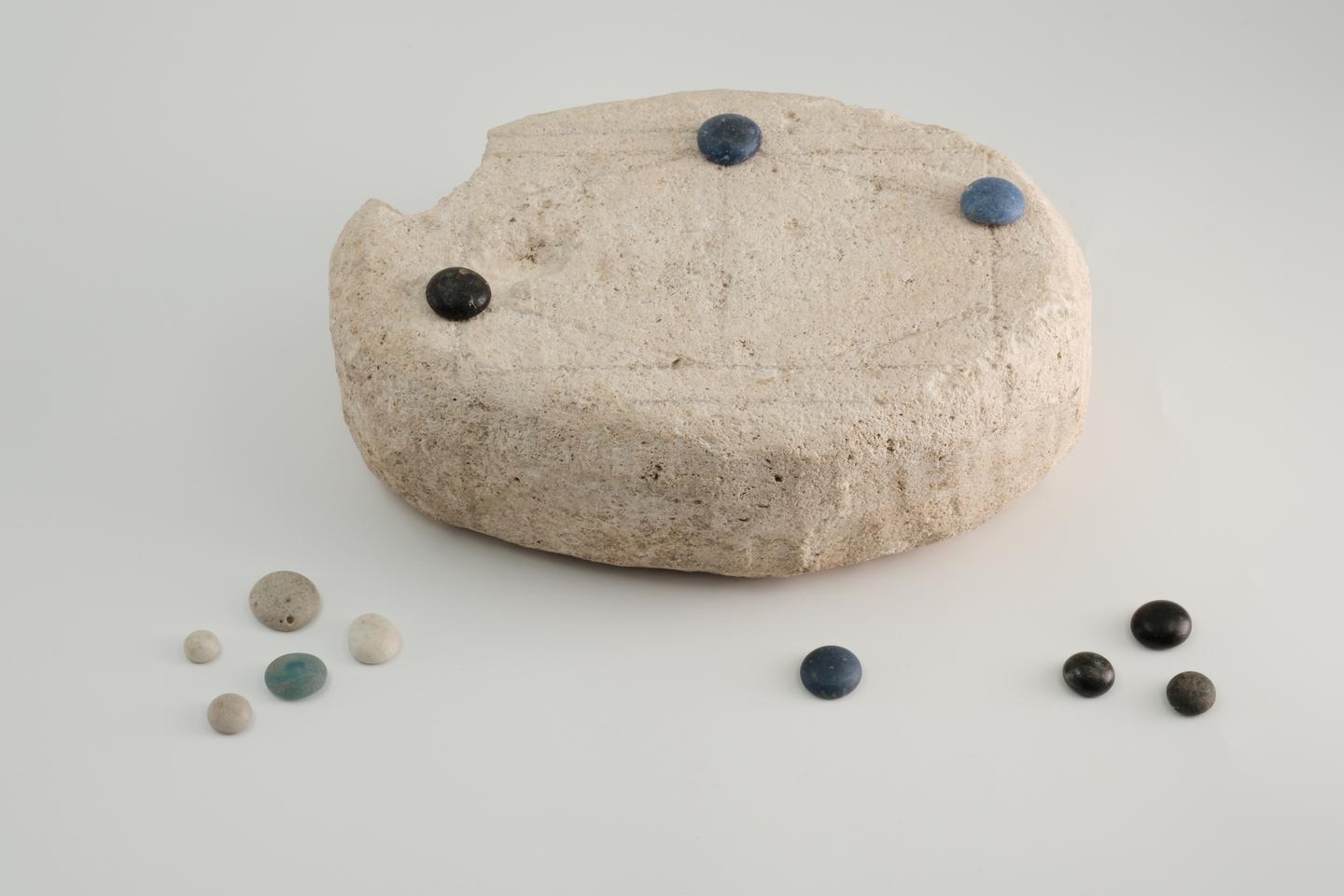
Heerlen, Netherlands – A seemingly unassuming game board, unearthed in the Netherlands over a century ago, has yielded its secrets thanks to the power of artificial intelligence. The limestone game, discovered at the site of the Roman settlement of Coriovallum (present-day Heerlen) in the early 20th century, has baffled archaeologists for decades. Resembling a “peppered camembert” as one researcher described it, the board’s intricate lines and purpose remained a mystery – until now. A team of researchers, utilizing AI to simulate gameplay, has determined the game is likely a variation of a “blocking game,” similar in concept to tic-tac-toe, offering a fascinating glimpse into the leisure activities of people living nearly 2,000 years ago.
The game board, measuring 21 centimeters in diameter, was initially excavated during archaeological digs in Heerlen. It lay largely unstudied for years, until archaeologist Walter Crist of the Het Romeins Museum in Heerlen became captivated by its unusual design in 2020. The board’s octagonal shape inscribed within a rectangle, coupled with the worn areas on its surface, hinted at a complex game, but the rules remained elusive. Traditional archaeological methods proved insufficient to unlock its secrets, leading the team to explore the potential of artificial intelligence.
The breakthrough came through the application of machine learning. Researchers programmed two AI agents to play against each other, testing over 100 different rule sets derived from known European games. The AI agents played more than 1,000 games per rule set, and the team analyzed the resulting movements of the game pieces, comparing them to the patterns of wear and tear on the board itself. This innovative approach, detailed in a study published February 11, 2026, in the peer-reviewed journal Antiquity, revealed a strong correlation between the AI simulations and the physical evidence on the game board. The full study can be found on the Antiquity website.
A Game of Blocking and Strategy
The analysis suggests the Roman game falls into the category of “blocking games,” where players aim to prevent their opponent from forming a specific pattern or sequence. While the exact rules remain somewhat uncertain, the AI simulations strongly indicate a strategic game requiring foresight and tactical planning. The researchers believe the game likely involved players taking turns placing pieces on the board, attempting to block their opponent’s progress and create opportunities for themselves.
Coriovallum, strategically located at the intersection of the Via Belgica and the Via Traiana, was a bustling center of trade and cultural exchange during the Roman period. Via Belgica served as a crucial route connecting Gaul to Germania, facilitating the movement of goods, ideas, and people across the Roman Empire. The discovery of this game board provides further evidence of the sophisticated culture and leisure activities enjoyed by the inhabitants of this important Roman settlement. The area was also a significant pottery production center, with over forty pottery kilns discovered in the region, highlighting the economic importance of Coriovallum.
The Future of the Roman Museum
The discovery comes as the Het Romeins Museum in Heerlen prepares for its grand opening in 2028. The museum is being built around the remarkably well-preserved remains of a Roman bathhouse, the oldest surviving stone structure in the Netherlands. The museum’s website provides updates on the construction and planned exhibits. Visitors will be able to explore the bathhouse ruins and learn about Roman bathing rituals, gaining a deeper understanding of daily life in Coriovallum. The museum aims to immerse visitors in the world of the Romans, showcasing their innovations and cultural contributions. Currently, the Roman bathhouse is closed to the public due to ongoing redevelopment work, but it promises to be a highlight of the museum when it opens its doors.
This innovative use of AI to decipher ancient games highlights the growing intersection of technology and archaeology. As computational power continues to increase, AI is poised to play an increasingly important role in unlocking the mysteries of the past, offering new insights into the lives and cultures of those who came before us. The successful application of AI in this case demonstrates its potential to analyze complex patterns and data, revealing hidden connections and shedding light on previously unknown aspects of history. The team hopes their work will inspire further research into the use of AI in archaeological investigations, potentially leading to the discovery of new knowledge about ancient civilizations.
The Roman Museum in Heerlen is expected to become a major cultural attraction, drawing visitors from across the Netherlands and beyond. The museum will not only showcase the archaeological finds from Coriovallum but also explore the broader history of the region, highlighting its rich cultural heritage. The project is expected to boost tourism and economic development in Heerlen, revitalizing the city center and creating new opportunities for local businesses.
As construction progresses and the opening date approaches, anticipation is building for the unveiling of this remarkable museum. The deciphering of the ancient game board is just one example of the exciting discoveries that await visitors, promising a captivating journey back in time to the world of Roman Coriovallum.
The Het Romeins Museum is scheduled to open in the summer of 2028. For the latest updates on the museum’s progress and planned exhibits, visit their official website. We encourage readers to share their thoughts and comments on this fascinating discovery below.
Worth a look