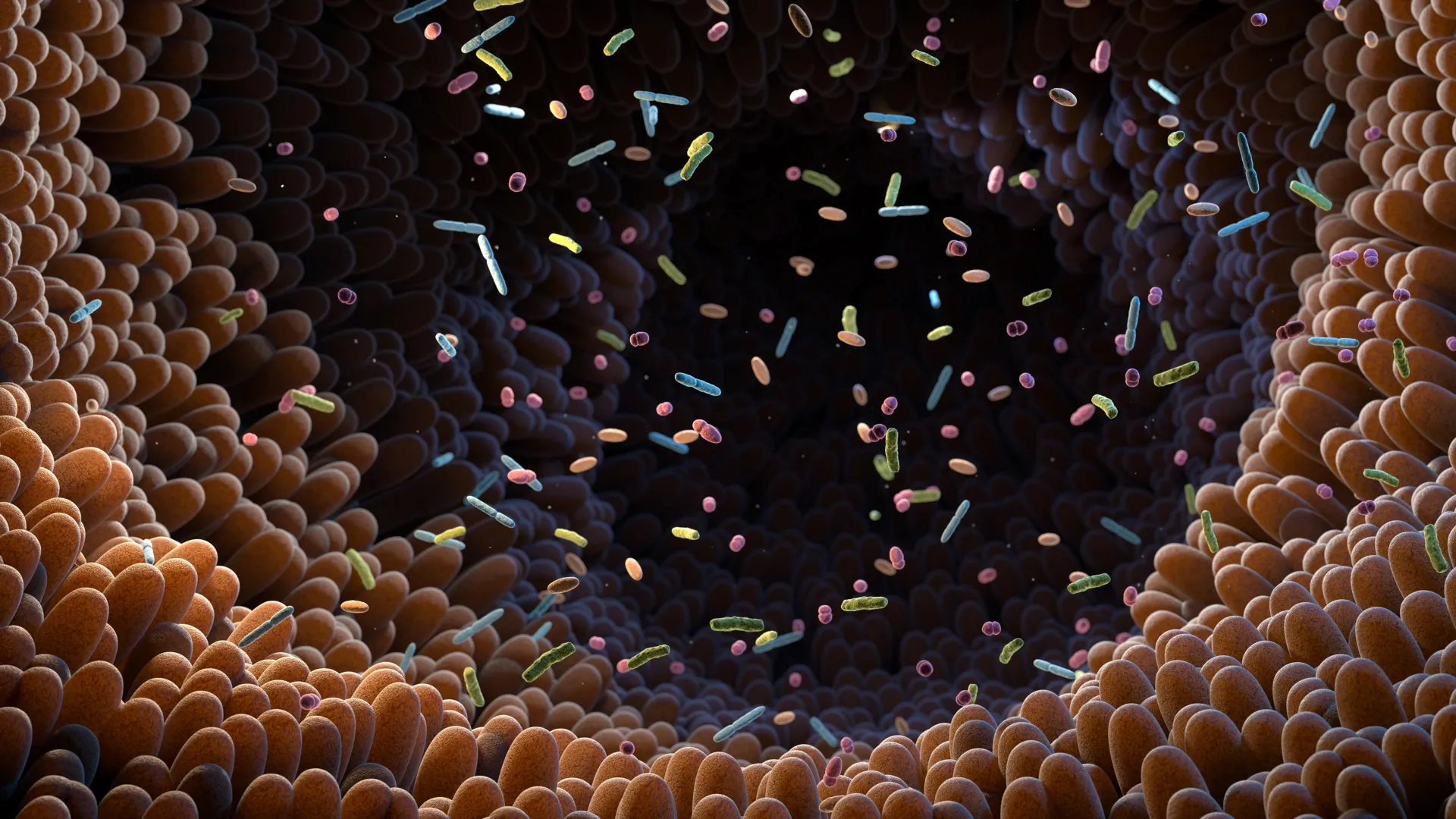
Decoding the Gut Microbiome: How AI is Revolutionizing Quality Assurance in Health Research
The human gut microbiome – the trillions of bacteria, fungi, viruses, and other microorganisms residing in our digestive tract – is increasingly recognized as a pivotal factor in overall health. From influencing digestion and immunity to impacting mood and even disease susceptibility, its complexity is staggering. However, unraveling the intricate relationships within this ecosystem has proven a monumental challenge.Now, a groundbreaking application of artificial intelligence (AI) is poised to dramatically improve the quality assurance of microbiome research, accelerating our understanding and paving the way for personalized medicine.
The scale of the Challenge: Why Customary Methods Fall Short
The sheer volume of data associated with the gut microbiome presents a significant hurdle. The human body contains roughly 30-40 trillion human cells, yet the intestines alone house approximately 100 trillion bacterial cells – meaning we carry more microbial cells than our own! these microbes don’t simply reside within us; they actively produce and modify thousands of compounds called metabolites. These metabolites act as crucial chemical messengers, influencing metabolism, immunity, and brain function.
Identifying which bacteria produce specific metabolites, and how these relationships shift in the context of disease, requires analyzing an immense network of interactions. Traditional data analysis methods often struggle to discern meaningful patterns from this noise, leading to possibly inaccurate conclusions and hindering progress. This is where advanced AI, specifically Bayesian neural networks, steps in to enhance quality assurance throughout the research process.
VBayesMM: An AI-Powered Approach to Microbial Mapping
Researchers at the University of Tokyo have developed a system called VBayesMM (Variational Bayes Microbial Metabolomics) to address these challenges.VBayesMM utilizes a Bayesian approach, a type of AI that excels at handling uncertainty. This is critical in microbiome research, where definitive conclusions are often elusive. Unlike traditional statistical methods, VBayesMM doesn’t just identify correlations; it quantifies the confidence in its predictions, minimizing the risk of drawing false positives.
“The problem is that we’re only beginning to understand which bacteria produce which human metabolites and how these relationships change in different diseases,” explains Project Researcher Tung Dang. “By accurately mapping these bacteria-chemical relationships, we could potentially develop personalized treatments.”
When tested against real-world data from studies on sleep disorders, obesity, and cancer, VBayesMM consistently outperformed existing methods. Crucially, the bacterial families identified by the AI aligned with established biological processes, bolstering confidence in the systemS ability to uncover genuine, rather than spurious, relationships. This represents a significant leap forward in quality assurance for microbiome data analysis.
Q&A: Deepening Your Understanding
Q: How does AI specifically improve quality assurance in gut microbiome research compared to traditional methods?
A: Traditional methods often struggle with the sheer complexity and volume of microbiome data, leading to potential false positives. VBayesMM, by employing a Bayesian approach, quantifies the uncertainty in its predictions, providing a more reliable and trustworthy assessment of bacterial-metabolite relationships. This reduces the risk of drawing incorrect conclusions and strengthens the overall validity of research findings.
Q: what are metabolites, and why is understanding their production by gut bacteria so important for quality assurance in health interventions?
A: Metabolites are small molecules produced by microbes that act as chemical messengers within the body, influencing everything from metabolism and immunity to brain function. Accurately identifying which bacteria produce specific metabolites is crucial because it allows researchers to pinpoint potential targets for therapeutic interventions – whether through dietary changes, targeted therapies, or even the introduction of beneficial bacteria. Poorly understood metabolite production undermines the quality assurance of any intervention.
Q: VBayesMM isn’t perfect. What are its current limitations, and how are researchers addressing them to further enhance quality assurance?
A: Currently, VBayesMM performs best when there’s a wealth of bacterial data compared to metabolite data. It also treats bacteria as autonomous entities, overlooking their complex interactions. researchers are working to address these limitations by incorporating more comprehensive chemical datasets,accounting for bacterial “family tree” relationships,and reducing computational demands. These improvements will directly enhance the quality assurance of the system’s outputs.
Q: The article mentions computational demands. How does the processing power required impact the quality assurance of microbiome studies using AI?
A: Analyzing massive microbiome datasets is computationally intensive. While current processing power presents a challenge,ongoing advancements in technology are expected to reduce these costs over time.Insufficient computational resources can lead to slower analysis, potentially limiting the scope of studies and impacting the thoroughness of data validation – all of which affect quality assurance.
Q: Beyond identifying bacterial-metabolite relationships, how could AI like VBayesMM contribute to personalized medicine and improve quality assurance in patient care?
A: The ultimate goal is to identify specific bacterial targets for treatments or dietary interventions tailored to individual patients. By understanding how a patient’s unique microbiome influences their health, clinicians can develop more effective and personalized strategies for disease prevention and treatment