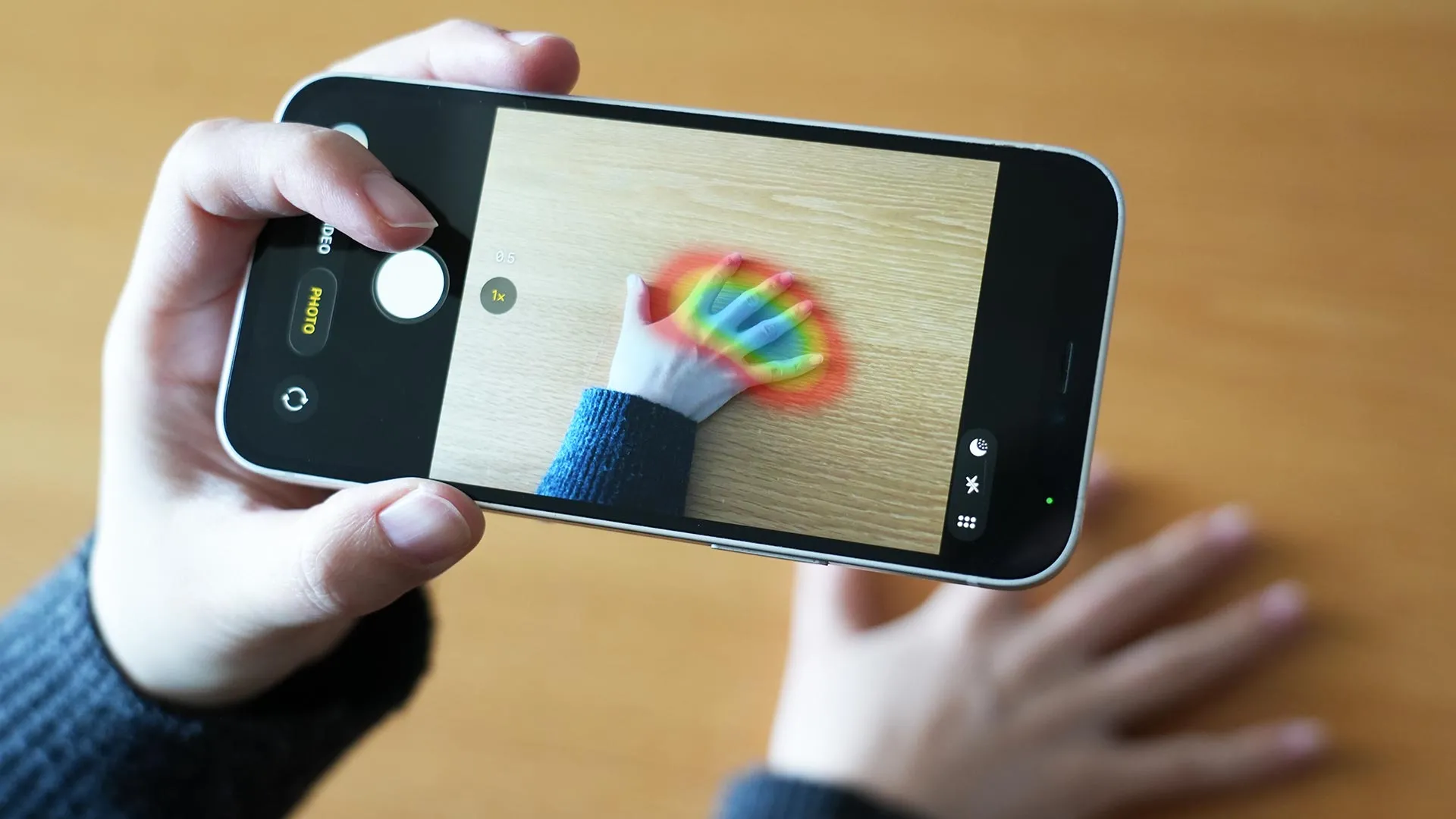
A Helping Hand: AI Accurately Detects Rare Endocrine Disorder Through Simple Hand Photos
Diagnosing rare diseases can be a lengthy and frustrating process for both patients and physicians. Often, subtle symptoms and a lack of widespread awareness contribute to significant delays in receiving a correct diagnosis. Now, a groundbreaking development from Kobe University in Japan offers a potential solution: an artificial intelligence system capable of accurately identifying acromegaly, a rare hormonal disorder, simply by analyzing photographs of the back of the hand and a clenched fist. This innovative approach not only promises faster diagnoses but also addresses growing concerns about patient privacy in the age of medical AI. The technology represents a significant step forward in leveraging artificial intelligence to improve healthcare access and reduce disparities, particularly in regions with limited specialist availability.
Acromegaly, affecting an estimated 3 to 4 people per 100,000, is caused by the pituitary gland producing too much growth hormone, typically due to a noncancerous tumor. The Mayo Clinic details how this excess hormone leads to gradual enlargement of the hands and feet, changes in facial features, and a range of other health complications, including joint pain, carpal tunnel syndrome, and an increased risk of cardiovascular disease. Untreated, acromegaly can reduce life expectancy by approximately 10 years. The insidious nature of the disease – its slow progression – often means it can take up to a decade to be correctly diagnosed, a timeframe that researchers at Kobe University are hoping to dramatically shorten.
The development of this AI system addresses a critical need for more efficient and accessible diagnostic tools. Traditional diagnosis relies on a combination of physical examinations, hormone level testing, and imaging scans, often requiring patients to travel long distances to see specialized endocrinologists. This modern technology offers the potential to streamline the initial screening process, allowing for earlier referrals and more timely treatment. The focus on hand images is particularly noteworthy, as it circumvents the privacy concerns associated with using facial recognition technology in healthcare applications.
Privacy-Conscious Design: Focusing on the Hands
The research team, led by endocrinologist Hidenori Fukuoka, recognized the growing unease surrounding the use of facial photographs in medical AI. Many existing AI diagnostic tools rely on facial analysis, but this approach raises legitimate concerns about data security and patient confidentiality. “With the progress of AI tools, there have been attempts to use photographs for early detection, but they have not been adopted in clinical practice,” Fukuoka explained. To overcome this hurdle, the team shifted their focus to the hands, a body part routinely examined by clinicians when assessing patients for conditions like acromegaly.
Yuka Ohmachi, a graduate student at Kobe University and a key contributor to the project, elaborated on this decision. “Trying to address this concern, we decided to focus on the hands, a body part we routinely examine alongside the face in clinical practice for diagnostic purposes, particularly because acromegaly often manifests changes in the hands.” The researchers deliberately limited the images to the dorsal (back) of the hand and a clenched fist, intentionally excluding the palm to avoid capturing identifying features like palm lines. This careful approach proved crucial in recruiting a large and diverse dataset for training and testing the AI model.
The study, published in the Journal of Clinical Endocrinology & Metabolism, involved a nationwide, multicenter effort, enrolling 716 patients (317 with acromegaly and 399 controls) from 15 Japanese pituitary centers. Over 11,480 images were collected and used to develop and validate the AI model. The data was carefully split into training and testing sets to ensure the model’s accuracy and generalizability.
AI Outperforms Specialists in Diagnostic Accuracy
The results of the study were remarkable. The AI model demonstrated a sensitivity of 0.89, meaning it correctly identified 89% of patients with acromegaly. It also achieved a specificity of 0.91, indicating that it correctly identified 91% of individuals *without* the condition. Further analysis revealed a positive predictive value of 0.88, a negative predictive value of 0.93, an F1-score of 0.89, and an area under the receiver operating characteristic curve (AUC) of 0.96 – a measure of the model’s overall performance. Importantly, the AI system consistently outperformed experienced endocrinologists when evaluating the same hand images, with F1-scores ranging from 0.43 to 0.63 for the specialists.
“Frankly, I was surprised that the diagnostic accuracy reached such a high level using only photographs of the back of the hand and the clenched fist,” Ohmachi stated. “What struck me as particularly significant was achieving this level of performance without facial features, which makes this approach a great deal more practical for disease screening.” The team utilized a ResNet-50-based deep learning model, trained using PyTorch with data augmentation and 5-fold cross-validation techniques to optimize performance and minimize bias.
Expanding the Scope of Hand-Based AI Diagnostics
The Kobe University researchers are not stopping at acromegaly. They envision expanding the application of this technology to detect other medical conditions that manifest visible changes in the hands. Potential targets include rheumatoid arthritis, anemia, and finger clubbing – a condition often associated with underlying lung or heart disease. “This result could be the entry point for expanding the potential of medical AI,” Ohmachi noted, highlighting the versatility of this approach.
Improving Access to Care and Reducing Healthcare Disparities
The implications of this technology extend beyond simply improving diagnostic accuracy. Fukuoka and his team believe that this AI tool can play a crucial role in addressing healthcare disparities, particularly in regional settings where access to specialized medical care is limited. “We believe that, by further developing this technology, it could lead to creating a medical infrastructure during comprehensive health check-ups to connect suspected cases of hand-related disorders to specialists,” Fukuoka explained. “it could support non-specialist physicians in regional healthcare settings, thus contributing to a reduction of healthcare disparities there.”
The researchers emphasize that the AI system is intended to *complement* clinical expertise, not replace it. In real-world clinical practice, doctors rely on a comprehensive assessment that includes medical history, physical examinations, and laboratory tests. The AI tool is designed to serve as an initial screening aid, flagging potential cases for further investigation by qualified healthcare professionals. This collaborative approach promises to enhance diagnostic efficiency and improve patient outcomes.
The project received funding from the Hyogo Foundation for Science Technology and involved collaborations with numerous institutions across Japan, including Fukuoka University, Hyogo Medical University, and Nagoya University. This collaborative spirit underscores the importance of interdisciplinary research in advancing medical innovation.
Key Takeaways
- An AI system developed by Kobe University can accurately diagnose acromegaly using only photos of the back of the hand and a clenched fist.
- The technology prioritizes patient privacy by avoiding the use of facial recognition.
- The AI model outperformed experienced endocrinologists in diagnostic accuracy.
- Researchers are exploring the potential to adapt the system to detect other conditions visible in the hands.
- This innovation could improve access to care and reduce healthcare disparities, particularly in underserved areas.
Looking ahead, the Kobe University team plans to conduct further validation studies with larger and more diverse datasets. They also aim to refine the AI model and explore its potential integration into routine health check-ups. The ongoing development of this technology promises to revolutionize the early detection of acromegaly and potentially other conditions, ultimately improving the lives of patients worldwide. The next step involves seeking regulatory approval and exploring partnerships with healthcare providers to facilitate widespread implementation. We encourage readers to share their thoughts on this exciting development in the comments below.