
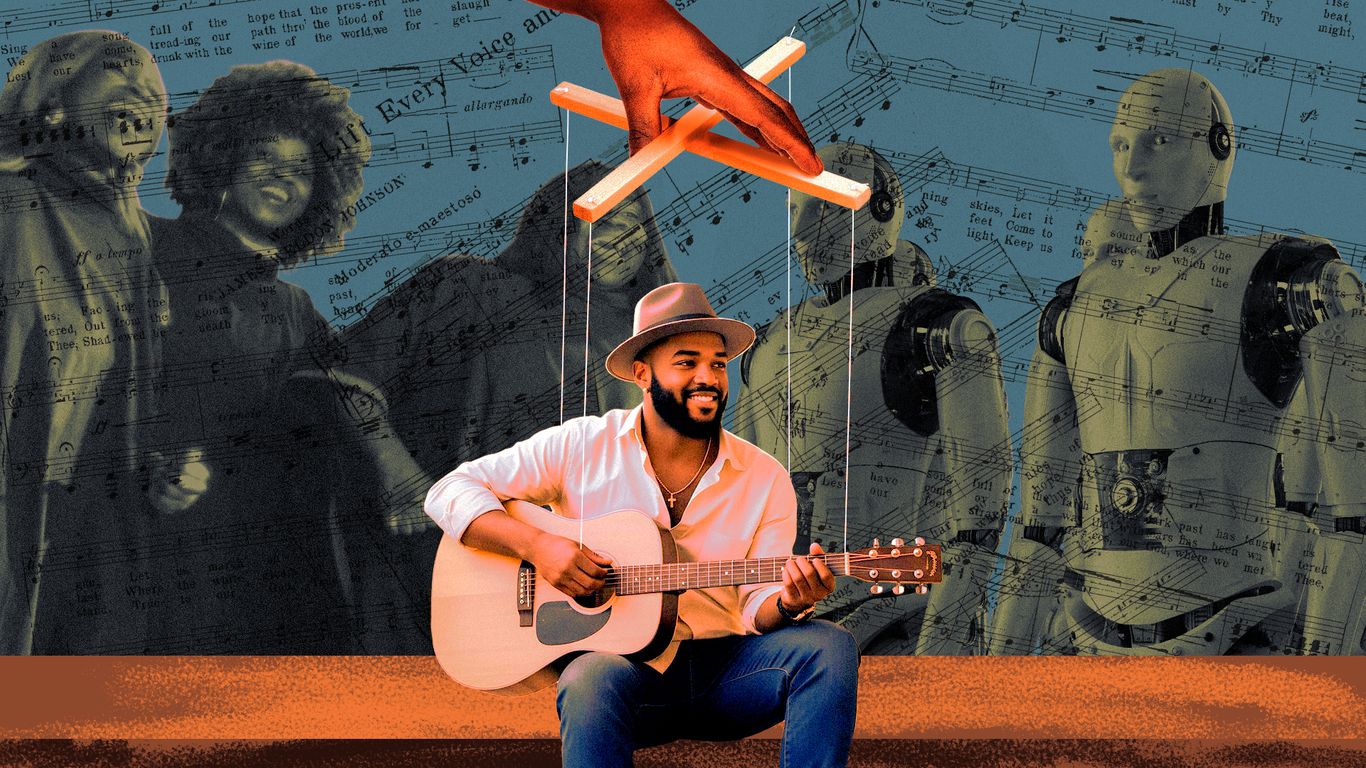
The Rise of AI-Generated Artists: Gospel, Contry, and a Growing Ethical Debate
The music industry is undergoing a quiet revolution, fueled by artificial intelligence. Beyond simple music creation tools, we’re now seeing fully-formed artists generated by AI, topping charts and sparking a complex conversation about authenticity, appropriation, and the future of creative expression. This isn’t a distant possibility; it’s happening now.
Recently, Solomon Ray, an AI-created gospel singer, surged to the top of Christian music charts. The project is the brainchild of Christopher “Topher” Townsend, a Mississippi-based conservative activist, former Air Force cryptologic analyst, and self-described MAGA rapper. This advancement,alongside the success of AI country artists Breaking Rust and Cain Walker,signals a significant shift in how music is made and consumed.
How Solomon Ray & Others Rose to prominence
Townsend utilized generative AI tools to construct every facet of Solomon Ray – voice, persona, lyrics, and production. He reports an overwhelming response,with listeners expressing feelings of connection and spiritual upliftment.
* “I’ve received thousands of messages from listeners who feel seen, comforted, and spiritually lifted by his songs,” Townsend shared via Solomon ray’s Instagram.
* he emphasizes his intention is to add to the gospel music landscape, not replace its legacy.
* Townsend insists the project is a “musical project, not a political puppet.”
This isn’t isolated to gospel.Breaking Rust’s “Walk My Walk” hit No. 1 on the Billboard country digital song sales chart last month, while Cain Walker’s “Don’t Tread On Me” secured the No. 3 spot. These successes demonstrate AI’s growing capability to not just create music, but to achieve commercial viability.
The Technological Leap & Its Implications
The speed and affordability of AI music creation are staggering. Cornell Tech professor James Grimmelmann highlights this dramatic change: “What once required weeks of production and millions of dollars can now be generated on a laptop – and updated in real time.”
This accessibility raises critical questions:
* The Construction of an Artist: Grimmelmann points out the unsettling ability to “construct an entire artist from scratch,” including deepfake videos and AI-generated voices.
* Data Bias & Exclusion: A significant concern is the potential for marginalized groups to be excluded from the training data used to create these AI models. This can perpetuate existing biases and limit representation.
* the Speed of Dissemination: the rapid creation and distribution of AI-generated content makes it tough to monitor and address perhaps harmful or inappropriate material.
A Spiritual Perspective: Authenticity & Testimony
While technology evolves,the core of gospel music remains rooted in human experience.Rev. Chris Hope, founder of the Boston-based Hope Group, acknowledges the long history of technology in church music, from synthesizers to electronics.However,he stresses a crucial distinction.
* AI should supplement, not substitute for human story and spirit.
* Black gospel music, in particular, is deeply connected to the tradition of personal testimony and lived experience.
* Hope poignantly asks, “if you’ve never been born, how can you be born again? If there’s no authentic witness, then what are you really listening to?”
This raises a essential question: can an AI truly convey the depth of faith and personal change that defines gospel music?
The Shadow of Digital Blackface & Appropriation
The rise of AI artists also brings to light concerns about cultural appropriation, specifically the phenomenon of “digital blackface.” Baylor University journalism professor Mia Moody-Ramirez, who is writing a book on the subject, explains that AI music represents another avenue for exploiting and commodifying Black culture.
* Digital blackface occurs when non-Black individuals utilize online platforms to adopt Black personas, often relying on harmful stereotypes.
* Without proper documentation and oversight, offensive or inappropriate AI-generated content can proliferate unchecked.
* This raises concerns about the ethical implications of profiting from a culture without genuine understanding or respect.
Looking Ahead: Navigating the New Musical Landscape
The emergence of AI-generated artists isn’t a trend to be dismissed. It’s a paradigm shift that demands careful consideration. While AI offers exciting possibilities for creativity and accessibility, we must address the ethical concerns surrounding authenticity, appropriation, and the potential for harm.
The conversation needs to include:
* Clarity: Clear

![Recover Deleted Files: Methods & Tools [2024 Guide]](https://i0.wp.com/www.popsci.com/wp-content/uploads/2025/12/how-to-recover-deleted-files.jpg?resize=150%2C150&ssl=1 "Recover Deleted Files: Methods & Tools [2024 Guide]")



