
For many IT leaders, compliance officers, and CTOs, the rapid adoption of artificial intelligence has created a widening gap between the desire to innovate and the necessity of control. As organizations rush to integrate AI agents and automated workflows, the question of where to begin with AI governance has develop into a critical priority for leadership teams worldwide.
The urgency is driven by the fact that AI rollouts and agile upgrades can quickly expose execution gaps, particularly regarding security and operational oversight. For distributed teams, these gaps often manifest as a lack of cost control or insufficient security governance, making the establishment of clear boundaries a prerequisite for sustainable growth.
Effective governance is not about saying “no” to innovation, but rather defining “how” that innovation happens. By drawing smart boundaries from day one, organizations can move faster with AI while mitigating the risks associated with unmanaged deployment.
Defining the Framework for AI Governance
At its core, AI governance is the set of rules, practices, and processes that ensure an organization’s use of artificial intelligence is ethical, secure, and compliant with regulatory standards. This involves moving beyond a vague sense of “we should probably have a policy” to a concrete, actionable starter kit that guides every level of the organization.
The primary challenge for most executives is the speed of the technology. When AI tools are deployed across a company, they often bypass traditional IT procurement channels—a phenomenon known as “Shadow AI.” Without a formal governance structure, companies risk data leakage, biased outputs, and unpredictable costs.
To combat this, governance frameworks must focus on three primary pillars: security, cost management, and integration. Ensuring that AI agents have deep integrations with existing systems while maintaining strict security protocols is essential for preventing unauthorized data access and maintaining the integrity of corporate information.
Addressing Execution Gaps in AI Rollouts
The transition from a pilot project to a full-scale AI rollout often reveals significant execution gaps. These gaps are frequently found in how distributed teams manage security governance and cost control. As noted in recent industry observations, the ability to maintain a tight grip on expenditures while scaling AI capabilities is a key differentiator for successful organizations on March 20, 2026.
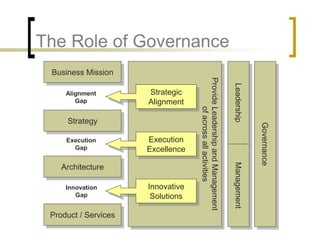
Common execution gaps include:
- Security Governance: Failure to implement consistent access controls across different AI platforms.
- Cost Control: Unpredictable spending due to API usage spikes or inefficient model selection.
- Integration Depth: AI tools that operate in silos rather than being deeply integrated into the company’s core software ecosystem.
Closing these gaps requires a proactive approach to policy. Instead of reacting to a security breach or a budget overrun, leaders should implement a “starter kit” for AI policy that defines acceptable use cases, data handling requirements, and mandatory security reviews for any latest AI tool introduced into the environment.
Strategic Steps to Start Your AI Governance Journey
Starting AI governance does not require a massive overhaul of corporate policy overnight. Instead, it begins with a series of strategic, incremental steps designed to provide immediate protection while allowing for flexibility.
Establish a Cross-Functional AI Council
Governance cannot live solely within the IT department. It requires a coalition of stakeholders, including legal counsel for compliance, HR for ethical considerations, and department heads to identify high-impact use cases. This council is responsible for setting the “smart boundaries” that allow the organization to innovate safely.
Audit Current AI Usage
Before a policy can be enforced, leaders must understand what is already in use. Conducting a comprehensive audit helps identify which AI tools are being used by employees and where the most significant risks—such as the input of proprietary data into public LLMs—are occurring.
Develop an “Acceptable Use” Policy
A clear, written policy serves as the foundation for governance. This document should explicitly state what is permitted and what is forbidden. For example, it might allow the use of AI for drafting emails but forbid the upload of customer PII (Personally Identifiable Information) into any third-party AI tool without explicit encryption and approval.
Implement Monitoring and Iteration
AI governance is not a one-time event but a continuous cycle. Due to the fact that AI breakthroughs happen weekly, policies must be agile. Regular reviews of AI performance, cost metrics, and security logs allow the governance council to adjust boundaries as the technology evolves.
The Impact of Governance on Organizational Agility
There is a common misconception that governance slows down innovation. In reality, the opposite is true. When employees have a clear understanding of the boundaries, they are more likely to experiment within those safe zones without fear of violating company policy or causing a security incident.
Organizations that implement a robust AI governance framework from the start are better positioned to scale. By solving the problems of cost control and security governance early, they avoid the “technical debt” of having to retroactively secure a sprawling, unmanaged AI ecosystem.
This approach transforms the role of the CTO and compliance officer from a “bottleneck” to an “enabler.” By providing the tools and guidelines necessary for safe AI adoption, leadership empowers their teams to leverage the full potential of AI breakthroughs while protecting the organization’s most valuable assets.
Key Takeaways for AI Governance
- Prioritize Speed with Boundaries: The fastest organizations are those that establish smart boundaries from the beginning.
- Focus on the “How”: Shift the conversation from “no” to “how” to encourage innovation within a secure framework.
- Close Execution Gaps: Pay specific attention to security governance and cost control for distributed teams.
- Start Minor: Utilize a governance starter kit to build a foundation before scaling to complex AI agent deployments.
As the landscape of artificial intelligence continues to shift, the next critical checkpoint for organizations will be the ongoing evaluation of AI agent integrations and their impact on distributed team security. Leaders are encouraged to review their current policy gaps and establish a governance council to ensure their AI strategy remains sustainable.
We desire to hear from you. How is your organization balancing the need for AI speed with the necessity of governance? Share your experiences and questions in the comments below.
Keep reading