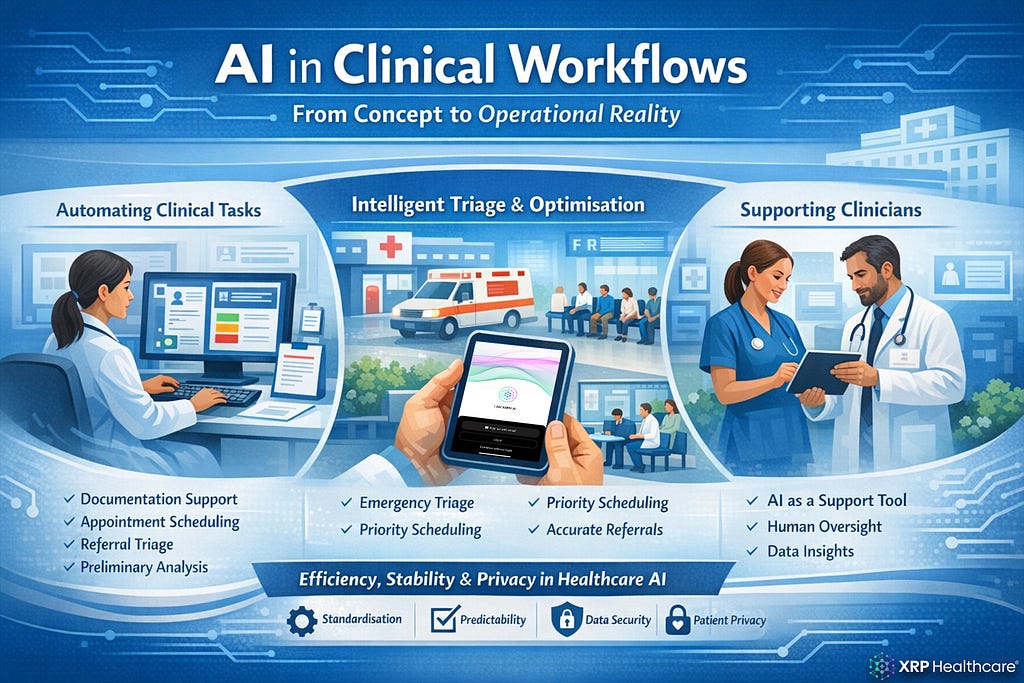
Healthcare systems globally are facing unprecedented pressures – an aging population, rising costs, and persistent staff shortages. These challenges are compounded by the sheer complexity of clinical workflows, where clinicians and administrators spend significant portions of their time on repetitive, administrative tasks that detract from direct patient care. From managing patient records and coordinating appointments to navigating complex billing processes, these manual processes are not only time-consuming but also prone to errors. But what if a substantial portion of this workload could be streamlined, not by replacing healthcare professionals, but by augmenting their capabilities with intelligent automation?
That’s the promise of AI clinical workflow automation, a rapidly evolving field poised to reshape the operational backbone of healthcare. This isn’t a futuristic concept. it’s a present-day reality, with hospitals and clinics increasingly adopting AI-powered solutions to improve efficiency, reduce burnout, and enhance patient outcomes. The integration of artificial intelligence, machine learning, and robotic process automation (RPA) is enabling healthcare organizations to dynamically manage administrative tasks, optimize clinical processes, and deliver more personalized care. According to a 2025 report by Nuroblox, AI workflow automation is key to optimizing healthcare and patient care. Nuroblox highlights the integration of AI, machine learning, and RPA into core healthcare workflows.
The Bottleneck of Manual Processes
Traditional clinical workflows are often fragmented and reliant on manual processes. Maintaining accurate patient records, coding diagnoses and procedures for billing, aligning clinical notes with insurance requirements, coordinating communication between departments, and scheduling follow-up appointments are all tasks that consume valuable time and resources. These manual processes not only contribute to administrative overhead but also increase the risk of human error, potentially leading to inaccurate billing, delayed care, and compromised patient safety. Studies consistently demonstrate a strong correlation between inefficient processes and clinician burnout, impacting both the quality of care and patient satisfaction. The administrative burden can divert resources away from direct patient care, exacerbating existing challenges within the healthcare system.
How AI is Transforming Clinical Workflows
AI clinical workflow automation leverages the power of machine learning and natural language processing (NLP) to assist with tasks that historically required significant human intervention. The core principle isn’t replacement, but augmentation – empowering healthcare professionals to focus on complex clinical decision-making and patient interaction even as automating repetitive, rule-based tasks. Several key applications are driving this transformation. Automated documentation, for example, utilizes AI to transcribe and structure clinical notes from voice or text input, significantly reducing the administrative burden on physicians. Intelligent coding support employs algorithms to match clinical documentation with accurate billing codes, improving compliance and minimizing claim denials. Workflow orchestration streamlines handoffs between departments, ensuring seamless transitions and preventing delays in the care continuum. Predictive alerts can prioritize tasks based on patient risk or urgency, enabling proactive intervention and reducing the potential for oversight. Cflow, a platform specializing in AI-driven workflow automation, emphasizes the accessibility and scalability of these technologies for healthcare organizations of all sizes. Cflow makes AI automation accessible with no-code capabilities and seamless integrations.
The Impact on Patient Experience
The benefits of AI-powered workflow automation extend beyond operational efficiency, directly impacting the patient experience. Faster, more streamlined processes translate into reduced wait times, increased face-to-face time with clinicians, and a more coordinated and personalized care journey. When documentation, scheduling, and communication are frictionless, clinicians can dedicate more attention to clinical judgment, empathy, and building rapport with their patients. Administrative errors are minimized, leading to greater accuracy and trust in the care process. Improved workflows catalyze better care, fostering a more positive and patient-centered healthcare system. The ability to proactively identify and address potential risks through predictive analytics also contributes to improved patient safety and outcomes.
Governance and Responsible AI Implementation
While the potential benefits of AI in clinical workflows are substantial, responsible implementation is paramount. Automation without adequate governance and oversight can inadvertently amplify existing biases, introduce modern errors, or compromise patient safety. Transparent and auditable AI systems are essential, allowing for clear understanding of how decisions are made and enabling effective monitoring and correction. Clinical oversight is crucial to ensure that AI-driven recommendations align with established medical standards and best practices. AI systems must be aligned with regulatory compliance requirements, such as HIPAA in the United States, to protect patient privacy and data security. Maintaining patient safety as the highest priority is non-negotiable, requiring rigorous testing, validation, and ongoing monitoring of AI performance. As highlighted by multiple sources, including the information provided by Flowforma, AI automation moves beyond traditional rule-based systems by using machine learning and natural language processing.
Looking Ahead: The Future of AI in Healthcare
The adoption of AI clinical workflow automation is not merely an incremental improvement; it represents a transformational shift in how healthcare is delivered. As pressure mounts on providers to improve quality, reduce costs, and address workforce shortages, AI is proving to be one of the most practical and impactful levers available. The National Library of Medicine has published studies indicating the potential of AI in areas like ambient documentation, sustainability, telenursing, and virtual care. This trend is expected to accelerate in the coming years, with advancements in AI technologies and increasing integration with electronic health records (EHRs) and other healthcare IT systems. The future of clinical care will depend on systems that are intelligent, integrated, and patient-focused, and AI is poised to play a central role in realizing that vision.
Key Takeaways
- Enhanced Efficiency: AI automates repetitive tasks, freeing up clinicians to focus on patient care.
- Improved Accuracy: AI-powered tools reduce errors in documentation, coding, and billing.
- Better Patient Experience: Streamlined workflows lead to reduced wait times and more personalized care.
- Reduced Burnout: Automation alleviates the administrative burden on healthcare professionals.
- Data-Driven Insights: AI provides valuable insights for optimizing clinical processes and improving outcomes.
The European Commission is currently reviewing its AI Act, which will establish a legal framework for the development and deployment of AI technologies across various sectors, including healthcare. The final regulations, expected in 2024, will likely address issues of data privacy, algorithmic bias, and accountability, shaping the future of AI adoption in Europe and beyond. Continued monitoring of these regulatory developments will be crucial for healthcare organizations seeking to implement AI solutions responsibly and ethically.
As AI continues to reshape healthcare operations, staying informed about the latest advancements and best practices will be essential for providers, policymakers, and patients alike. The ongoing evolution of AI technology promises to unlock even greater potential for improving the quality, accessibility, and affordability of healthcare for all. We will continue to report on developments in this rapidly evolving field as they unfold.
Share your thoughts on the role of AI in healthcare in the comments below. And please share this article with your colleagues and networks to spark a broader conversation about the future of healthcare innovation.
Keep reading