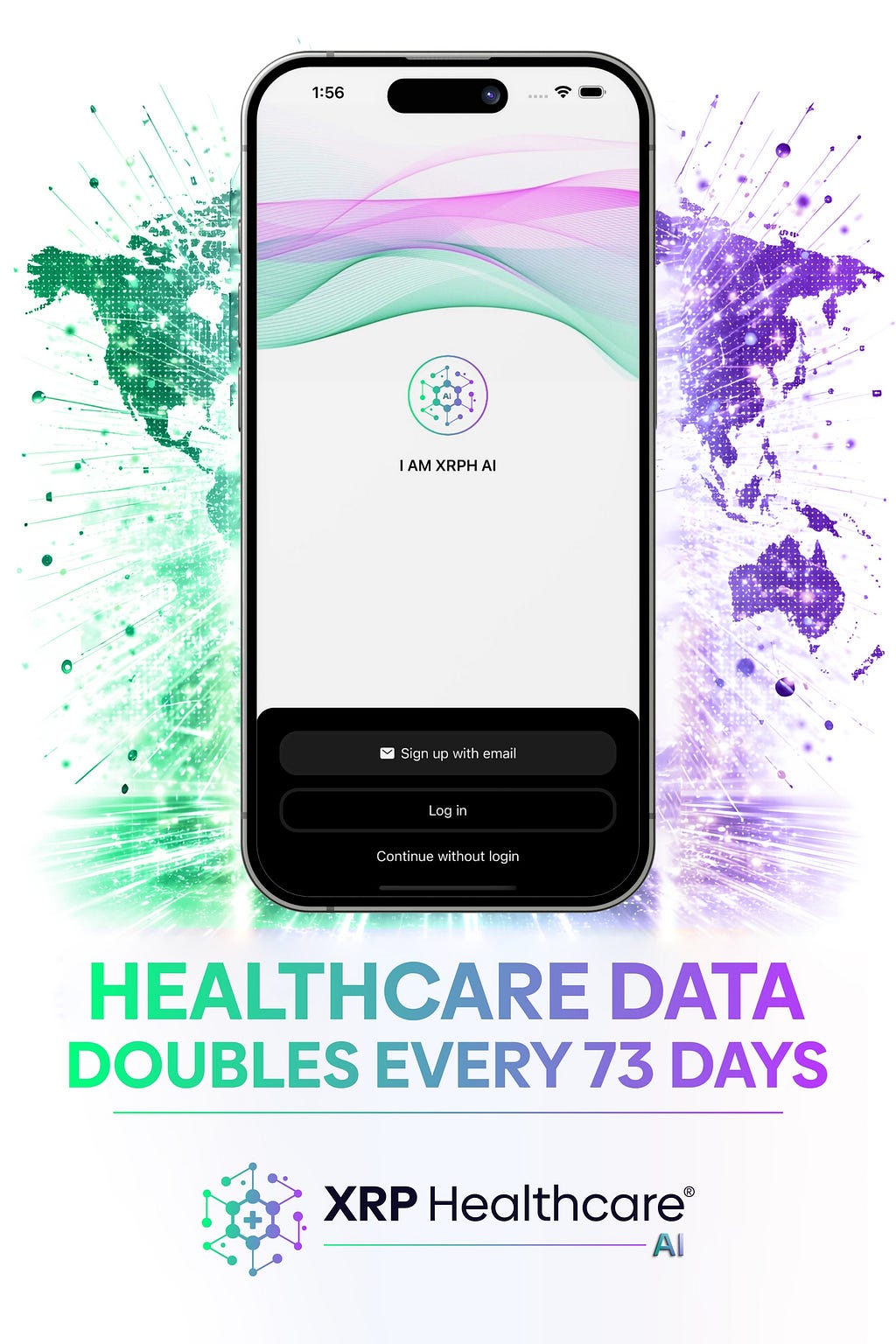
The healthcare landscape is undergoing a profound transformation, driven by an exponential surge in data. Across hospitals, research institutions, wearable technology, genomic sequencing, diagnostic tools, and clinical systems, the volume of healthcare information is increasing at an unprecedented rate. Experts estimate that healthcare data is now doubling approximately every 73 days, creating one of the fastest-growing data ecosystems globally. This explosion of information presents both immense opportunities for improving patient outcomes and significant challenges in managing and interpreting this complex data.
Traditionally, healthcare infrastructure has struggled to preserve pace with this rapid data growth. The ability to analyze, interpret, and apply this data effectively requires advanced technological systems, and increasingly, artificial intelligence (AI) is emerging as an indispensable tool. AI’s capacity to process vast datasets, identify patterns, and generate insights beyond human capabilities is becoming critical for navigating this new era of healthcare. The Ohio Hospital Association, for example, has been providing data analytics tools to its members for four decades, recognizing the growing importance of data-driven decision-making within healthcare systems. Their work highlights the ongoing efforts to harness data for improved healthcare outcomes.
The Transformative Power of Artificial Intelligence in Healthcare
Artificial intelligence is rapidly becoming a core component of modern healthcare technology. AI systems can process vast datasets, identify patterns across complex medical information, and generate insights that would be impossible to uncover through manual analysis alone. In an environment where healthcare data is doubling every few months, AI offers the ability to analyze massive datasets in real-time, support faster and more informed medical decision-making, detect patterns in patient data that improve diagnostics, enhance research and drug discovery, and enable scalable healthcare technology platforms.
The benefits of AI in healthcare extend beyond simply processing data. AI-powered tools can assist in early disease detection, personalize treatment plans, predict patient risk, and automate administrative tasks, freeing up healthcare professionals to focus on patient care. For instance, AI algorithms are being used to analyze medical images, such as X-rays and MRIs, to identify anomalies that might be missed by the human eye. This capability is particularly valuable in areas like radiology and oncology, where early detection is crucial for successful treatment. AI is playing a growing role in drug discovery, accelerating the identification of potential drug candidates and reducing the time and cost associated with bringing new therapies to market.
The Rise of AI-Driven Healthcare Platforms
The next generation of healthcare systems must be built with intelligence at their core. Simply collecting data is no longer sufficient. healthcare platforms must be capable of understanding and applying data at scale. Artificial intelligence enables healthcare systems to move beyond data storage and toward data intelligence – transforming raw information into actionable insights. From predictive analytics to patient support tools, AI is reshaping how healthcare systems operate and how individuals interact with healthcare services.
This shift is not merely theoretical; it is already happening. Hospitals and healthcare providers are increasingly adopting AI-powered solutions to improve efficiency, reduce costs, and enhance patient care. The Ohio Department of Health (ODH) provides a wealth of data and resources through its Explore Data & Stats portal, allowing researchers and healthcare professionals to access critical datasets on demographic trends, leading causes of death, population health, and healthcare spending. This data is increasingly being leveraged by AI algorithms to identify trends and improve public health initiatives.
XRPH AI and the Future of Intelligent Healthcare
Within this evolving landscape, XRPH AI is positioned as a player in the advancement of AI-driven healthcare solutions. While specific details about XRPH AI’s technology and applications are limited in publicly available sources, the company’s stated goal is to operate within this environment by leveraging AI-driven systems that assist interact with healthcare information more effectively. The core principle is not simply to generate more data, but to ensure that data can be interpreted, understood, and applied in meaningful ways.
The integration of AI into healthcare platforms is not without its challenges. Data privacy and security are paramount concerns, and robust safeguards must be in place to protect sensitive patient information. Ensuring the accuracy and reliability of AI algorithms is crucial, as errors in diagnosis or treatment recommendations could have serious consequences. Addressing these challenges requires a collaborative effort between healthcare providers, technology developers, and regulatory agencies.
Addressing Data Privacy and Security Concerns
As healthcare data becomes increasingly digitized and shared, protecting patient privacy and security is of utmost importance. Regulations such as the Health Insurance Portability and Accountability Act (HIPAA) in the United States establish strict guidelines for the handling of protected health information. AI systems must be designed and implemented in a way that complies with these regulations and safeguards patient data from unauthorized access or disclosure. Techniques such as data encryption, anonymization, and access controls can help mitigate these risks.
Ensuring Accuracy and Reliability of AI Algorithms
The accuracy and reliability of AI algorithms are critical for ensuring patient safety and effective healthcare delivery. AI models must be trained on high-quality, representative datasets to avoid bias and ensure that they generalize well to diverse patient populations. Regular monitoring and validation of AI algorithms are also essential to detect and correct any errors or inaccuracies. Transparency and explainability are also important considerations, as healthcare professionals need to understand how AI algorithms arrive at their conclusions in order to trust and effectively utilize them.
The Future of Healthcare is Intelligent
Healthcare data will continue to grow rapidly in the years ahead. The platforms that succeed will be those capable of managing complexity while delivering clarity and insight. Artificial intelligence is emerging as the technology that makes this possible. As healthcare systems evolve and digital health continues to expand globally, the integration of AI into healthcare platforms will turn into increasingly essential. The American Hospital Directory provides operational data, financial information, and utilization statistics for acute care hospitals, offering a valuable resource for benchmarking and performance improvement.
The potential benefits of AI in healthcare are vast, ranging from improved diagnostics and personalized treatment to more efficient healthcare delivery and reduced costs. However, realizing these benefits requires a concerted effort to address the challenges related to data privacy, security, and algorithm accuracy. By embracing a responsible and ethical approach to AI development and implementation, You can unlock the full potential of this transformative technology and create a healthier future for all.
Key Takeaways
- Healthcare data is growing exponentially, doubling approximately every 73 days.
- Artificial intelligence is becoming essential for managing and interpreting this vast amount of data.
- AI-driven platforms are transforming healthcare by enabling faster diagnoses, personalized treatments, and more efficient operations.
- Data privacy and security are paramount concerns in the age of AI-powered healthcare.
- Continued investment in AI research and development is crucial for realizing the full potential of this technology.
Looking ahead, the focus will likely shift towards developing more sophisticated AI algorithms that can integrate data from multiple sources, personalize treatment plans based on individual patient characteristics, and predict future health risks. The ongoing development of interoperable healthcare data standards will be critical for facilitating data sharing and collaboration across different healthcare systems. Further research is needed to explore the ethical implications of AI in healthcare and ensure that these technologies are used responsibly and equitably.
The next significant development to watch will be the ongoing discussions surrounding data governance and interoperability standards within the healthcare industry. These discussions will shape the future of data sharing and collaboration, ultimately impacting the effectiveness of AI-driven healthcare solutions. We encourage readers to share their thoughts and experiences with AI in healthcare in the comments below.