Japan Unveils ‘Buddharoid,’ an AI-Powered Robot Monk to Address Religious Workforce Shortages
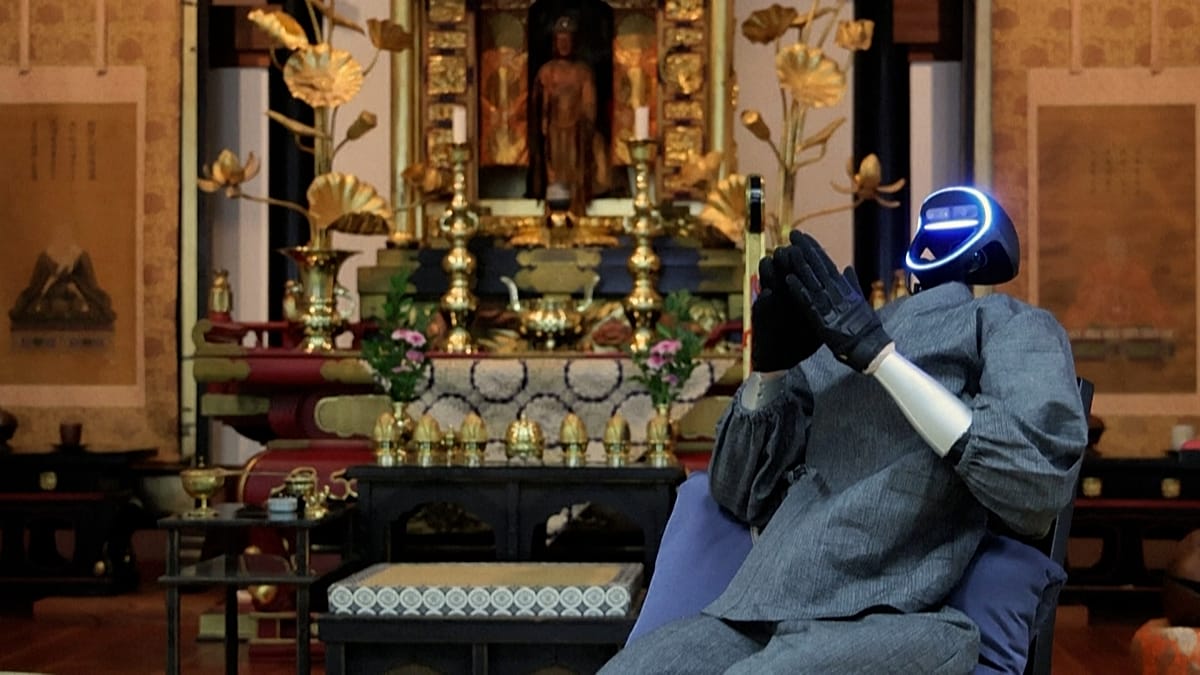
Kyoto, Japan – In a groundbreaking intersection of faith and technology, researchers at Kyoto University have developed an artificial intelligence-powered robot monk, dubbed “Buddharoid,” designed to offer spiritual guidance and potentially assist with religious rituals. The humanoid robot, unveiled on Tuesday, February 24, 2026, at the Shoren-in temple in Kyoto Prefecture, represents a novel approach to addressing the dwindling number of Buddhist monks in Japan and the challenges facing the country’s religious infrastructure. The Buddharoid is equipped with the “BuddhaBot-Plus,” an AI chatbot derived from OpenAI’s ChatGPT, and is capable of responding to questions on a wide range of topics using Buddhist scriptures.
The development comes as Japan grapples with a rapidly aging population and a decline in religious affiliation, leading to the projected closure of approximately 30% of Buddhist temples by 2040, as younger generations move away from organized religion. The Buddharoid is intended to support the Buddhist clergy during this period of transition, offering a potential solution to the shortage of practitioners.
AI and Ancient Texts: The Making of a Robotic Monk
Professor Seiji Kumagai of Kyoto University, who as well serves as a monk, spearheaded the research team responsible for creating the Buddharoid. The robot’s core functionality stems from BuddhaBot-Plus, a specialized generative AI system built upon OpenAI’s ChatGPT. This AI has been extensively trained on sacred Buddhist scriptures, enabling it to provide spiritual guidance on personal and social issues, mirroring the role of a human monk. During a demonstration, the Buddharoid was asked for advice regarding personal relationships and responded, “It will improve if you reflect on your closeness with them and maintain an inner balance.”
Though, the Buddharoid is not solely reliant on software. Its physical form and movements are based on a humanoid robot manufactured by Unitree Robotics, a Chinese firm. The robot’s design incorporates slow, deliberate movements – including bowing and the *gassho* gesture of placing palms together in prayer – to emulate the traditional practices of Buddhist monks. This combination of advanced AI and realistic physical embodiment aims to create a more authentic and engaging experience for those seeking spiritual counsel.
Addressing a Demographic Crisis in Japanese Buddhism
The decline in the number of Buddhist monks is a significant concern for Japan’s religious community. The aging population and shifting societal values have contributed to a decrease in individuals choosing to enter the priesthood. This shortage poses a challenge to the continuation of traditional Buddhist practices and the maintenance of temples across the country. Professor Kumagai believes the Buddharoid could represent a “paradigm shift” in how religious services are conducted and how spiritual guidance is provided. He suggests that the robot could assist monks with various tasks, allowing them to focus on more complex aspects of their roles.
The Buddharoid’s development is not an isolated incident. It reflects a broader trend of incorporating technology into religious practices. From AI simulations of religious figures to unmanned souvenir shops staffed by robotic cats at Narita Airport, Japan is increasingly exploring the potential of artificial intelligence to address societal challenges and enhance daily life. The Buddharoid, however, represents a particularly unique and potentially transformative application of this technology.
Ethical Considerations and the Future of Spiritual Guidance
The introduction of an AI-powered robot monk also raises important ethical questions about the role of technology in spiritual practice. Some may question whether a machine can truly provide the same level of empathy, understanding, and spiritual insight as a human monk. Others may worry about the potential for the commodification of religion or the erosion of traditional values.
Researchers acknowledge these concerns and emphasize that the Buddharoid is not intended to replace human monks entirely. Instead, it is envisioned as a tool to support and augment their operate, particularly in situations where there is a shortage of practitioners. The robot’s ability to access and synthesize vast amounts of Buddhist scripture could also prove valuable for research and education purposes.
The Buddharoid project is a collaboration between Kyoto University and the tech ventures Teraverse and XNOVA. XNOVA Inc. Provided imagery of the robot, showcasing its physical appearance and capabilities. The project highlights the growing collaboration between academic institutions and private companies in the development of cutting-edge technologies.
What’s Next for the Buddharoid?
Following its initial unveiling, the Buddharoid will undergo further testing and refinement. Researchers plan to gather feedback from monks and the public to improve its functionality and address any concerns. Future development may include expanding the robot’s knowledge base to encompass a wider range of Buddhist traditions and incorporating more sophisticated AI algorithms to enhance its conversational abilities. The team also intends to explore the possibility of deploying the Buddharoid in other temples and religious settings across Japan.
The Buddharoid’s development marks a significant step in the exploration of artificial intelligence’s potential role in religious life. As Japan continues to grapple with demographic challenges and evolving societal values, the Buddharoid may offer a glimpse into the future of spiritual guidance and the enduring power of faith in a technologically advanced world. The next step for the research team is to analyze the feedback received from the initial demonstrations and begin implementing improvements to the robot’s AI and physical capabilities, with a projected timeline for further updates in late 2026.
What are your thoughts on the use of AI in religious practices? Share your comments below.