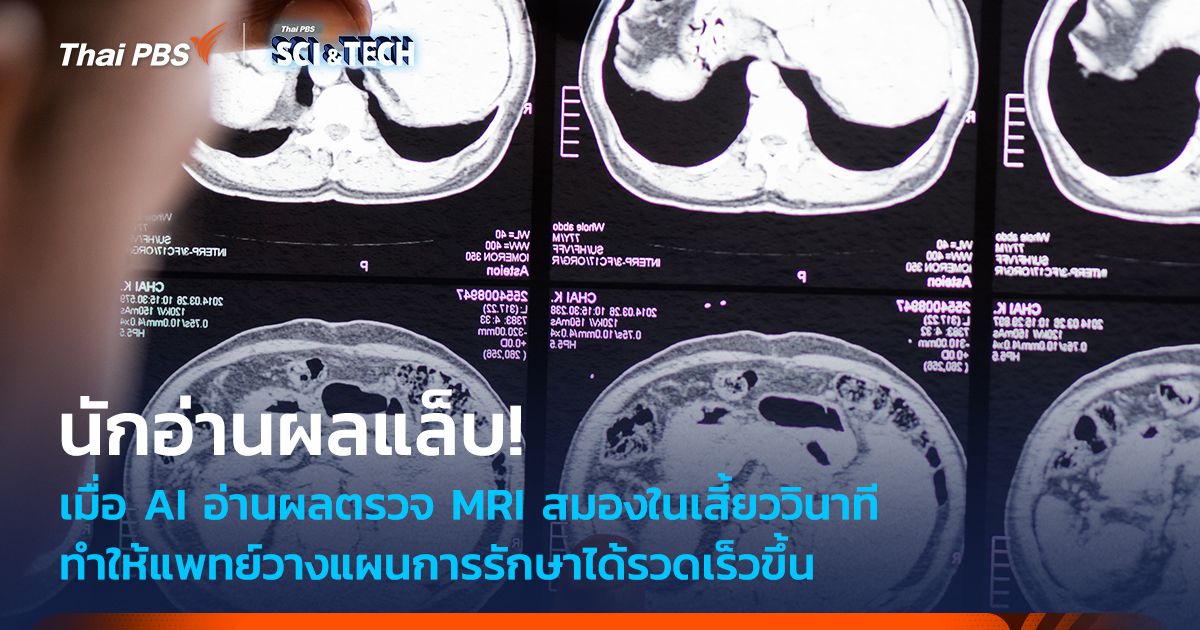
AI-Powered MRI Analysis Promises Faster Stroke Treatment
The rapid diagnosis of neurological conditions, particularly stroke, is critical for effective treatment and improved patient outcomes. Recent advancements in artificial intelligence are offering a potential breakthrough, with AI systems now capable of analyzing brain MRI scans in a matter of seconds, significantly reducing the time it takes to develop a treatment plan. This technology, exemplified by a system called PRIMA, developed by researchers at the University of Michigan, promises to be a game-changer in emergency neurological care, where every minute can mean the difference between life and death.
Traditionally, interpreting MRI scans requires highly trained radiologists, a process that can be time-consuming, especially in busy hospital settings. The delay in diagnosis can be particularly detrimental in cases of stroke, where timely intervention is essential to minimize brain damage. The new AI systems aim to alleviate this bottleneck, providing rapid, accurate assessments that can assist clinicians in making swift and informed decisions. This isn’t about replacing radiologists, but rather augmenting their capabilities and allowing them to focus on the most complex cases.
PRIMA: A New Tool in the Fight Against Stroke
The PRIMA (Promptable Radiology Intelligent Medical Assistant) system, detailed in a recent publication in Nature Biomedical Engineering, represents a significant step forward in AI-assisted medical imaging. Developed by a team from the University of Michigan, PRIMA is designed to analyze MRI scans and identify critical indicators of neurological conditions with remarkable speed and accuracy. As reported by Thai PBS, the system can deliver results in a fraction of the time required for traditional analysis.
The core innovation of PRIMA lies in its ability to be “prompted” with specific questions, allowing radiologists to focus the AI’s analysis on particular areas of concern. This targeted approach enhances efficiency and reduces the risk of overlooking crucial details. The system isn’t simply identifying anomalies; it’s providing a focused assessment based on the clinical needs of the patient. This level of adaptability is a key differentiator from earlier AI imaging tools.
How PRIMA Works: A Deep Dive into the Technology
PRIMA utilizes a sophisticated deep learning algorithm trained on a vast dataset of MRI scans. This extensive training allows the AI to recognize patterns and anomalies indicative of various neurological conditions, including stroke, hemorrhage and tumors. The system doesn’t just identify potential problems; it also provides a comprehensive report, highlighting key findings and offering insights that can aid in diagnosis and treatment planning. The University of Michigan team emphasizes that PRIMA is designed to perform *with* radiologists, not replace them.
The development of PRIMA involved a collaborative effort between researchers and neurosurgeons, ensuring that the system’s capabilities align with the practical needs of clinical practice. This close collaboration is crucial for the successful implementation of AI in healthcare, as it ensures that the technology is both effective and user-friendly. The researchers have focused on creating a tool that seamlessly integrates into existing workflows, minimizing disruption and maximizing impact.
The Impact on Patient Care: Speed and Accuracy
The potential benefits of AI-powered MRI analysis are far-reaching. By accelerating the diagnostic process, these systems can enable faster treatment initiation, potentially improving outcomes for patients with time-sensitive conditions like stroke. The ability to quickly identify critical findings can also reduce the necessitate for repeat scans, minimizing patient exposure to radiation and lowering healthcare costs.
In the case of stroke, rapid diagnosis is paramount. The window of opportunity for administering thrombolytic drugs, which can dissolve blood clots and restore blood flow to the brain, is limited to a few hours. PRIMA’s ability to analyze MRI scans in seconds could significantly increase the number of patients who are eligible for this life-saving treatment. The system’s accuracy can help to rule out stroke in patients presenting with similar symptoms, avoiding unnecessary interventions.
Beyond Stroke: Expanding Applications of AI in Medical Imaging
Even as the initial focus of PRIMA is on stroke diagnosis, the technology has the potential to be applied to a wide range of neurological conditions. Researchers are exploring its use in identifying brain tumors, detecting early signs of Alzheimer’s disease, and monitoring the progression of multiple sclerosis. The versatility of the AI platform makes it a valuable tool for addressing a variety of diagnostic challenges.
The development of AI-powered medical imaging is part of a broader trend towards the integration of artificial intelligence into healthcare. AI is being used to analyze medical records, predict patient risk, and personalize treatment plans. These advancements have the potential to transform the healthcare landscape, improving efficiency, reducing costs, and enhancing patient care.
Challenges and Future Directions
Despite the promising potential of AI-powered MRI analysis, several challenges remain. One key concern is the need for large, high-quality datasets to train the AI algorithms. Access to such datasets can be limited, particularly for rare or underrepresented conditions. Ensuring data privacy and security is also paramount, as medical imaging data contains sensitive patient information.
Another challenge is the need for ongoing validation and refinement of the AI systems. The performance of these systems can vary depending on the patient population and the imaging protocols used. Regular monitoring and updates are essential to maintain accuracy and reliability. It’s crucial to address potential biases in the AI algorithms, ensuring that they perform equally well across different demographic groups.
Looking ahead, the future of AI-powered medical imaging is bright. Researchers are working on developing more sophisticated algorithms that can analyze a wider range of imaging modalities, including CT scans and PET scans. The integration of AI with other technologies, such as robotics and virtual reality, could further enhance diagnostic and treatment capabilities. The ultimate goal is to create a seamless, intelligent healthcare system that delivers personalized, proactive care to all patients.
Thai PBS and the Advancement of AI in Healthcare
Thai PBS is actively involved in exploring and promoting the use of artificial intelligence in various sectors, including healthcare. Their AI initiatives, such as AI Voice for audio content creation and AI Anchor for news delivery, demonstrate a commitment to leveraging technology for public benefit. The coverage of PRIMA and other AI advancements highlights the importance of raising awareness about these innovations and their potential to improve lives.
The organization also offers AI-powered services like news summarization and vertical live streaming, showcasing a broad range of applications. This commitment to AI innovation positions Thai PBS as a key player in the digital transformation of Thailand and a valuable source of information on emerging technologies.
Key Takeaways:
- AI systems like PRIMA can analyze brain MRI scans in seconds, significantly reducing diagnostic time.
- PRIMA assists radiologists by providing focused assessments and highlighting critical findings.
- Rapid diagnosis is crucial for effective treatment of time-sensitive conditions like stroke.
- Challenges remain in data access, validation, and bias mitigation.
- AI-powered medical imaging has the potential to transform healthcare and improve patient outcomes.
The development and implementation of AI in medical imaging represent a significant step forward in healthcare innovation. As technology continues to evolve, we can expect to see even more sophisticated tools that empower clinicians and improve the lives of patients worldwide. Further research and collaboration will be essential to overcome the remaining challenges and unlock the full potential of this transformative technology. The next step for PRIMA will be broader clinical trials to assess its performance in real-world settings and refine its capabilities based on feedback from radiologists and neurosurgeons.
What are your thoughts on the role of AI in healthcare? Share your comments below, and let’s continue the conversation.
Worth a look